An everyday example
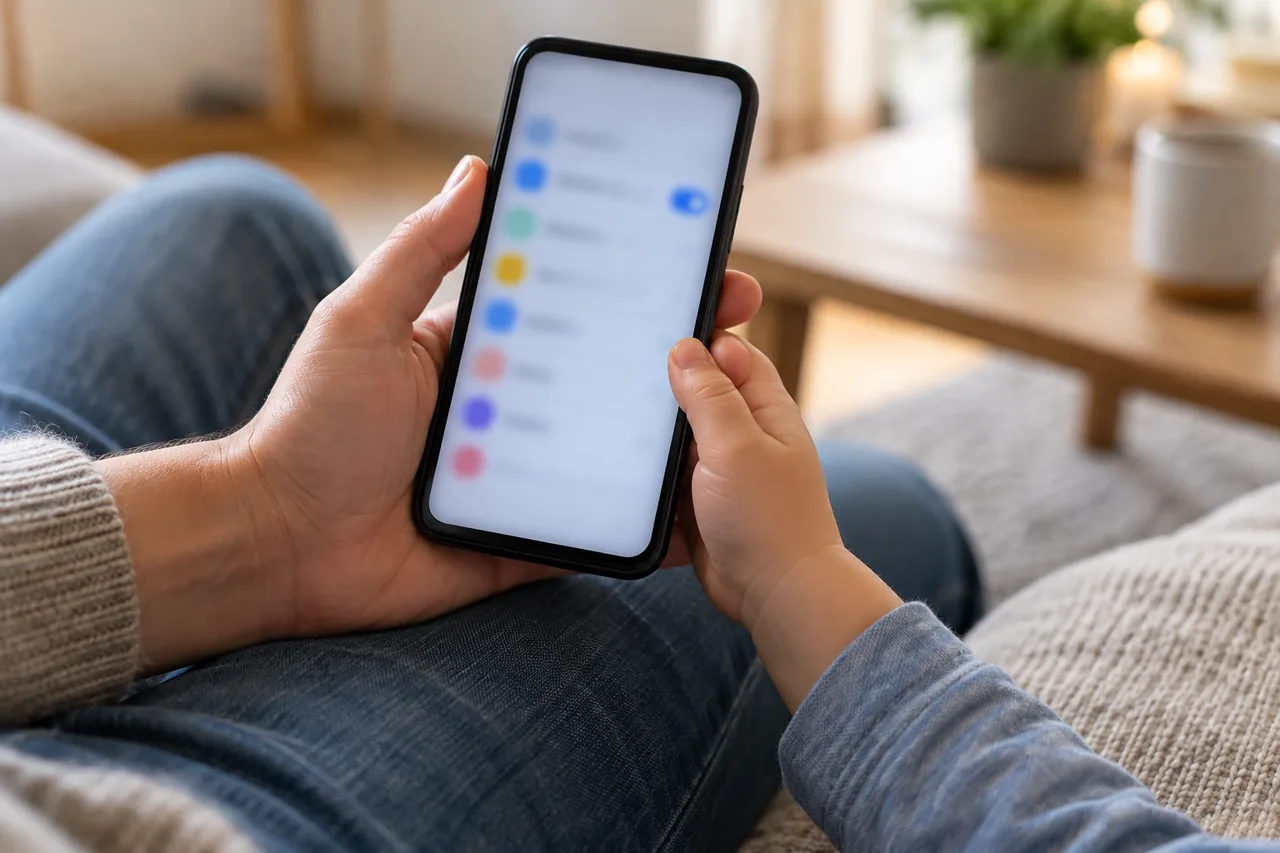
Fictional example: Tom, a British father living in Vienna, wants to give his daughter Ella (12) her own SIM card before she starts taking the tram to school alone. A shop assistant offers a contract with a large data allowance. Tom takes the documents home instead of signing on the spot.
At home, he and Ella work out what she needs: calls, messages and a little mobile internet. Tom chooses a prepaid card (in Austria called a Wertkarte) in his own name and tops it up with a fixed amount each month. He asks the operator to bar third-party services and calls to foreign tariff zones. On Ella's Android phone they set a data limit slightly below the plan's allowance.
Prepaid or contract: which plan suits your child?
The key question is how much cost risk you accept and how long you commit. With prepaid you load credit first, and charges are deducted from it. With a contract you pay afterwards on a monthly bill. Across the EU, the provider must give you a written contract with rates and charges and detailed information on its duration and renewal.
| Criterion | Prepaid | Contract with monthly bill |
|---|---|---|
| Payment | Credit loaded in advance, spending is deducted from it | Bill after use |
| Commitment | No fixed term | Check the contract's duration and renewal terms before signing |
| Purchases charged to the phone number | Possible with prepaid too: request barring | Possible: request barring |
| Data allowance used up | Check the plan's terms | Watch out for automatic data top-ups |
| Premium-rate numbers | Deducted from credit | Charged on the bill; in Germany 0900 and 0180 numbers are not covered by flat rates |
Questions to answer before you sign
- What does your child need the line for: being reachable, messaging or browsing on the go?
- What is the most the line may cost per month, and who pays for top-ups?
- Do you want a long commitment, or should the plan be easy to change as your child grows?
- What do the terms say happens when the data allowance runs out?
- Can you see and change barring options and limits in your online account?
Tip: Whether your child is ready for a smartphone at all, and which family rules help, is covered in First smartphone for your child: age, ground rules and settings.
Who should hold the contract?
The rules on contracts signed by minors are national and differ between countries. If you take out the line in your own name, the bill comes to you, and you manage barring and limits in your online account.
Your child's needs will change. Across the EU, you can switch mobile operator within one working day and keep the same number, and you may end your contract if the provider changes the original terms. Starting with a prepaid card is therefore not a dead end.
Which barring should you request at sign-up?
A phone number can be used to pay for services from other companies, such as apps, ringtones or game credit. The charge then appears on the phone bill or is deducted from prepaid credit. The most important brake is third-party barring: it stops the number from being used to bill such services. In Germany, the consumer advice centres say setting it up must be free of charge and protects prepaid and contract customers alike.
All six countries in this guide offer such protection, but the details differ; the country box below lists them. Two points stand out: in Switzerland, 090x premium numbers are barred by default for customers under 16, and in Italy, under AGCOM decision 10/21/CONS of 14 January 2021, premium services are blocked by default on SIM cards and can only be unblocked at the user's express request. Italian offers designed for minors must also include active parental control. In Austria, the regulator RTR expressly recommends tariff-zone barring, for example for calls abroad, when children have a phone.
Third-party barring only covers charges to the phone number. Card payments, for example through an app store account, are not affected. For those, use purchase approval in the family account or a password prompt before each purchase; Parental controls on a phone: set up Screen Time and Family Link shows how.
How do you stop mobile data from getting expensive?
Extra charges often begin once the data allowance is used up. German consumer advice centres warn about plans with an automatic data top-up that books more data without asking. Read what happens after the allowance runs out, and ask the operator whether you can cancel such an option.
Austria has a legal cost brake: without consent, operators may charge at most 60 euros for domestic mobile data on top of the plan. You are notified once 30 euros of extra charges have built up; at 60 euros, data is blocked or slowed to no less than 128 kbit/s.
Within the EU, flat rates and data allowances work as they do at home; outside the EU, on ships and on planes, data use can become very expensive. Exceptions and traps are explained in EU roaming rules: where it stays free and where it gets costly. In Switzerland, a roaming cost limit must be set when the contract is signed, under rules in force since 1 January 2021.
A second brake on the phone: data warning and limit
The phone measures usage itself, and some operators measure differently. Set the limit slightly below your plan's allowance.
Android (Pixel, Android 8.0 and later)
- Open Settings › Network and Internet › Internet.
- Next to your operator, tap the Settings icon.
- Tap Data warning and limit and, if needed, turn on Set data warning. Tap Data warning, enter a value in MB or GB and tap Set.
- Turn on Set data limit, read the message and tap OK. Tap Data limit, enter a value and tap Set.
- When the limit is reached, mobile data turns off. To turn it back on, turn off Set data limit.
Menu path as given in the manufacturer’s help; it may differ by device and version: support.google.com
iPhone
- Open Settings and tap Mobile Data or Cellular, depending on the device.
- Scroll down to the list of apps and turn off mobile data for apps that should only use Wi-Fi.
- At the start of each billing month, tap Reset Statistics to see the month's usage.
- Under Mobile Data Options, turn Data Roaming off before travelling unless your plan includes it.
Menu path as given in the manufacturer’s help; it may differ by device and version: support.apple.com
Menus may differ on Android phones from other manufacturers. Apple's help does not mention an automatic data limit, so on an iPhone the plan and the operator's barring matter most.
What applies in Germany, Austria, Switzerland, France, Italy and Spain?
| Country | Barring | Cost brake or filter | Where to turn |
|---|---|---|---|
| Germany | Third-party barring free of charge, also for prepaid; partial barring possible | Redirect to the operator's page before subscriptions since 1 February 2020 at the latest; check for automatic data top-ups | Operator, then a complaint to the Bundesnetzagentur marked «Drittanbieter» |
| Austria | Third-party barring free once a year; tariff-zone and roaming barring | At most 60 euros for domestic mobile data without consent; 60-euro roaming limit unless agreed otherwise | Operator; consumer information from the regulator RTR |
| Switzerland | 090x numbers barred by default for under-16s; barring free of charge | Roaming cost limit set at sign-up, since 1 January 2021 | Provider, then the ombudscom conciliation body |
| France | Free option to block calls and SMS to certain premium numbers, since 2018; free Internet+ blocking | Payments on the operator bill capped at 50 euros per transaction and 300 euros per month | Spam SMS to 33700; unusual charges on surmafacture.fr |
| Italy | Premium services blocked by default on SIM cards (AGCOM 10/21/CONS) | Free parental control, active in offers for minors; operators had to comply by 21 November 2023 | Operator; information from AGCOM |
| Spain | Disconnection of international calls and 803, 806, 807 numbers on request | Prepaid cards help control spending; premium charges shown separately on the bill | Operator, then the Oficina de Atención al Usuario de Telecomunicaciones |
Switzerland is not in the EU, so EU rules do not automatically apply there. With a parent's or guardian's consent, 0900 and 0901 numbers can be unblocked for under-16s; 0906 numbers for adult entertainment stay barred.
What if an unknown charge still appears on the bill?
Germany's Bundesnetzagentur recommends this order:
- Dispute the item promptly and with reasons with your mobile operator. It can check whether the money-back guarantee applies.
- Send your objection to the third-party provider as well.
- Cancel any subscription as a precaution so that no further charges follow.
- If you pay by direct debit, revoke the payment and pay the bill again without the disputed item.
- If that does not help, complain to the Bundesnetzagentur and mark the complaint «Drittanbieter». In other countries, use the contacts in the country box.
In Germany, the money-back guarantee given by participating operators covers unnoticed and unwanted single purchases, and subscriptions where the redirect demonstrably did not work. For larger amounts or disputes about a contract your child entered, a consumer advice service can look at your case; this guide is not legal advice.
Common mistakes
- Signing in the shop straight away without reading the contract terms and what happens when the data allowance runs out.
- Assuming prepaid automatically protects against third-party subscriptions, although the number can be used for billing with prepaid too.
- Requesting barring only after the first unknown charge instead of at sign-up.
- Relying only on the data counter on the phone, although the operator may measure differently.
- Reversing the whole bill over one disputed item instead of paying the undisputed amount.
Your checklist
The checkboxes are for your own reference. No entries are sent to us. To keep a copy, print the page or save it as a PDF using your browser menu.
Common questions
Does third-party barring cost anything?
In Germany, setting it up must be free of charge according to the consumer advice centres, for prepaid and contract customers. In Austria, third-party barring must be set up free once a year. In Switzerland, barring 090x numbers must be free, and in France the option to block certain premium numbers is free. Ask your operator to confirm that the barring is active.
Do I need barring on a prepaid card?
Yes, it makes sense. With prepaid, services bought via the phone number are deducted from the credit that was meant for your child's calls and data. In Germany, barring protects prepaid and contract customers alike. Request it as soon as you buy the card, for example by email or in your online account, and check the confirmation.
Is a data limit on the phone enough?
It is a useful second brake but does not replace the rules in the plan. The phone measures usage itself and the operator may count differently, so set the limit slightly below the allowance. On Android the limit switches mobile data off; on an iPhone you can turn off mobile data for individual apps. Also make sure no automatic top-up books extra data.
Can we change the plan later without losing the number?
Yes. Across the EU, you can switch mobile operator within one working day and keep your number. That makes it easy to start with a simple prepaid card and move to a contract later. Before switching, check the notice period and whether any remaining credit or contract fees apply. In Switzerland, ask your provider about its own conditions.
Sources and further information
Primary sources from public authorities, consumer organisations and providers. A source may be in another language; follow the guidance that applies to your service and where you live.
- Your Europe (EU): Telecommunication services, contracts and switching providerSource review date:
- Verbraucherzentrale (DE): Avoiding smartphone cost traps (in German)Source review date:
- Bundesnetzagentur (DE): Third-party billing, barring, redirect and guarantee (in German)Source review date:
- RTR (AT): Barring and cost limits for consumers (in German)Source review date:
- OFCOM (CH): Value-added services, avoiding nasty surprises (in German)Source review date:
- OFCOM (CH): Roaming and cost limits (in German)Source review date:
- DGCCRF (FR): Premium-rate numbers and blocking options (in French)Source review date:
- AGCOM (IT): Protection of minors, parental control (in Italian)Source review date:
- AGCOM (IT): Decision 10/21/CONS on blocking premium services (in Italian)Source review date:
- Oficina de Atención al Usuario de Telecomunicaciones (ES): User rights (in Spanish)Source review date: