An everyday example
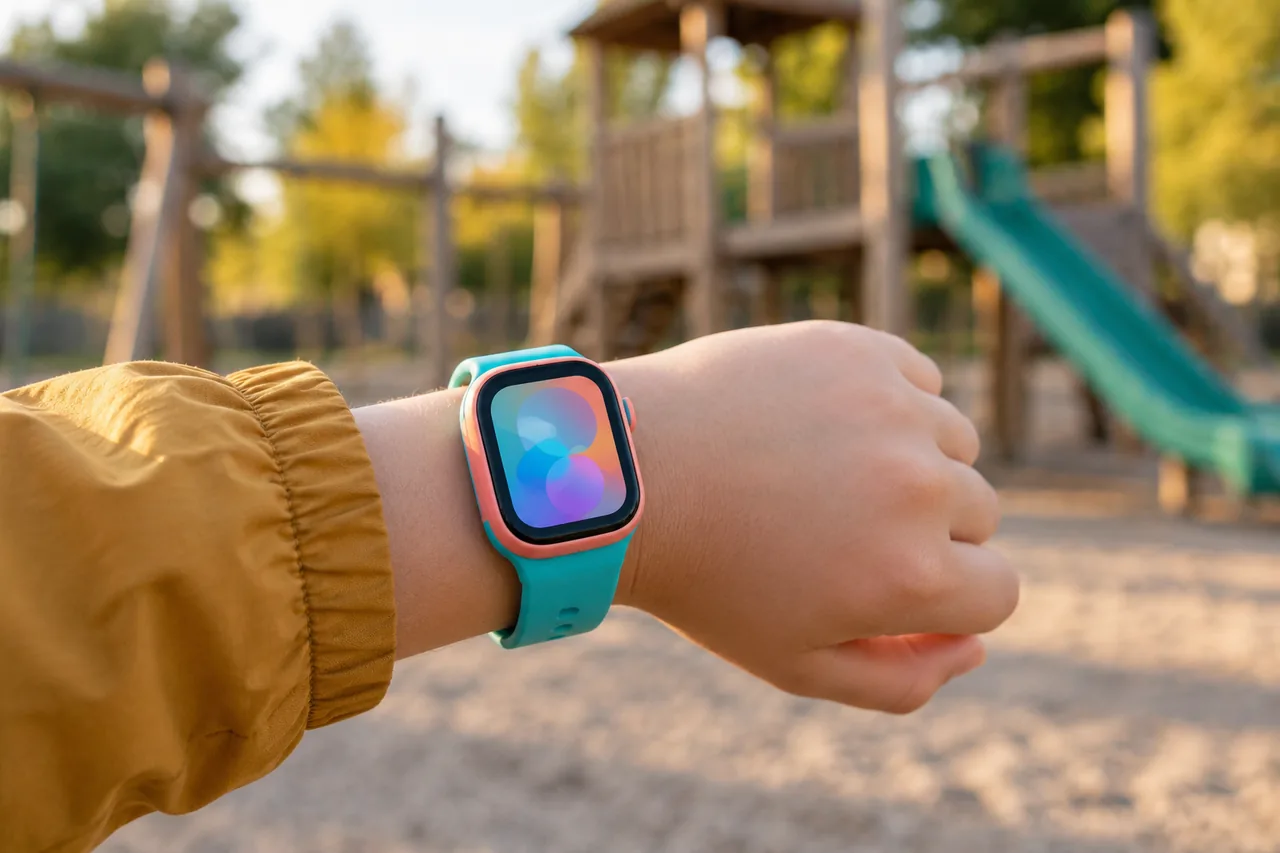
Fictitious example: Tom is British and lives with his family in Madrid. His daughter Maya is 13 and wants Instagram, because her class shares everything there. Friends at home say 13 is fine; a colleague says Spain is moving to 16.
Tom learns that limits differ between countries. The age of 16 comes from a Spanish bill that Congress allowed to proceed in September 2025; the sign-up age in force is 14, according to the Ministry of Justice. They agree to wait until Maya turns 14, then set up a private profile together and review it after a month.
Which age limits apply today?
Two kinds of limits overlap. Platforms set a minimum age in their terms of use, often only asked for at sign-up. EU data protection law adds a second limit: if an online service relies on consent to process a child's data, it needs the explicit consent of a parent or guardian below a certain age. According to the European Commission, that threshold varies between 13 and 16 depending on the member state.
Google's help page shows how much this varies:
| Country | Own Google Account from |
|---|---|
| Germany | 16 |
| Austria | 14 |
| Switzerland | 13 (default, not listed separately) |
| France | 15 |
| Italy | 14 |
| Spain | 14 |
For younger children, parents can create and manage a Google Account with Family Link, Google says.
Tip: A platform's minimum age is the provider's legal condition, not a judgement that the service suits your child.
What does the EU KIDS Act propose?
On 17 September 2026, the European Commission proposed the EU KIDS Act, a regulation on protecting minors online. For social networks and video-sharing services with risky features, it sets three tiers:
- Under 13: no account. On video platforms designed for young children, a parent may allow limited access through their own account, for up to one hour a day.
- 13 to under 15: a limited account set up by a parent or guardian, capped at one hour a day; parents approve contacts.
- 15 and over: their own account, on services that must by law be safe for them.
Self-declared age would no longer be enough. Certified solutions would check age, such as a free EU app and, in time, the European Digital Identity Wallet (see EUDI Wallet explained). The proposal also covers games, AI chatbots and app stores, and bans addictive techniques for minors such as infinite scrolling without real breaks.
Important: this is a proposal, not law. The European Parliament and the Council will now negotiate the final text. The Commission is collecting feedback until 26 November 2026.
What are individual countries planning?
| Country | Planned or debated | Status |
|---|---|---|
| Austria | Platforms with addictive features, such as TikTok, Instagram, Snapchat and YouTube, closed to under-14s | Draft; could apply from 1 Jan 2027 if the European Commission does not object by the end of October 2026 and parliament adopts it unchanged |
| Germany | Statutory minimum age of 13 with age checks, backed by the federal minister | Expert recommendations of 24 Jun 2026; EU solution preferred |
| France | Ban on social networks for under-15s | Struck down by the Conseil constitutionnel on 14 Aug 2026 |
| Spain | Sign-up age for social networks raised from 14 to 16 | Bill cleared a first vote in Congress on 10 Sep 2025 |
| Italy | The EU KIDS Act would apply directly | EU proposal of 17 Sep 2026 |
| Switzerland | EU rules do not apply automatically | Swiss rules are decided separately |
Austria wants third parties such as ID Austria, not the platforms, to check age. The European Commission is reviewing the draft; if it asks for changes, the start will be delayed.
France shows that a ban needs careful design. The Conseil constitutionnel accepted that protecting children can justify limits, but found a general ban that ignored the child's situation and the risks of each service disproportionate. The law also required every user, adults included, to prove their age without privacy safeguards.
Spain's bill would also require free parental controls on internet-connected devices.
How do you decide as a family in the meantime?
Whether your child uses an app is still a family decision. A step-by-step approach helps:
- List the apps your child uses or wants, with the minimum age the provider sets.
- Talk about what the app is for: a class chat, a hobby, watching videos or posting.
- Start with one platform, a private profile and clear rules; add features later.
- Set up the account together: privacy, who can comment or send messages, how to block and report. Seeing your profile through others' eyes helps with the settings.
- Ask regularly what your child sees, enjoys or finds unsettling, without judging straight away.
If the first phone comes before the first account, read Your child's first smartphone.
Common mistakes
- Treating announcements as law: the KIDS Act, Austria's draft and Germany's recommendations are not in force.
- Reading a platform's minimum age as advice on whether the app suits your child.
- Assuming the platform checks age. Often it is just a date entered at sign-up.
- Applying your home country's rules when you live elsewhere in Europe. Limits differ by country.
- Banning an app and ending the conversation. You then learn less about your child's life online.
Your checklist
The checkboxes are for your own reference. No entries are sent to us. To keep a copy, print the page or save it as a PDF using your browser menu.
Common questions
What age is Instagram or TikTok allowed from in Europe?
There is no single EU-wide legal age yet. Platforms set a minimum age in their terms, and data protection rules require parental consent below 13 to 16, depending on the country. Google, for example, lets teenagers manage their own account from 16 in Germany, 15 in France and 14 in Austria, Italy and Spain.
Will my child lose their account if the KIDS Act is adopted?
Not now. The KIDS Act is still a proposal. If adopted as proposed, platforms would have to check existing accounts within six months of the rules applying. Own accounts of under-15s, and accounts whose age cannot be established, would be disabled. Children aged 13 and 14 could use a limited account set up by a parent.
How would age checks work?
Platforms would not check identity documents themselves. Certified third parties would provide proof of age using zero-knowledge proof technology. Austria's draft also leaves the check to third parties such as ID Austria rather than the platforms. Each EU member state would offer at least one free way to prove age.
Does the KIDS Act apply in Switzerland?
Not directly. Switzerland is not an EU member, so EU regulations do not apply there automatically. For now, the platforms' own rules matter most; Google, for example, applies its default age of 13 for an own account there. Swiss rules are decided separately by the Federal Council and Parliament.
Sources and further information
Primary sources from public authorities, consumer organisations and providers. A source may be in another language; follow the guidance that applies to your service and where you live.
- European Commission: The KIDS Act explainedSource review date:
- European Commission: EU KIDS Act, helping children navigate a safer online worldSource review date:
- European Commission: Are there any specific safeguards for data about children?Source review date:
- Google Account Help: Age requirements on Google AccountsSource review date:
- Austrian Parliament: EU Kids Act vs. Austria's government, whose social media ban will apply? (German)Source review date:
- German Federal Ministry BMBFSFJ: expert commission recommendations (German)Source review date:
- Conseil constitutionnel: Decision no. 2026-911 DC of 14 August 2026 (French)Source review date:
- Spanish Ministry of Justice: Congress approves processing of the minors' digital protection bill (Spanish)Source review date: