An everyday example
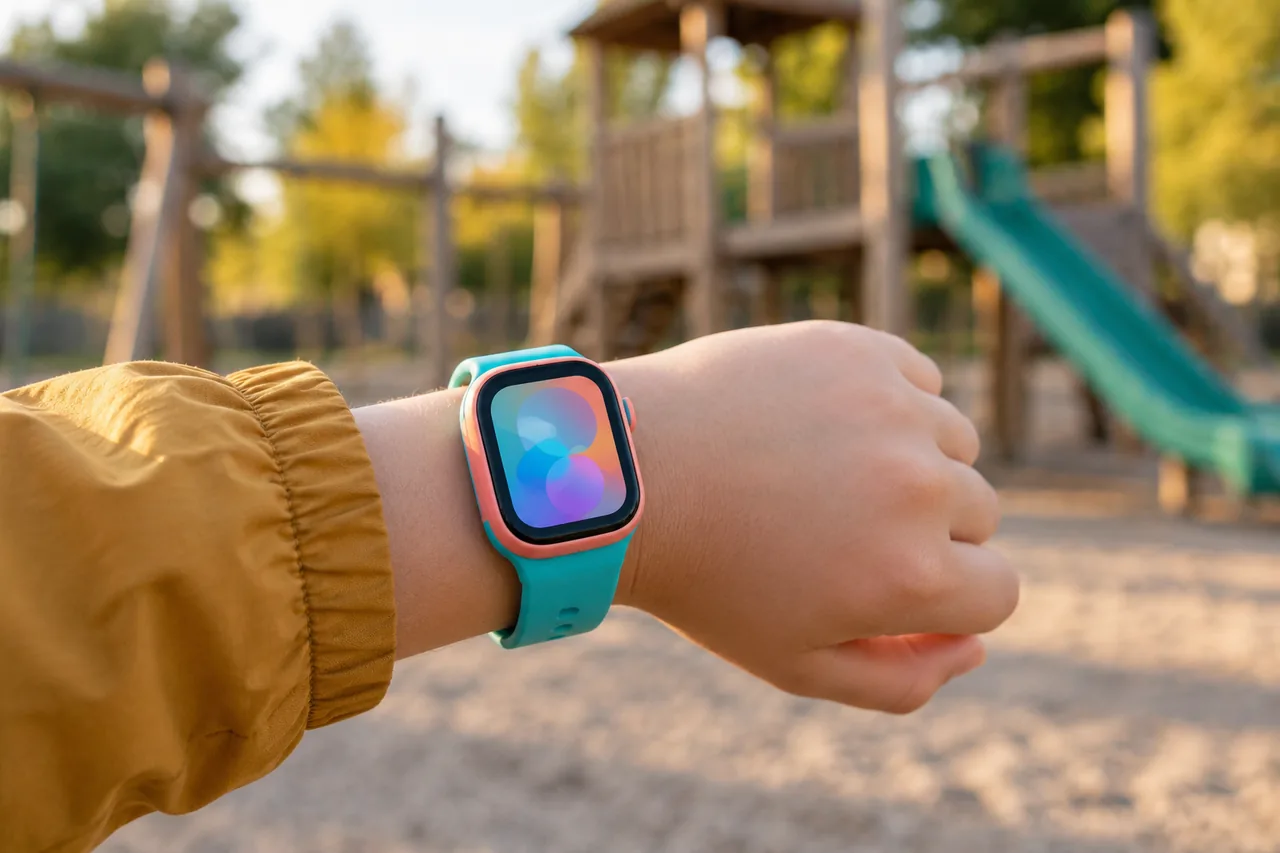
Fictional example: Daniel lives in Vienna and wants his daughter Mia (9) to walk to her swimming lesson on her own. Online he finds a cheap children's watch with a SIM card. Next to location and calls, the listing advertises 'voice monitoring': the parent app can listen in on the watch's surroundings without anyone noticing.
Daniel decides against it. He compares two models without that feature, checks where they store location data and sits down with Mia. Together they agree: the watch goes along on swimming days, Daniel only opens the map if Mia does not call as arranged, and Mia can ask at any time what the app is showing.
Smartwatch, GPS tracker or tag: which suits your family?
'Child tracker' covers several kinds of device. The Austrian advice centre Saferinternet.at distinguishes location apps on a smartphone, GPS trackers on a backpack or a chain, and children's smartwatches, which can also do things such as set safe zones. The French data protection authority CNIL adds AirTags and connected toys to the list.
| Device type | What it typically does | What to check before buying |
|---|---|---|
| Children's smartwatch with SIM card | Calls, location and, depending on the model, safe zones | Running costs for SIM and calls, where data is stored, no listening function |
| GPS tracker on a backpack or chain | Shows the location in a parent app | Who sees the positions, how long they are kept, what happens when the battery runs out |
| Smartwatch from a major brand with a family feature | Apple Watch for a child without an iPhone: calls, messages, location sharing | A compatible parent iPhone, a mobile plan, availability in your country and with your carrier |
| Bluetooth tag such as AirTag | According to Apple, designed to find personal belongings, not to track people | Whether you want to find an object or reach your child |
Questions to settle before you buy
- Do you need location at all? The CNIL notes that a simple phone without internet is often enough.
- Which features does your child really need? Leave the rest off.
- Who gets access to the parent app?
- How long will the manufacturer provide security updates? For a second-hand device, the CNIL advises checking that it still receives them.
- What does it cost to run? Saferinternet.at reminds parents of follow-on costs such as SIM card and calls.
Why is the listening function off-limits?
Some children's watches offer a feature that lets parents listen in on the child's surroundings through the app without being noticed. This also affects teachers and friends who know nothing about it. Germany's Federal Network Agency (Bundesnetzagentur) classes such watches as prohibited telecommunications equipment (consumer information, as of July 2024): they can transmit, are disguised as an everyday object and are suited and intended for covert listening. According to the agency, warning signs in the manual or app include terms such as 'voice monitoring' or 'one-way conversation', or a baby monitor function or monitor number.
The legal basis is section 8 of Germany's Telecommunications Digital Services Data Protection Act (TDDDG). It prohibits possessing, manufacturing, making available on the market or importing telecommunications equipment that imitates another object or is disguised as an everyday item and, for that reason or because of how it works, is particularly suited and intended to secretly listen to other people's private conversations. Under the law, this applies in particular where the listening function is not clearly recognisable to those affected. An ordinary call your child answers is different: they know someone is listening.
| Country | What applies | Where to find information |
|---|---|---|
| Germany | Children's watches with a listening function count as prohibited telecommunications equipment, according to the Bundesnetzagentur (July 2024); section 8 TDDDG bans possessing, selling and importing them. Location itself is a data protection matter, not banned. | Bundesnetzagentur |
| Austria | Per Saferinternet.at (2018), the Austrian Telecommunications Act contains no provision comparable to Germany's, but secret listening may have criminal consequences. | Saferinternet.at |
| Switzerland | Own rules; EU law does not apply automatically. Covert data collection may violate criminal law (Art. 179bis to 179quater Criminal Code); children cannot legally consent to their own monitoring. | Federal Data Protection and Information Commissioner (FDPIC) |
| France | A law of 3 August 2018 bans phone use in nursery, primary and lower secondary schools, except in particular circumstances; per the CNIL this can cover watches with the same communication features. | CNIL |
| Italy | Apple says its Family Setup for the Apple Watch is not available in Italy. | Garante per la protezione dei dati personali |
| Spain | INCIBE runs the cybersecurity helpline 017, also via WhatsApp on 900 116 117. | INCIBE |
This overview is not legal advice. If you have a specific legal question, an advice centre or a qualified professional can help.
Where do location, contacts and voice messages end up?
A children's watch collects location histories, contacts, messages and, depending on the model, health data, often via the provider's servers. The Swiss commissioner says careful consideration should be given to where this data is processed and under what conditions.
Price is no guarantee of security, the CNIL notes; in 2019 the European Commission recalled connected watches over a flaw in how data was stored on remote servers. Check where the manufacturer is established, whether the GDPR is mentioned and whether data goes to third parties.
What the privacy policy should tell you
- Which data the watch collects, where it is stored and whether it is shared.
- Whether transmission and storage are encrypted.
- How long the location history is kept and whether you can delete it yourself.
- Whether you can protect access with a strong password or an additional sign-in step.
No clear answers? Ask the manufacturer. No reply is useful information too.
Straight after unboxing
- Replace the default PIN and passwords and use two-step sign-in where available.
- Turn on automatic updates.
- Refuse or revoke permissions that the feature does not need, as the Swiss commissioner advises. See Check app permissions.
- Switch off real-time location when not needed (CNIL).
How do you set up an Apple Watch for a child without an iPhone?
Apple calls this Family Setup. You need an Apple Watch Series 4 or later with cellular, or an Apple Watch SE or later with cellular, watchOS 7 or later, and for the initial setup an iPhone 6s or later with iOS 14 or later. You also need your own Apple Account with two-factor authentication, one for your child and a Family Sharing group in which you are organiser or parent/guardian. Apple says Family Setup is not available in Italy, Korea, mainland China and other countries.
Set up an Apple Watch for a family member (parent's iPhone)
- If the watch is not new, erase it first, then turn it on.
- Hold the watch near your iPhone and tap Continue. If no message appears, open the Apple Watch app › All Watches › Add Watch.
- Tap Set Up for a Family Member › Continue and pair the devices. If you cannot use the camera, tap Pair Apple Watch Manually. Then tap Set Up Apple Watch.
- Tap Agree to accept the terms. Choose your child (if they are missing, tap Add Family Member), enter their Apple Account password and tap Next.
- Optional: turn on Ask to Buy. For mobile service, add the watch to your plan if your carrier supports it, or tap Not Now.
- On the following screens, only turn on what you have agreed together, for example Location Services for the Find My app.
- Finally, set a Screen Time passcode for the watch, turn on Schooltime and tap OK.
- Later: Apple Watch app › All Watches › choose the watch under Family Watches › Done, then open the setting you want to change.
Menu path as given in the manufacturer’s help; it may differ by device and version: support.apple.com
For other brands, follow that manufacturer's help pages and switch on only what you have agreed.
Which rules should you agree on together?
The CNIL warns that constant tracking can limit a child's independence and their ability to judge risks, and that a feeling of permanent surveillance can push them to censor themselves. It advises talking about location and seeking your child's agreement once they are mature enough. Saferinternet.at recommends tracking only with the child's knowledge and consent. The Swiss commissioner stresses that parents must act in the child's interest while respecting their privacy and personal space.
- When is the watch worn: on the way to school, at sports, at weekends?
- When do you look at the map, for example only if an agreed call does not come?
- Who is on the contact list, and who decides about new contacts?
- What happens in an emergency: whom does your child call first, and where do they wait?
- What if the battery is flat? Saferinternet.at notes that GPS trackers can fail; a missing dot is not yet an emergency.
- When will you review the rules? As children grow, they need more room of their own.
Tip: Write the rules down and keep the sheet next to the watch charger.
Moving on to a phone later? See Your child's first smartphone. If you then share locations by phone, see Review your location sharing.
What should you do with a watch that can listen in or is no longer needed?
If the manual of a watch you already own describes a listening function, do not use it. In Germany, the Bundesnetzagentur advises parents to render such watches harmless themselves and keep proof of destruction (consumer information, as of July 2024). Do not sell or give it away: section 8 TDDDG prohibits possessing such equipment and making it available on the market.
Before passing on a harmless watch, remove it from the parent app, delete the location history, reset it and cancel or remove the SIM card. Passing on an old phone shows how to sign out cleanly; the steps work for watches too.
Common mistakes
- Buying the cheapest watch without looking at the privacy policy and updates.
- Keeping the default PIN or password.
- Leaving real-time location on and checking the map constantly.
- Tracking a child secretly or using a listening function, even when it is advertised as 'for safety'.
- Passing a watch on without removing it from the parent app and deleting the data.
Your checklist
The checkboxes are for your own reference. No entries are sent to us. To keep a copy, print the page or save it as a PDF using your browser menu.
Common questions
Are children's smartwatches banned in Germany?
No. What is banned are children's watches with a function that lets parents secretly listen to the surroundings. The Bundesnetzagentur classes them as prohibited telecommunications equipment, which section 8 TDDDG bans people from owning or selling. Calls, messages and location alone are not affected. Before you buy, look out for terms such as 'voice monitoring' or 'one-way conversation', and choose another model if you find them.
Can I track my child without telling them?
Advice centres recommend against it. Saferinternet.at advises tracking only with the child's knowledge and consent, and the CNIL suggests talking about location and seeking the child's agreement once they are mature enough. In Switzerland, the federal commissioner stresses that parents must respect their child's privacy. For a legal question about your own situation, an advice centre or professional can help.
Is an AirTag in the school bag enough?
Apple says AirTag was designed to help people locate their personal belongings, not to track people. A tag like this is therefore better suited to finding a lost school bag than to accompanying your child on the way. If you need to reach your child and see their location, a device built for that purpose, whose functions your child knows, makes more sense.
Sources and further information
Primary sources from public authorities, consumer organisations and providers. A source may be in another language; follow the guidance that applies to your service and where you live.
- FDPIC (Switzerland): Wearables: smartwatches, fitness trackers, smart glassesSource review date:
- CNIL: Géolocalisation des enfants, quels enjeux pour leur vie privée ? (French)Source review date:
- Apple Support (UK): Set up Apple Watch for a family memberSource review date:
- Apple Newsroom: An update on AirTag and unwanted trackingSource review date:
- Bundesnetzagentur: Children's watches with a listening function, consumer information, July 2024 (German)Source review date:
- Gesetze im Internet: Section 8 TDDDG, misuse of telecommunications equipment (German)Source review date:
- Saferinternet.at: Tracking children (German)Source review date:
- INCIBE: Límites técnicos para un día a día más seguro (Spanish)Source review date: