What can this look like in everyday life?
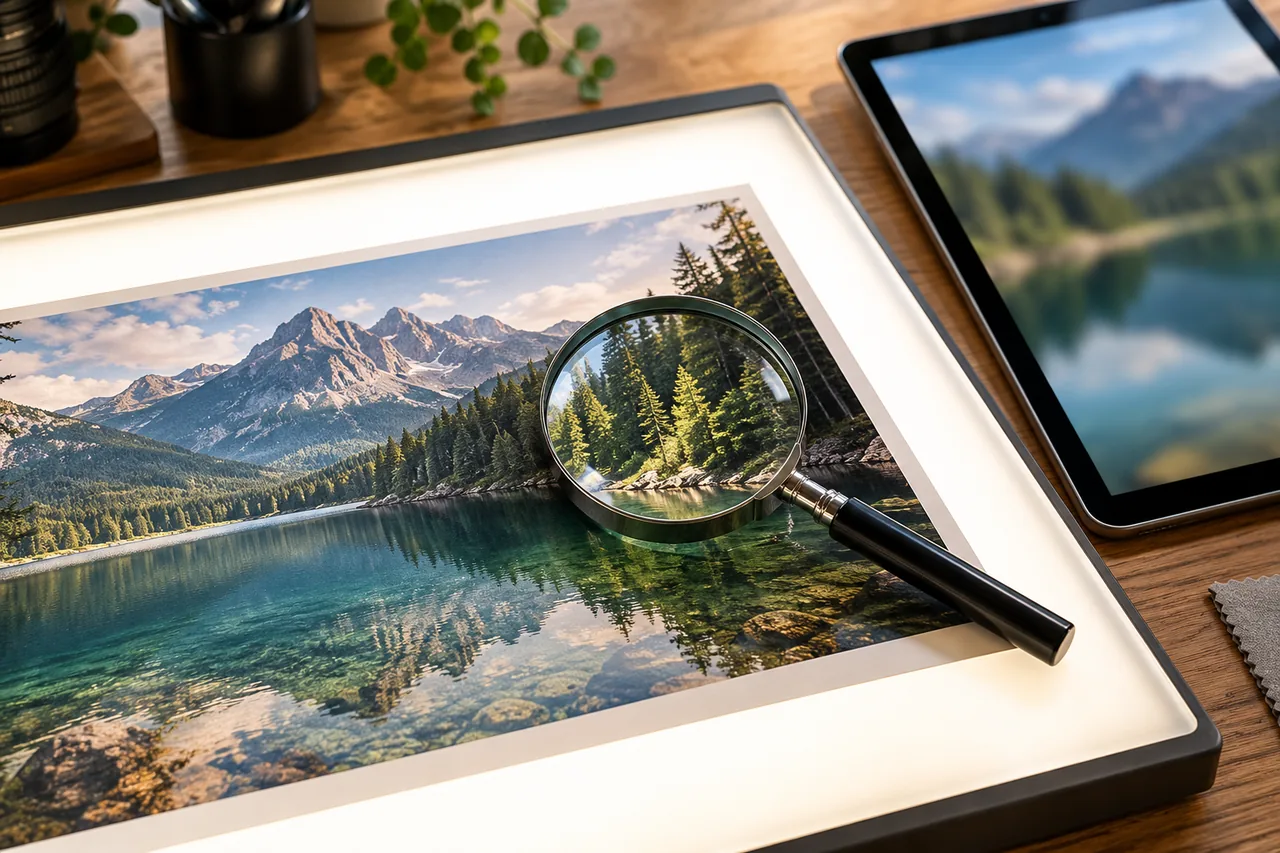
Fictional example: Siobhán lives in Cork and follows a neighbourhood group on her phone. One evening, two pictures appear. The first shows the quays in a glowing sunset, labelled 'AI-generated'. The second shows a flooded street with the caption 'Schools closed tomorrow!' and no label at all.
Siobhán is about to forward the second picture to other parents. Then she stops: the missing label tells her nothing about whether the photo is real or recent. The school's own channel mentions no closure, and the person who posted it 'saw it somewhere'. Siobhán forwards nothing and asks where the picture first appeared.
Which AI content has to be labelled in the EU?
The rules are in Article 50 of the EU AI Act (Regulation 2024/1689). They distinguish two roles. Providers develop an AI system and place it on the market. Deployers use one under their own authority, for example a company, a public body or a newsroom.
| Situation | Duty for | What is required |
|---|---|---|
| You chat with an AI | Provider | You must be able to tell it is an AI, unless this is obvious |
| AI generates images, audio, video or text | Provider | A machine-readable mark identifying it as AI content |
| Deepfake | Deployer | A clear disclosure at the latest when you first see or hear it |
| AI text on matters of public interest | Deployer | A clear label, unless it underwent human review or editorial control and someone holds editorial responsibility |
| Deepfake in an evidently artistic, satirical or fictional work | Deployer | Only a disclosure that does not spoil the work |
The Act defines a deepfake as AI-generated or manipulated image, audio or video content that resembles real persons, objects, places or events and would falsely appear authentic. A spell check alone does not count as human review.
What matters for you: deployer duties do not apply to purely personal use. If your cousin shares a self-made AI picture in the family chat, the AI Act requires no label. Anyone earning regular income from posts or publishing for work does count as a deployer.
When do the rules apply?
| Date | What applies |
|---|---|
| 1 August 2024 | The AI Act enters into force. |
| 2 August 2026 | The transparency rules in Article 50 start to apply. |
| 2 December 2026 | End of the transition period: generators already on the market before 2 August 2026 must also add machine-readable marks. |
| 2 December 2026 | Ban on AI systems that generate sexual deepfakes without the consent of the person shown, or child sexual abuse material. |
The transition period and the ban come from Regulation (EU) 2026/1744 of 8 July 2026, the Digital Omnibus on AI. Content created before 2 August 2026 need not be labelled retrospectively.
Tip: No machine-readable mark before early December 2026? The transition period may simply be the reason.
What do labels, watermarks and provenance data tell you?
The AI Act mentions techniques such as watermarks, metadata, cryptographic proof of origin and fingerprints. As a viewer, you mostly meet three kinds.
| Type | What you see | What it tells you | Limit |
|---|---|---|---|
| Visible label | Text such as 'AI-generated' or a symbol | AI was involved | Says nothing about whether the claim is true |
| Invisible watermark | Nothing; a checking tool reads it | An AI tool created or changed the content | Only if a mark was added and a checking tool exists |
| Provenance data | Sometimes a 'Cr' symbol that opens details | How the content was made and edited | If missing, that does not prove a fake |
One provenance standard is Content Credentials; its specification is a project hosted by the Coalition for Content Provenance and Authenticity (C2PA). A small symbol, the Content Credentials pin, shows that provenance details are available, such as how the content was made and edited. There is also a voluntary code of practice on marking and labelling, which the Commission and the AI Board have assessed as adequate. The AI Act does not prescribe one specific symbol.
Where are the limits of labelling?
- Not a fact check: a real photo can carry a misleading caption; an AI image can be a harmless illustration.
- Not proof of authenticity: private use, older content and standard edits fall outside the duties.
- Technical limits: the Act requires reliable and robust marks, but only as far as this is technically feasible.
- Intent: the initiative behind Content Credentials itself notes that some people will keep passing AI content off as authentic.
So treat a label as one piece of evidence among several. For videos that upset you, see checking where a realistic video comes from. If an old picture causes fresh outrage, read checking the date and context of a viral post.
How do the rules apply in your country?
In EU countries, the AI Act applies directly. Switzerland is not an EU member, so it does not apply there automatically. On 12 February 2025, the Federal Council said that Switzerland should ratify the Council of Europe convention on AI and keep regulating AI sector by sector, for example in health care and transport. Providers outside the EU must still follow the AI Act when they offer AI systems in the EU or their output is used there.
| Country | AI Act | Where to turn |
|---|---|---|
| DE | Applies directly | Bundesnetzagentur and its AI Service Desk, mainly for organisations |
| AT | Applies directly | RTR AI Service Desk, with information for the general public |
| FR | Applies directly | EU AI Act Service Desk; 17Cyber, a government service, helps victims of malicious online acts |
| IT | Applies directly | ACN and AgID, listed as national resources by the EU Service Desk |
| ES | Applies directly | Spanish AI Supervision Agency (AESIA) |
| CH | Does not apply automatically | Federal Council information on admin.ch |
Tip: If a deepfake shows you, read what to do about a deepfake of you: save evidence, report it, get it removed.
Common mistakes
- Thinking 'no label, so it is real': a lot of content needs no label.
- Reading an AI label as a verdict: it describes how content was made, not whether it is true.
- Studying only image details: source, date and context usually tell you more.
- Expecting one standard symbol: labels differ from platform to platform.
Your checklist
The checkboxes are for your own reference. No entries are sent to us. To keep a copy, print the page or save it as a PDF using your browser menu.
Common questions
Does every AI-generated image have to be labelled?
No. Providers of AI tools have had to mark generated images in a machine-readable way since 2 August 2026; tools already on the market before then have until 2 December 2026. A visible label is mainly required for deepfakes published by deployers, not for purely private use. Platforms may also set their own rules.
Is an image with an AI label automatically fake news?
No. The label only says that AI helped to create or change it. An illustration for an article, an advert or a piece of art can be perfectly fine. What matters is whether the image presents something as a real event. Ask yourself what it is trying to show you, and who puts their name to it.
Can I check myself whether an image has a watermark?
Partly. You can view visible labels and provenance details marked with the 'Cr' symbol directly. Invisible watermarks can only be read by a suitable checking tool; the AI Act requires providers to make their marks detectable. A negative result does not prove that an image is genuine, so check the source, date and context too.
Sources and further information
Primary sources from public authorities, consumer organisations and providers. A source may be in another language; follow the guidance that applies to your service and where you live.
- AI Act Service Desk (European Commission): Timeline for the implementation of the EU AI ActSource review date:
- EUR-Lex: Regulation (EU) 2024/1689 (AI Act), Articles 2, 3, 50 and recital 133Source review date:
- European Commission: Transparency obligations under Article 50 of the AI Act (FAQ)Source review date:
- EUR-Lex: Regulation (EU) 2026/1744, Digital Omnibus on AISource review date:
- AI Act Service Desk: National resourcesSource review date:
- Swiss Federal Council: AI regulation and the Council of Europe convention (in German)Source review date:
- Content Credentials (C2PA): Provenance information for digital contentSource review date:
- Cybermalveillance.gouv.fr: French government assistance for victims, including 17Cyber (in French)Source review date: