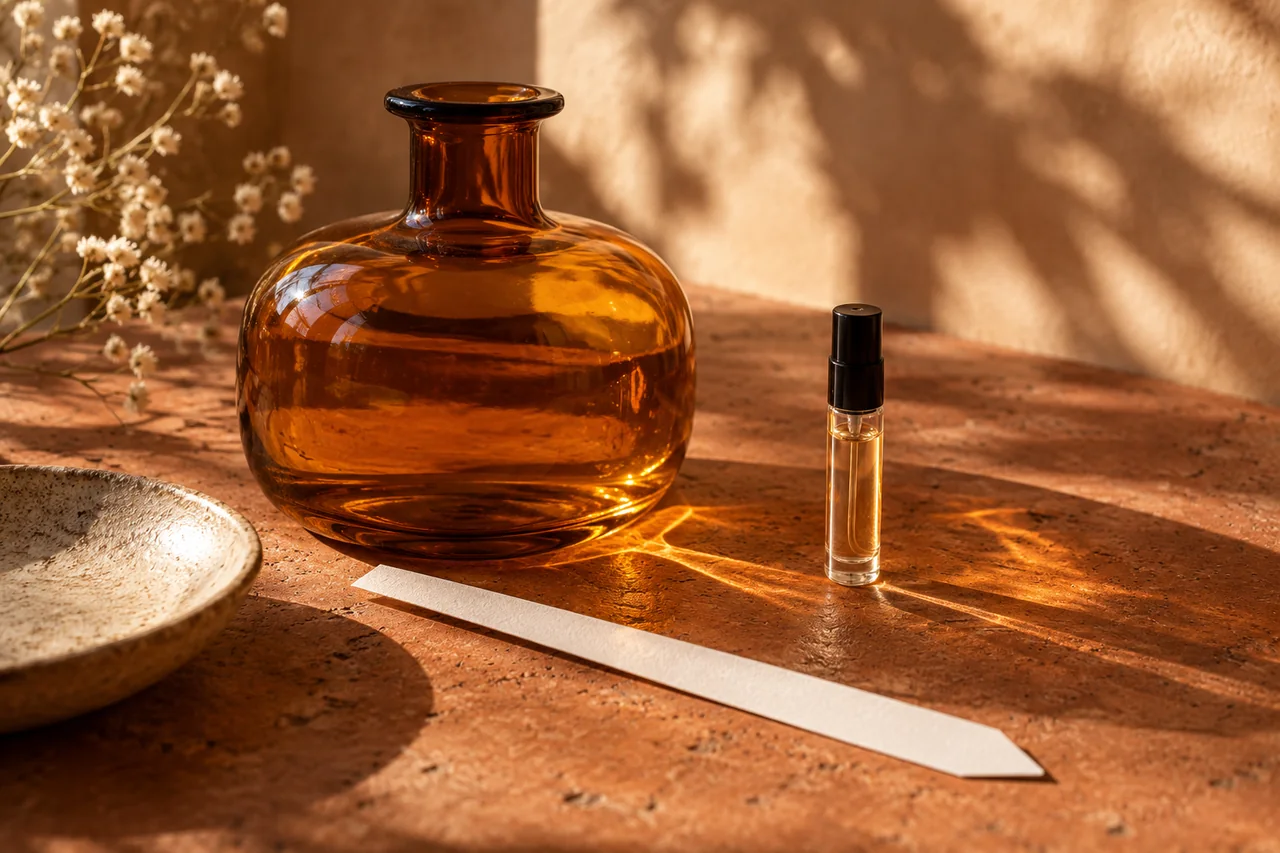
Amber is used for varied warm, sometimes balsamic or sweet impressions. It is not one unambiguous ingredient and does not automatically mean fossil amber or animal-derived ambergris. Decide whether you want softness, dryness, spice or sweetness instead of a general promise of sensuality.
Name your preferred warmth
Warm wood, soft cloth and vanilla may all feel warm but differ. Choose two words and a limit, such as soft and dry without smoke or room-filling presence. Warmth here is an association, not a claim that perfume changes body temperature or guarantees a particular emotional state.
Untangle similar terms
Amber, ambery, ambergris and fossil amber are not automatically equivalent. For composition or animal-origin concerns, ask for concrete product information. Record uncertain terms rather than guessing. Golden liquid and an amber-coloured bottle do not prove a material; attractive imagery can invite interest without answering factual questions.
Map warmth against sweetness
Draw axes from little to pronounced warmth and dry to sweet. Place two or three smelled samples and add density or airiness. You may enjoy warmth with very little sweetness, or prefer a sweeter soft version. This is a personal map, not objective measurement. Similar candidates can be separated by later development and suitable occasions.
Test comfort over time
An initially cosy scent may become too dense. Try a restrained amount on an ordinary suitable day and check later enjoyment. Strong presence does not establish quality or duration. Do not automatically add more when your own awareness fades; voluntary feedback may help. Shared-space and fragrance-free rules outweigh a comforting association.
Check the role against an alternative
Autumn and evening imagery are invitations, not calendar rules. Consider how often the imagined occasion really occurs and choose a useful size. Compare a drier wood or lighter spice direction: perhaps you want warmth without sweetness, or discover that amber’s softness is essential. Buy only if the favourite fulfils the original need, not merely because it wins a narrow group.
Frequently asked questions
Does amber always smell of vanilla?
No. Vanilla can be one association, but the term also covers other dry or sweet compositions. Assess the whole sample.
Does amber in the name indicate animal ingredients?
Not reliably. If this matters, obtain a specific manufacturer statement about the product and relevant ingredient-origin claims.
Questions and experiences
Share a question or a useful experience about this topic. Every contribution is checked before publication. Comments may be written in different languages.
Loading reader contributions…
Opening the form sets a necessary session cookie. No email address is required. Publication is subject to moderation and is not guaranteed. For deletion requests: Contact