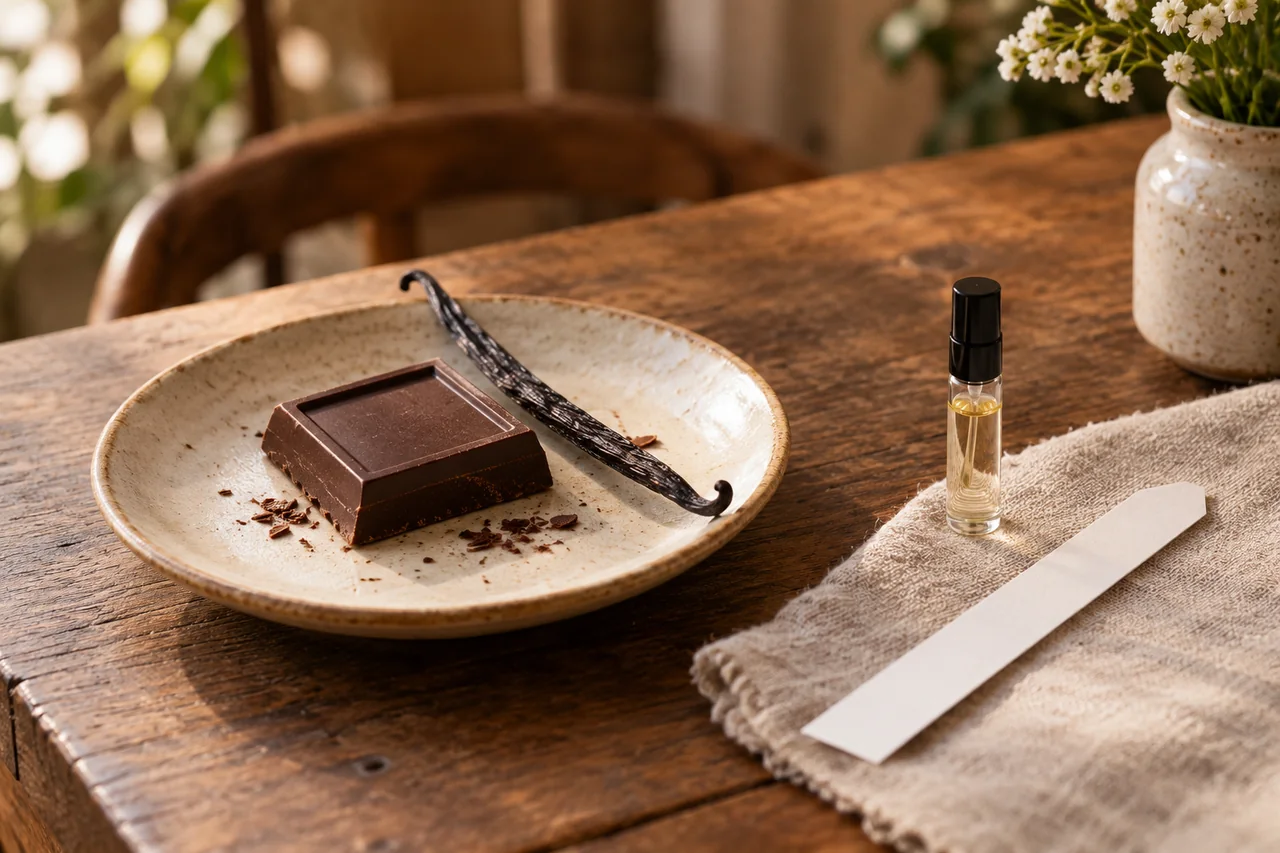
Gourmand describes perfume that recalls edible things such as vanilla, baking or cocoa. These are scent associations: perfume is not food. Decide whether you want sweetness, warmth, roasting or creaminess, and distinguish a briefly delicious smell from something you want to wear for hours.
Specify the idea
Recall a dessert smell and isolate its appeal: vanilla warmth, dry cocoa, roasted character or creamy softness. Memory is enough; no eating or buying mixing materials is required. Enjoying dry cocoa while disliking sugary sweetness points to a different search from wanting a very sweet, soft dessert impression.
Observe ordinary wear
Record the immediate pleasant association, then ask whether you still want it while doing unrelated things. A fascinating paper sample and a daily companion are different roles. If a suitable wear trial becomes too sweet later, that is a useful limit, not a contradiction. Interest need not become a large purchase.
Build a sweetness scale
Place smelled samples from dry to very sweet and add a second feature: roasted, creamy, fruity or spicy. Look for the combination your favourites share. A request such as gourmand but dry and roasted rather than creamy and sugary is more useful than an unqualified family label.
Assess contrast and factual information
Wood, spice or bitterness may frame a dessert idea, but greater complexity is not automatically better. Note your impression before reading the description. Vanilla or cocoa pictures do not establish those food ingredients in perfume. Keep labelled samples away from food; never taste or misuse them. Known sensitivities require actual product information, not inference from edible associations.
Choose an occasion and amount
Decide whether this is an occasional warm contrast or frequent companion. A friendly dessert description does not guarantee low presence in shared rooms. Begin restrained and respect fragrance-free rules. A small size may suit rare occasions better than a cheaper-per-millilitre stockpile. Compare with existing scents to avoid several initially tempting but largely interchangeable sweet bottles.
Frequently asked questions
Must gourmand perfume be very sweet?
No. Drier, roasted or bitter edible associations can also be part of this direction. Test the specific sample.
Is gourmand intended for a particular age?
No. Preferences for sweetness, warmth and roasting are individual. Enjoyment and appropriate presence matter more than age.
Questions and experiences
Share a question or a useful experience about this topic. Every contribution is checked before publication. Comments may be written in different languages.
Loading reader contributions…
Opening the form sets a necessary session cookie. No email address is required. Publication is subject to moderation and is not guaranteed. For deletion requests: Contact