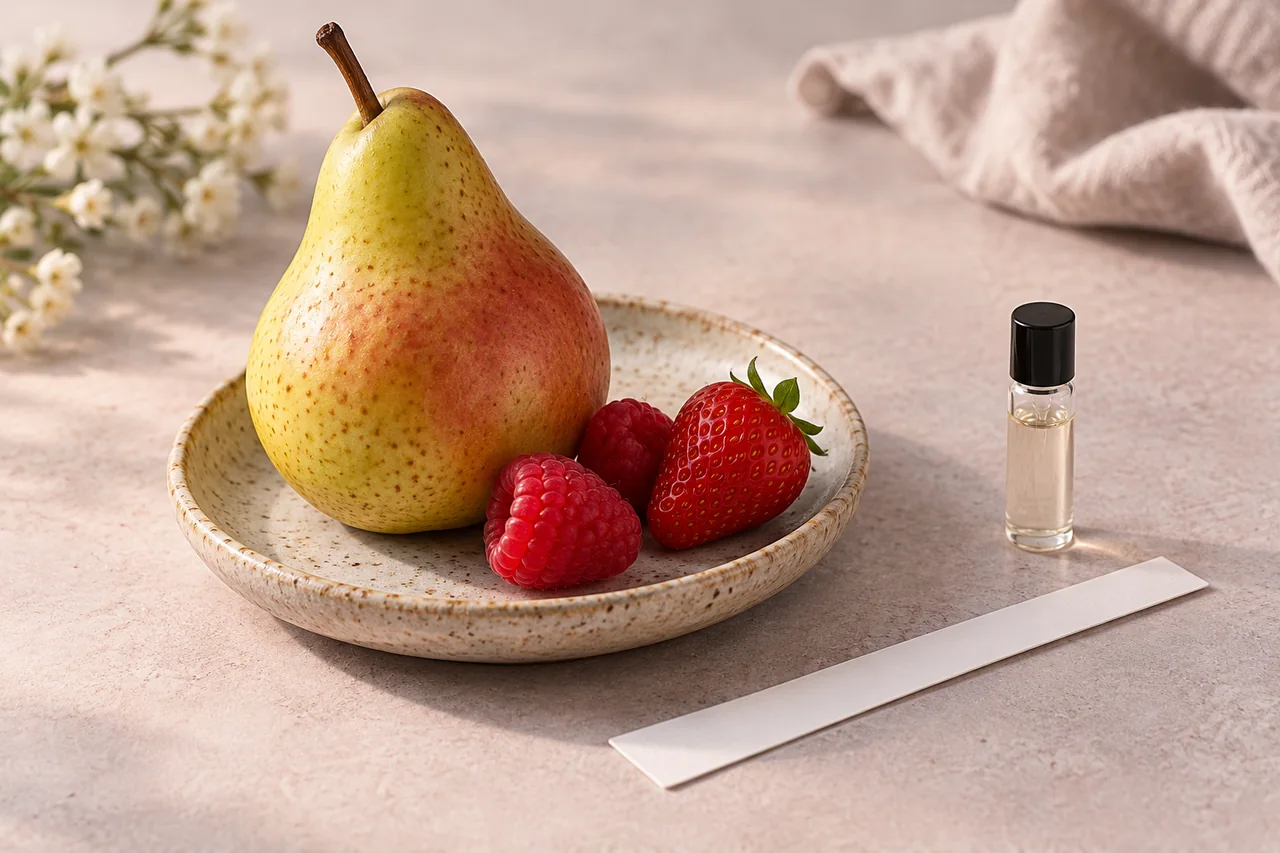
Fruity does not automatically mean very sweet. A scent may suggest fresh peel, juicy flesh, ripe fruit or sweets. Those differences often explain preference more clearly than the fruit name, and help keep an attractive picture from making the decision for you.
Choose the fruit effect
Perhaps you want pear-like juiciness, tart berries or peach-like softness. The same named fruit can behave differently in separate compositions, and perfume is not a literal tasting sample. Add fresh and barely sweet, soft and ripe, or deliberately sweet-like to make the brief useful.
Draw a ripeness map
Create fresh, ripe and sweetly stylised boxes for smelled samples. Add dry, juicy or creamy beneath each. These words are personal imagery, not claims about actual fruit maturity in the product. Look for common features among favourites without buying samples just to fill every box.
Describe sweetness without judging people
A fruit-sweet association may be delightful or too much for prolonged wear. Record that directly rather than calling it cheap, childish or immature. A very sweet fragrance can be thoughtfully made and still unsuitable for you; a quieter one is not inherently more adult.
Observe what takes over
Later development may become floral, woody or warm. A juicy opening can grow too creamy, or a woodier frame can make it enjoyable for longer. Record the change, then search for the development you want rather than collecting long lists of advertised fruits.
Separate imagery from a useful purchase
Fruit pictures do not prove extracts, natural manufacture or special tolerance. Consult exact product information, keep samples labelled and use perfume only for its intended purpose, never as food. Ask whether a favourite fills a real gap or duplicates an existing scent. Try restrained ordinary wear and, between two candidates, consider which you would actually choose next week.
Frequently asked questions
Are fruity perfumes always very sweet?
No. They can be fresh, tart, soft or notably sweet. Compare those qualities separately.
Must I identify the exact fruit?
No. A useful overall description such as juicy and low in sweetness can be clearer than an uncertain fruit identification.

Questions and experiences
Share a question or a useful experience about this topic. Every contribution is checked before publication. Comments may be written in different languages.
Loading reader contributions…
Opening the form sets a necessary session cookie. No email address is required. Publication is subject to moderation and is not guaranteed. For deletion requests: Contact