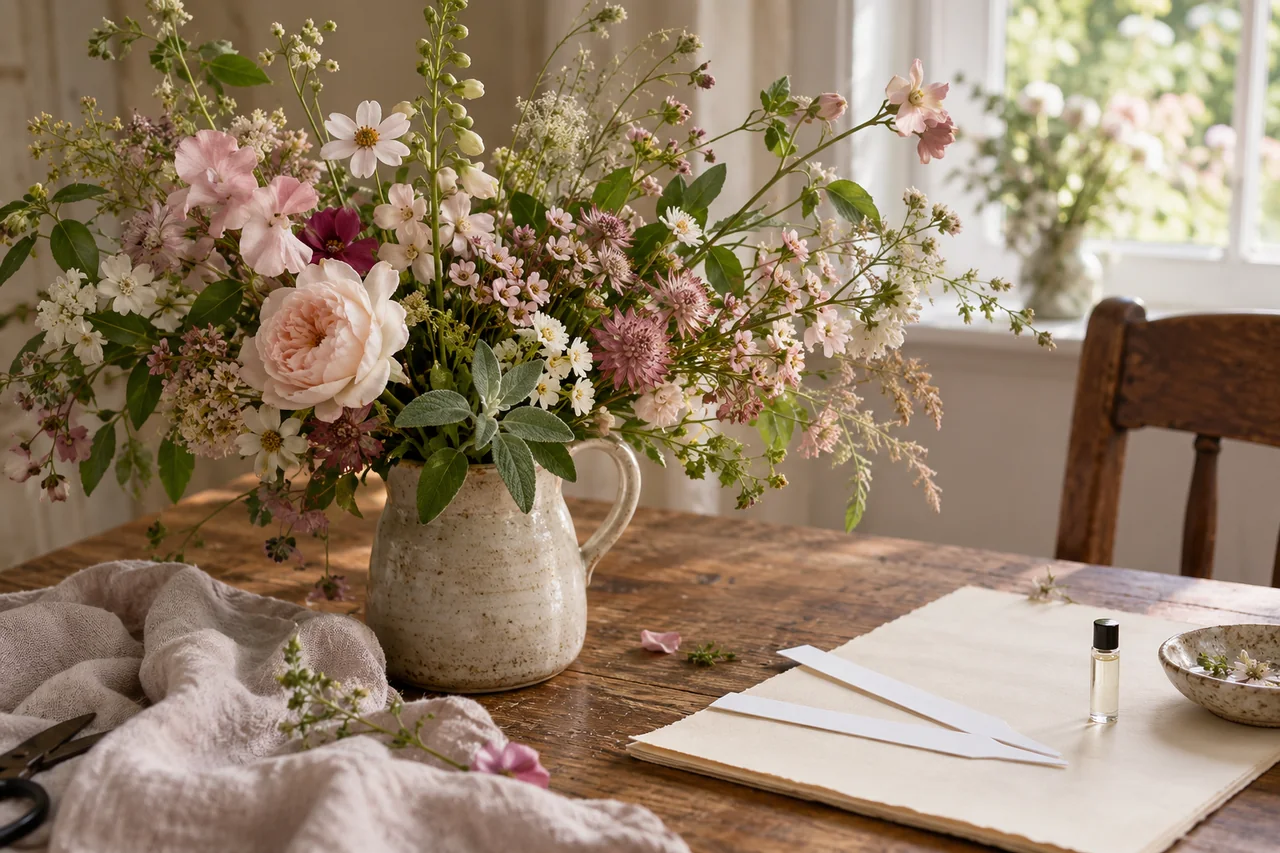
Floral perfumes may be fresh, dry, soft or opulent. The shared flower idea says little about which you will enjoy. Decide whether you want a recognisable blossom, a mixed bouquet or a floral background, then compare the surrounding character.
Single blossom or overall impression?
A familiar flower can begin the search, but named perfumes interpret it differently. You may want recognisable rose, or something floral without one blossom dominating. Both are clear requests and neither requires specialist language. A garden smell is a starting memory, not a guarantee.
Use texture as a second dimension
Glass, cotton and velvet can help express airy, soft and dense impressions. These are personal metaphors, not measurements. If a sample feels heavy, decide whether flowers themselves bother you or whether sweetness and density are the issue. A different interpretation within the same family may then work.
Look for the bouquet’s green edge
A remembered bouquet may include stems, leaves and cool air. Say so if that is what you want. Compare a green-floral sample with a softer version and notice whether the contrast feels fresh or stern. You need not name a specific green note; the whole impression and later wear matter.
Draw a simple bouquet chart
Create boxes for single flower, bouquet and floral background. Place smelled samples according to your perception and add a texture word and intended use. Favourites spread across boxes may share softness rather than a particular flower. Respect associations with people and places without labelling a whole family old-fashioned or restricted by age; specify powdery, soapy or dense instead.
Choose by practical use
Assess presence, development and comfortable application before a bigger purchase. If you already own a floral, ask what different job another bottle would do; a sample may cover occasional variety. Save your own description, not only a list of marketed flowers. For gifts, a sample chosen together is more useful than assuming a particular blossom belongs to the recipient.
Frequently asked questions
Are floral scents only for women?
No. Anyone may enjoy floral directions. Preference and context are more useful than fixed gender labels.
Does a flower note prove that its extract is included?
No. A fragrance description is not a complete ingredient list. Consult the actual product labelling.
Questions and experiences
Share a question or a useful experience about this topic. Every contribution is checked before publication. Comments may be written in different languages.
Loading reader contributions…
Opening the form sets a necessary session cookie. No email address is required. Publication is subject to moderation and is not guaranteed. For deletion requests: Contact