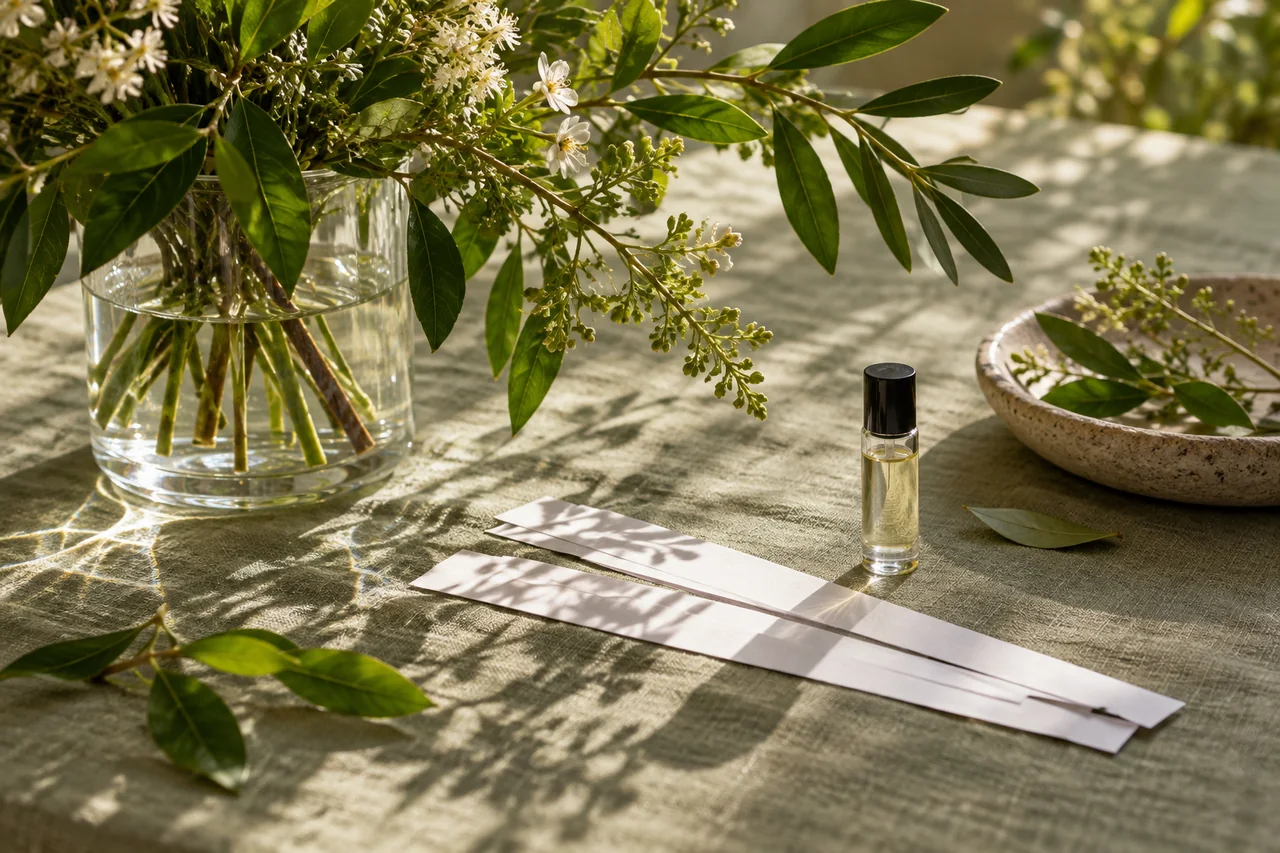
Green in perfume describes an association, not bottle colour or a sustainability label. It may suggest leaves, herbs or dry bitterness. Familiar images help explain which interpretation you enjoy without assigning it to a particular personality or calling it automatically natural.
Recall three green scenes
Imagine fresh leaves in a vase, a herb garden and dry grass. Note which feels appealing and which sharp or bitter. Garden or woodland memories also work. You do not need to collect, crush or apply plants; unknown plants do not belong in a scent experiment. Compare the memory later with a labelled sample.
Separate freshness from sweetness
Green can accompany fruit, flowers and soft accords. Ask independently how fresh and how sweet each sample seems. You may prefer juicy green to a stern dry version, or seek that dry contrast. Replace a blanket dislike of green with the precise issue: too herbal, or too sweet behind the leaves.
Compare contrasting interpretations
Try one soft-leafy and one dry-herbal candidate separately on labelled paper. Write two images for each before deciding which deserves further exploration. A bright garden versus a spicy herb cupboard is already useful language. Add manufacturer terminology afterwards rather than needing to identify every note.
Follow the whole composition
A green accent may sharpen a floral idea or change perceived fruity sweetness, but these are possible descriptions, not universal effects. Observe what remains after the opening and what becomes dominant. If you only like the initial leaf impression, search for a later character closer to your wishes.
Keep factual claims separate
A forest picture, green label or botanical wording does not establish ingredients, tolerance or environmental impact. A synthetic composition can also suggest plants. Separate scent storytelling from verifiable product statements and ask about missing facts. Decide whether the fragrance fills a frequent role or occasional contrast, with restrained presence in shared spaces. End with a brief such as soft leaves without strong herbs.
Frequently asked questions
Are green fragrances only for spring?
No. Seasonal imagery is optional; choose according to preference and circumstances throughout the year.
Does green mean natural ingredients?
No. It is a scent association. Ingredient origin and environmental claims need separate, specific support.
Questions and experiences
Share a question or a useful experience about this topic. Every contribution is checked before publication. Comments may be written in different languages.
Loading reader contributions…
Opening the form sets a necessary session cookie. No email address is required. Publication is subject to moderation and is not guaranteed. For deletion requests: Contact