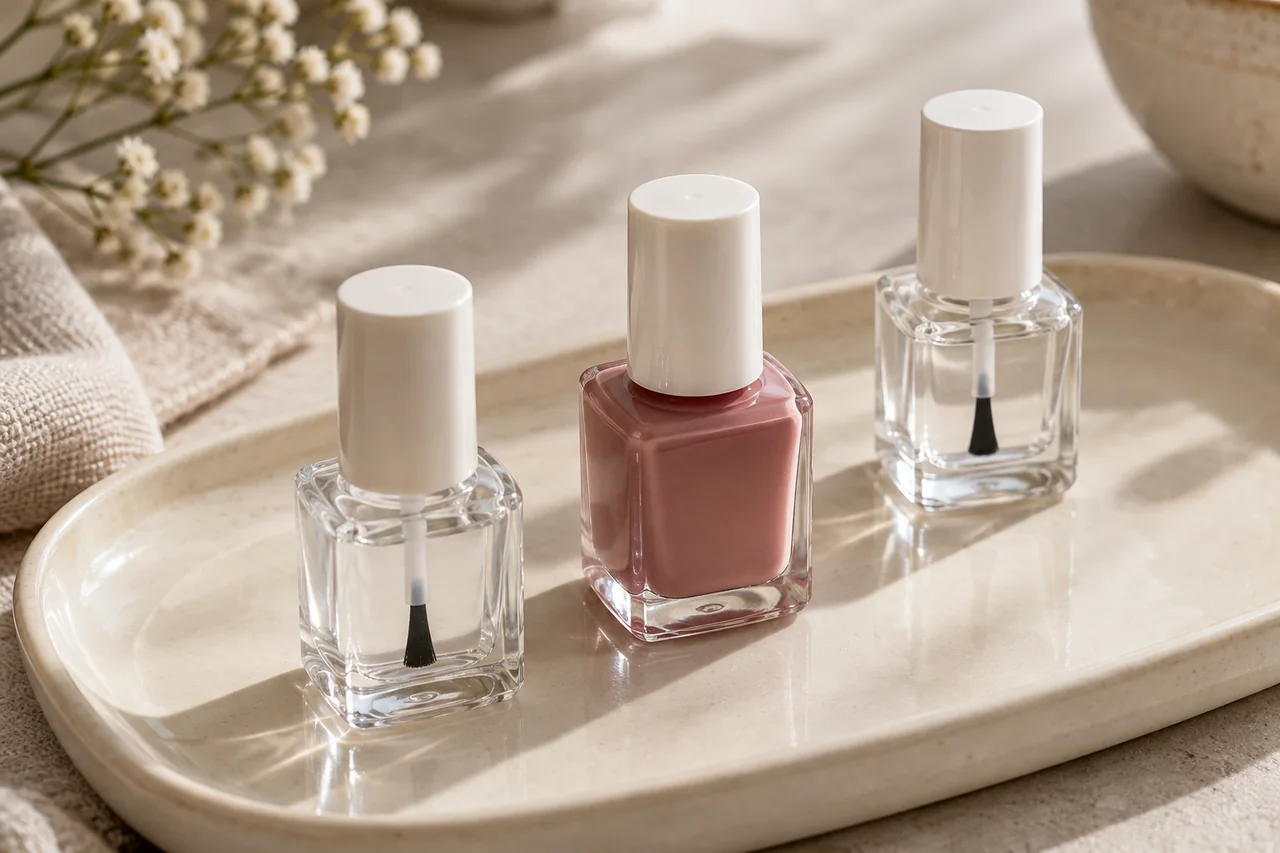
Similar bottles and clear liquids can have different jobs. A short written sequence makes an ordinary polish routine easier to follow and repeat.
Read the function, not the bottle shape
A base coat is intended before colour; a top coat is the finishing application. The exact functions depend on the formula. A two-in-one product has its own directions. Two clear liquids are not automatically interchangeable. Arrange bottles in the proposed order and read their full names; similar packaging can create more confusion than the process itself.
Identify the system
Check that you are using ordinary air-drying polish. Light-cured products, activators and professional bonding products belong to different procedures. “Long-lasting” and “gel effect” do not explain application. Clarify unclear labels before starting. Do not add a lamp because polish remains soft longer than expected, or assume a preparation product from a tutorial belongs with your chosen combination.
Write a short sequence
Record the name, function and waiting guidance for each product: any base, the specified colour layers and any finish. If the colour instructions specify no base, follow that rather than adding a supposedly more professional step. Mark unresolved questions. This note is particularly useful after a break or when several bottles look alike.
Do not use extra layers as a universal repair
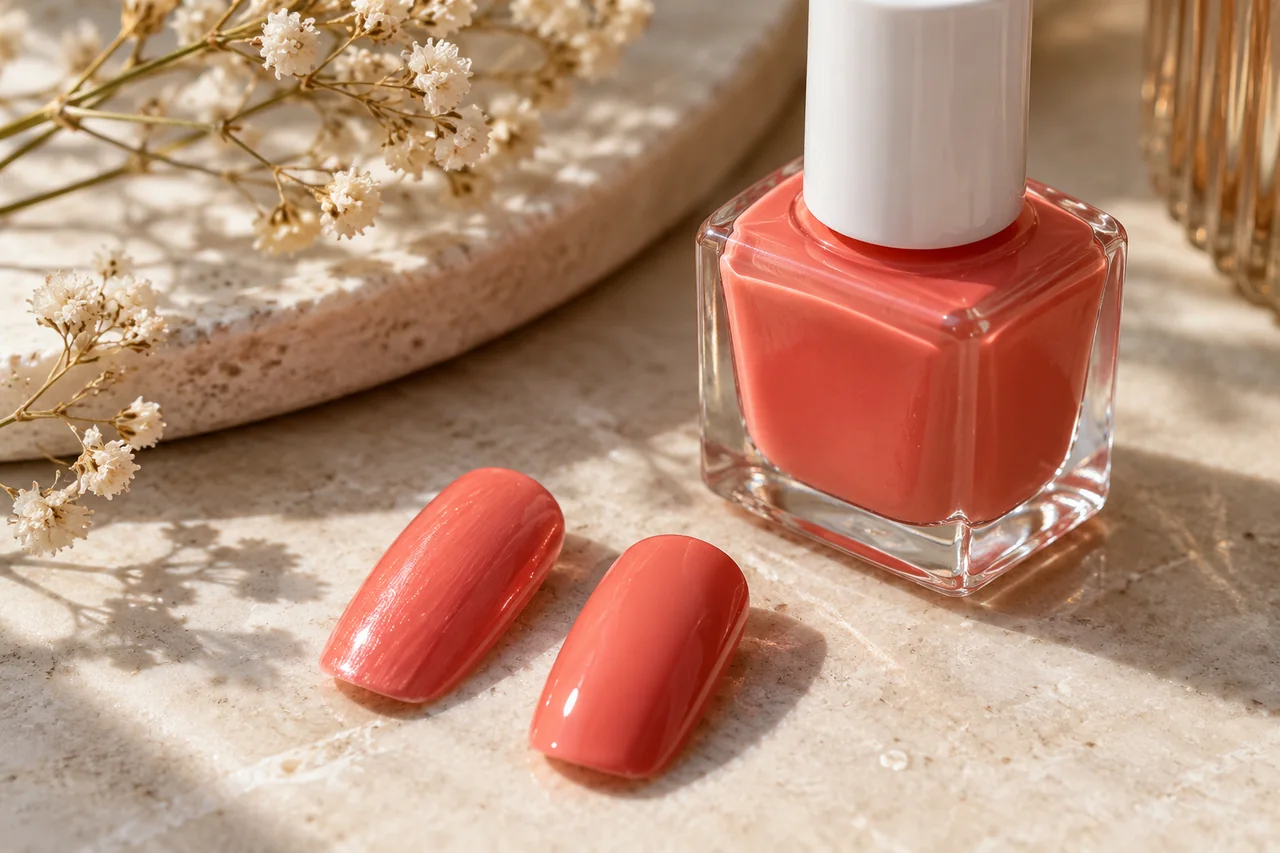
If colour looks different from the expected result, check opacity and intended layering first. Top coat does not replace a missing colour layer, and base coat is not a general thinner. Avoid improvised mixing. A visible free edge may be part of a sheer design, while an opaque product may specify several thin applications. A loose sample can preview the complete result.
Check compatibility specifically
One brand can contain several different systems. Conversely, a combination may be expressly suitable across particular products. Read full instructions rather than grouping similar names or bottles. Ask the manufacturer using complete product names if uncertain, and retain the answer. An attractive personal trial is not general proof of safety or durability.
Choose and record the intended finish
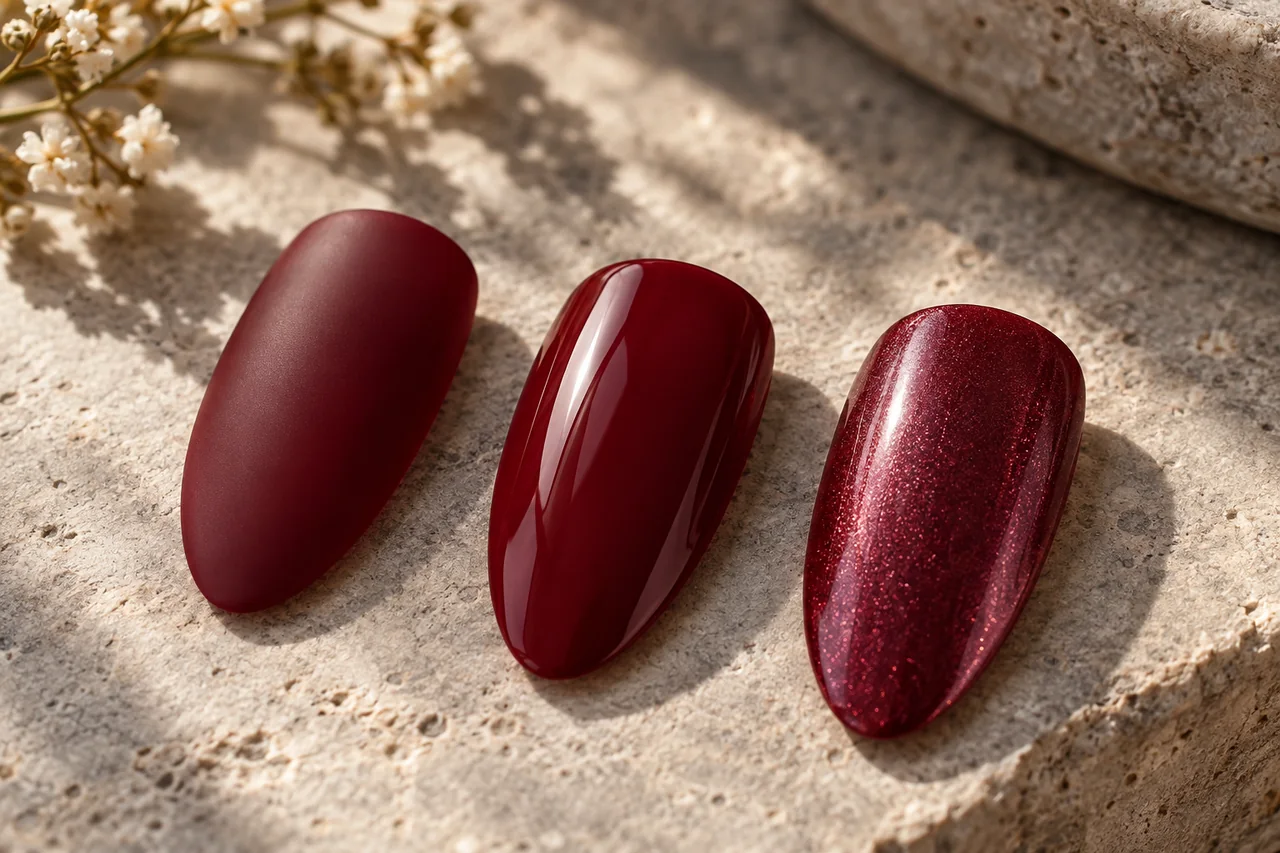
A top product may preserve or change a matte, shimmering or specialist effect. Compare on a loose sample before a complete manicure. A colour with its intended finish may already provide what you want; more shine and layers do not automatically improve quality.
Afterwards, note the combination and your views on coverage and surface. If chipping or unevenness occurs, this record is more useful than “my top coat never works”. Keep labels and instructions accessible rather than decanting into unlabelled containers. Change one permitted feature next time so the comparison stays understandable.
Frequently asked questions
Can I use top coat as base coat?
Only when that specific product is intended for both purposes. Transparency or similar consistency does not establish suitability. Follow its stated functions and directions.
Does every colour polish need base coat?
No single sequence fits all products. Some specify a particular base and others use a different structure. Follow the colour product and compatible system instructions rather than adding a step from another tutorial.
Questions and experiences
Share a question or a useful experience about this topic. Every contribution is checked before publication. Comments may be written in different languages.
Loading reader contributions…
Opening the form sets a necessary session cookie. No email address is required. Publication is subject to moderation and is not guaranteed. For deletion requests: Contact