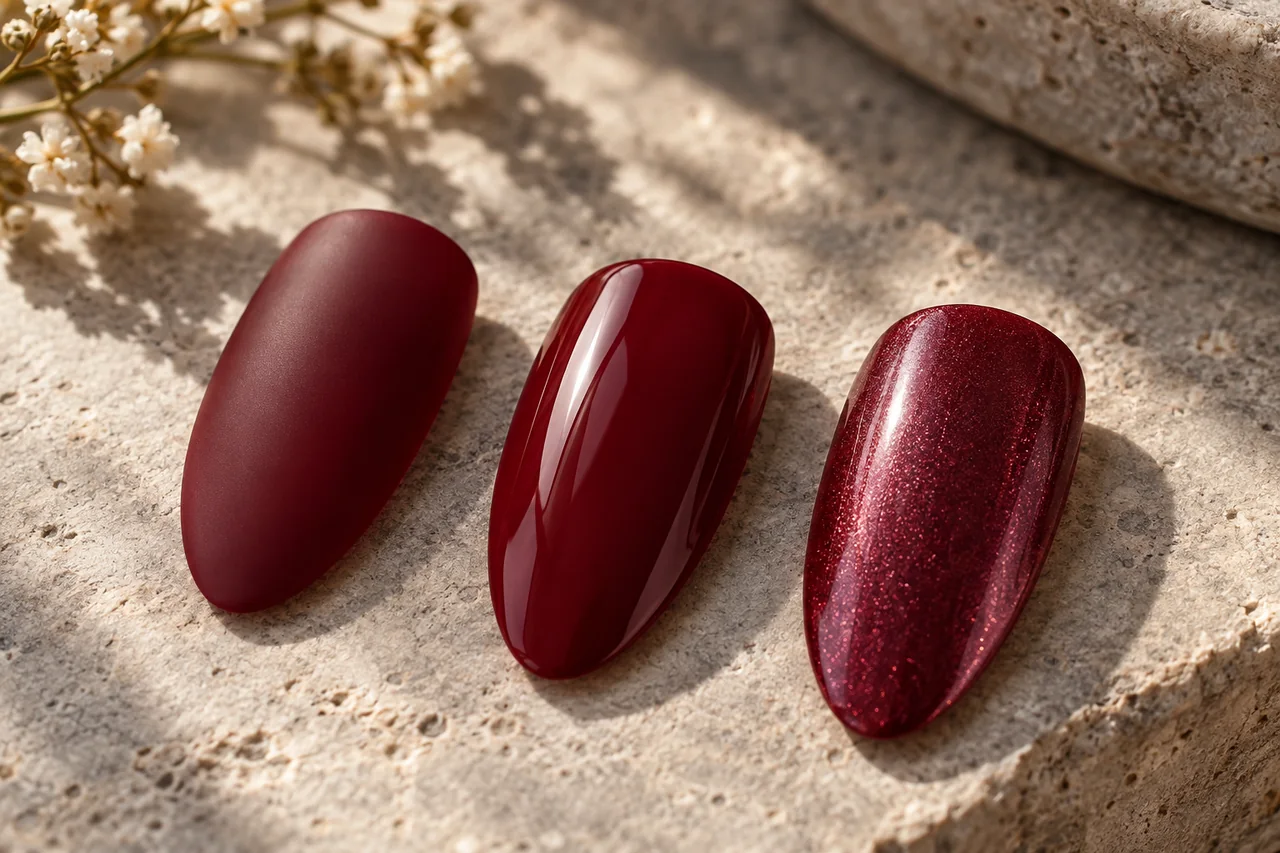
Finish changes how a colour catches light. A useful comparison separates that visual effect from the product system needed to create it.
Translate names into visible features
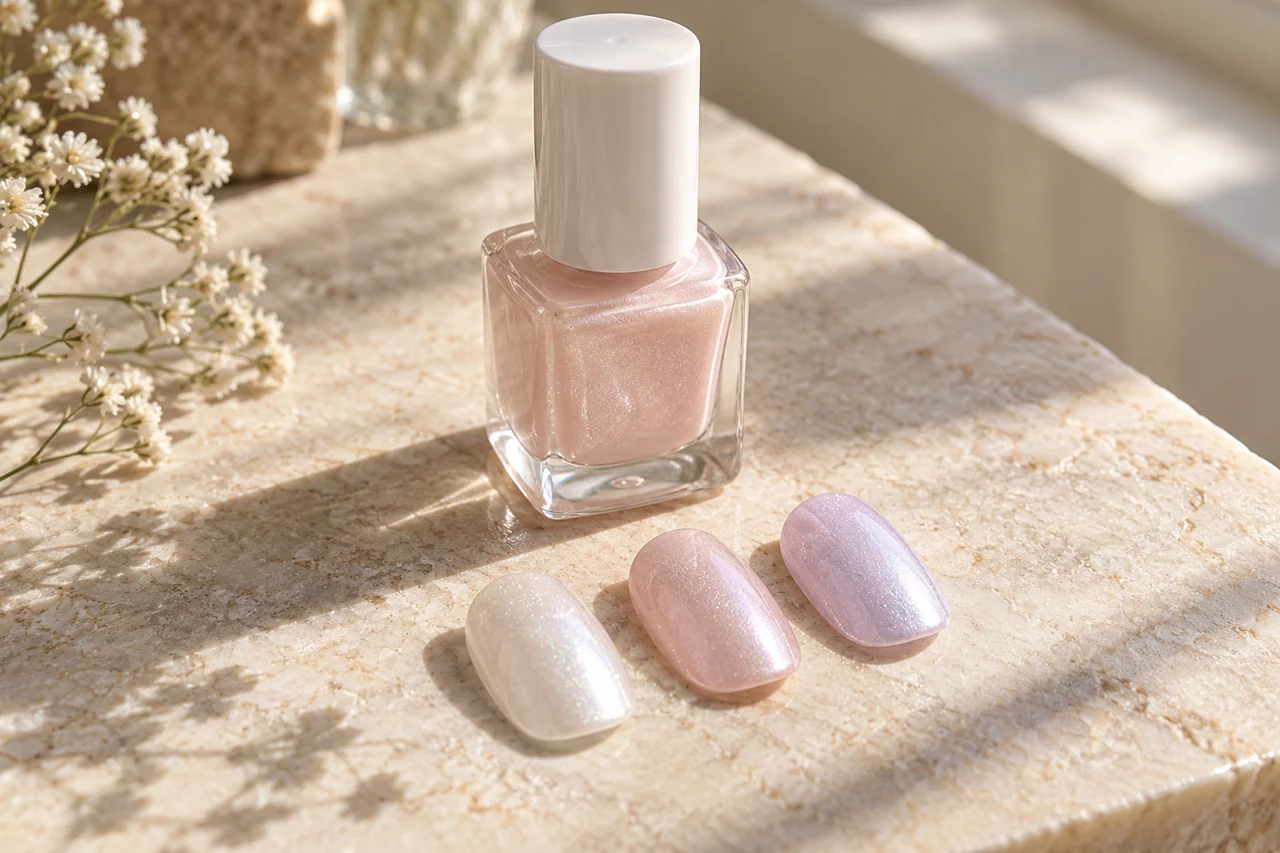
Glossy surfaces show clearer reflections; matte ones scatter light more softly. Shimmer may mean small light points or a changing soft glow, while metallic often suggests a more continuous reflection. Retailers use these words differently, so read the description and inspect a real sample if possible. “Gel-look” can describe appearance without explaining application. The label tells you how a product is used; your comparison tells you how it looks.
Make a fair comparison
Choose two or three similar shades in different finishes on the same background. A dark red gloss and a pale matte rose change colour and finish together. If making samples with ordinary polish, use only intended compatible products according to instructions. Do not abrade your nail surface merely to explore a matte effect; test the idea on a sample.
Observe three lighting situations
Look by a window, under your usual indoor light and at a slightly changed angle. A shimmer obvious beneath a bright lamp may look restrained at work. A dark glossy finish may define the outline through its reflection. Photograph alternatives together if possible; separate images with automatic exposure can become difficult to compare fairly.
Connect finish to the whole outfit
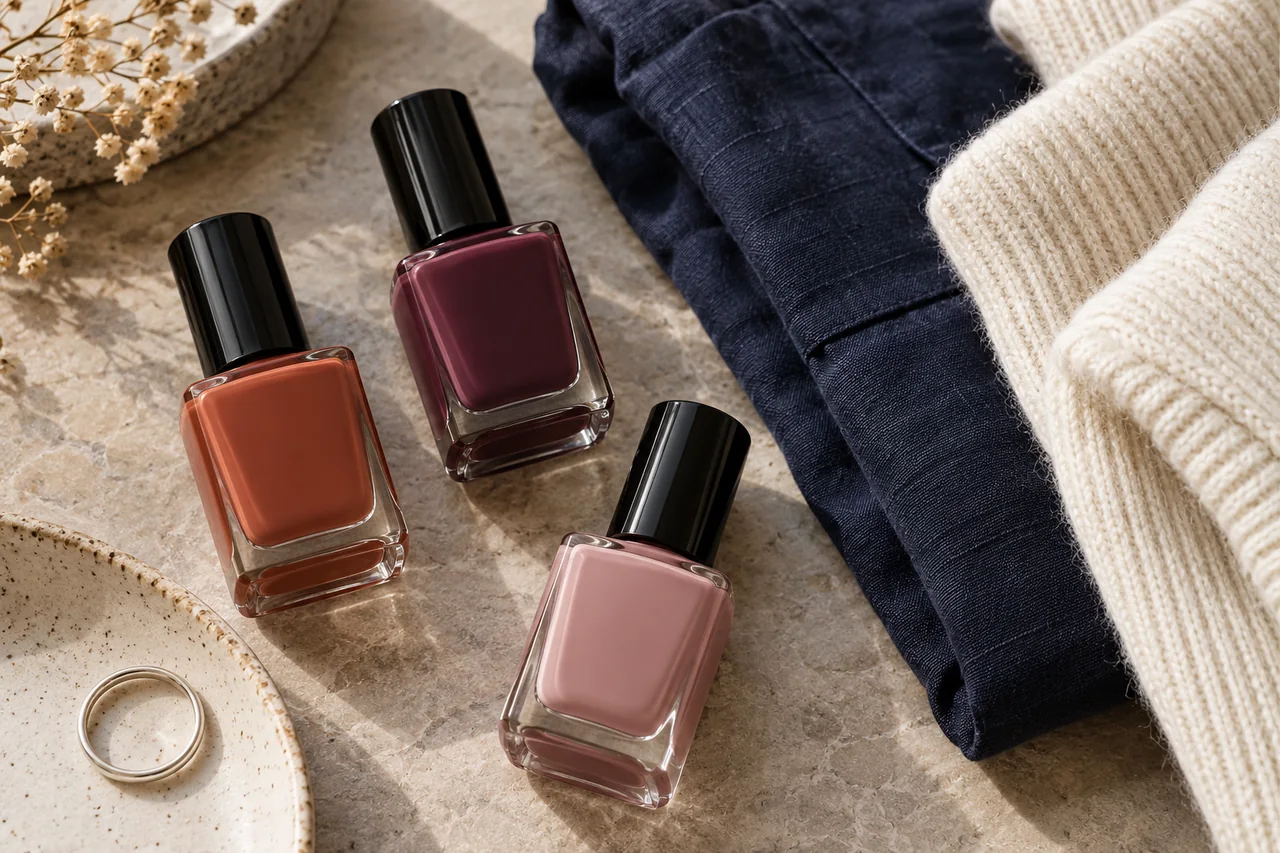
A quiet design can use a restrained colour or a restrained surface effect; both need not be subtle. A bright matte shade may feel graphic, while a sheer glossy one may feel soft. These are aesthetic interpretations, not rules. Compare samples beside knitwear, cotton or jewellery and decide whether to repeat or contrast textures. The whole outfit matters more than an impressive close-up.
Check the complete effort
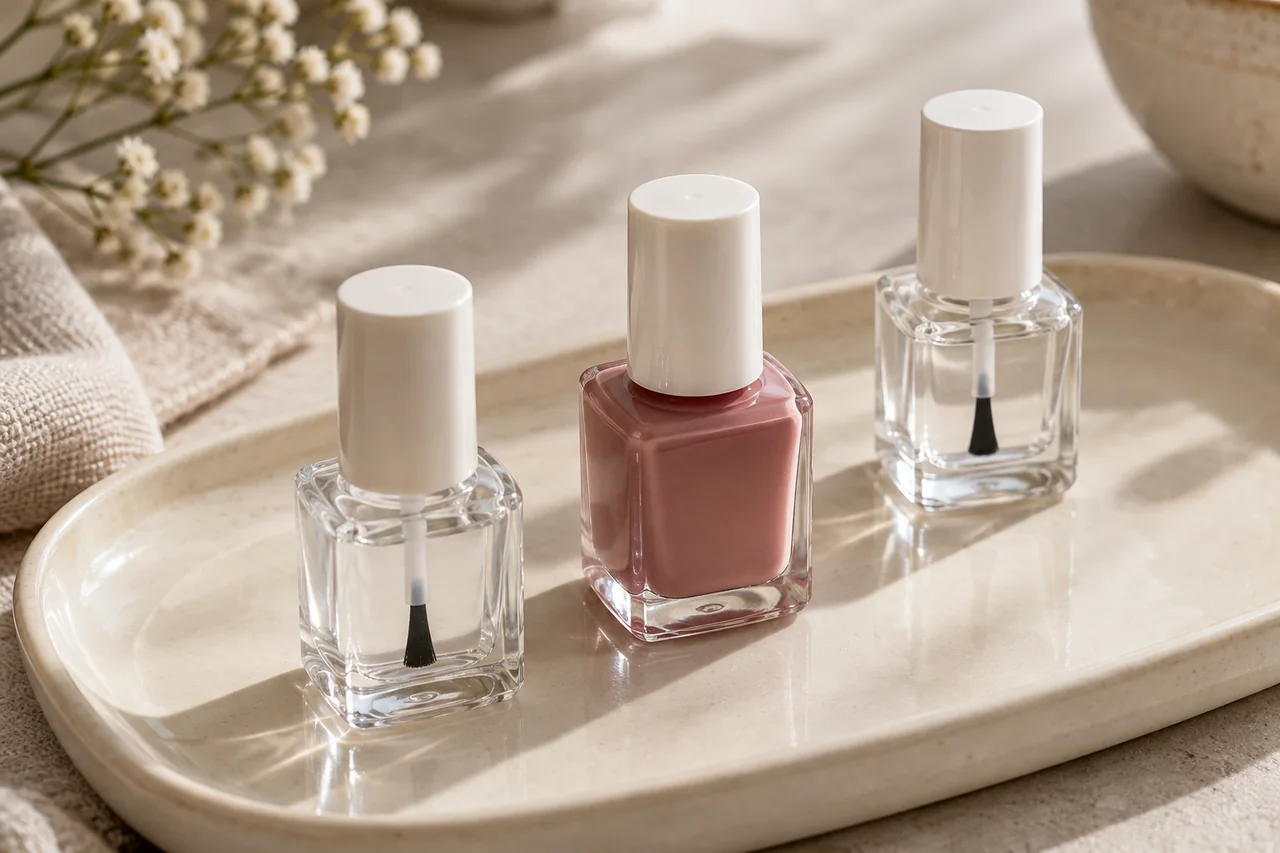
Some effects need one ordinary polish; others involve several products or a salon system. Ask about both application and removal before buying. A photograph does not show those costs. A soft pearly effect does not automatically require an elaborate enhancement, while a mirror-like reference may not be reproducible with existing polish. A similar effect can be a good choice; avoid improvised mixtures of unsuitable products.
Keep the decision specific
For example, among three muted berry samples, matte may look too quiet beside a coarse jumper and metallic more prominent than you want. Gloss may provide your preferred middle ground. That does not establish gloss as universally better, and an evening outfit may lead to another choice.
If dissatisfied later, identify whether the issue was really finish, opacity or colour under indoor light. Change one feature at a time. Record the product and layer sequence, but do not present personal wear experience as a scientific quality test or a universal durability guarantee.
Frequently asked questions
Does gel-look mean a gel product?
The advertising term alone is insufficient. Check the actual directions. Do not use a lamp or activator unless it explicitly belongs to the intended system.
Can any finish be changed with a top coat?
Not reliably. A top coat can change appearance, but compatibility and application depend on the products. Check instructions and a sample; another layer may alter a specialist effect.
Questions and experiences
Share a question or a useful experience about this topic. Every contribution is checked before publication. Comments may be written in different languages.
Loading reader contributions…
Opening the form sets a necessary session cookie. No email address is required. Publication is subject to moderation and is not guaranteed. For deletion requests: Contact