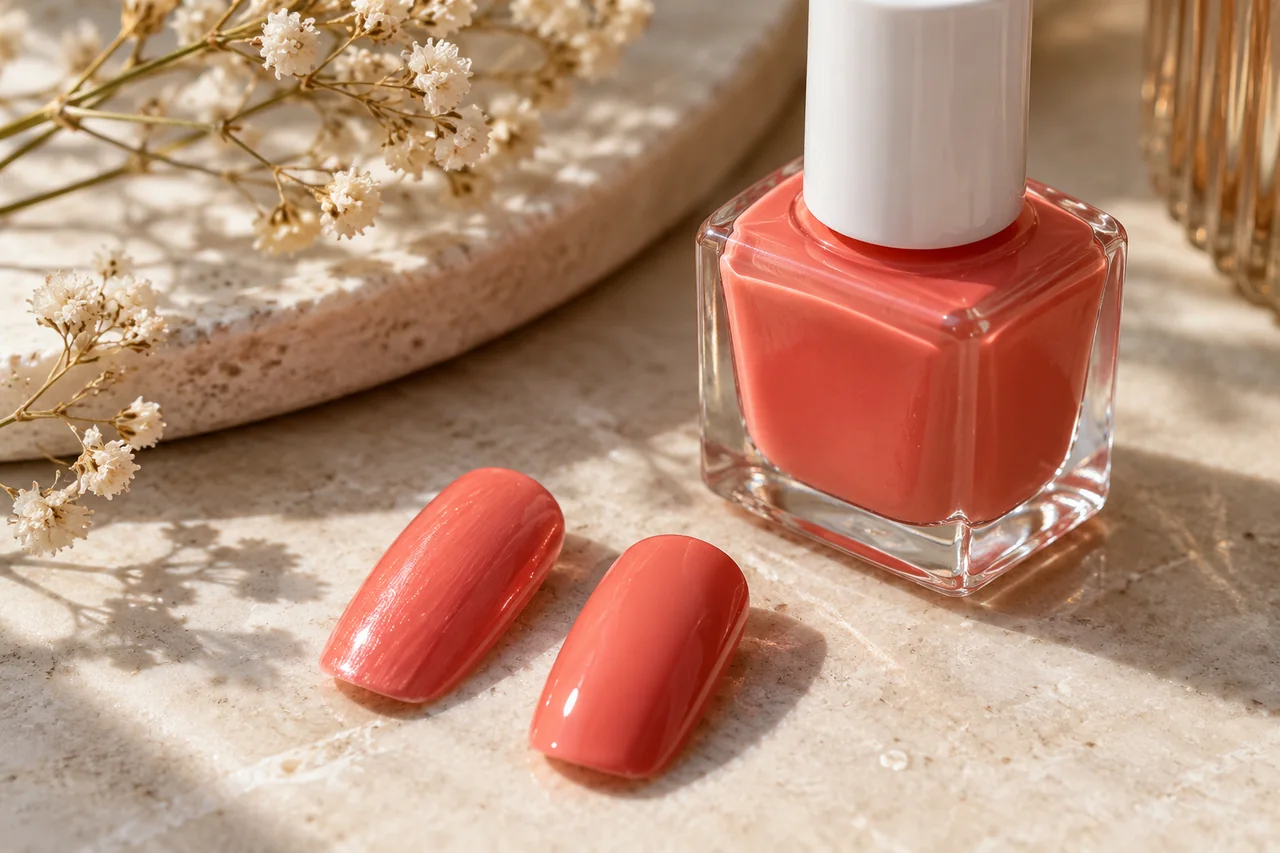
A streaky result can have several meanings. A precise description and one controlled change are more useful than assuming one internet trick explains every flaw.
Describe what you actually see
Uneven coverage, visible brush marks and a disrupted surface are different problems. Bubbles also differ from lint or dust. Inspect in ordinary light, not only extreme magnification. A small close-up variation may not bother you in everyday wear. Note whether all nails look similar or whether the less skilfully painted hand differs; that helps choose the next comparison.
Check the product directions
Read preparation, layer and top-coat instructions for this specific product and note any departures. Some colours are deliberately sheer, so a thin first layer is not necessarily faulty. Check usable-life and storage information and whether the bottle was closed properly. Do not add solvents from an arbitrary online recipe. Ask the manufacturer about unclear consistency instead of improvising dilution.
Observe the brush application
An overloaded brush may be difficult to control, while too little product may interrupt a smooth stroke. There is no universal drop count. Practise with the intended brush on a suitable loose sample. Aim for a steady, repeatable movement and avoid unnecessary correction as the surface begins drying. Record what actually improves handling with your product.
Keep the layer system consistent
Changing base, colour and top coat together makes improvement hard to interpret. Start with the recommended combination and keep the order consistent. Next time, adjust one plausible factor, such as the amount picked up by the brush. Allow the stated intervals. A thicker layer is not automatically the answer to streaks and changes the process and drying needs.
Note the surroundings
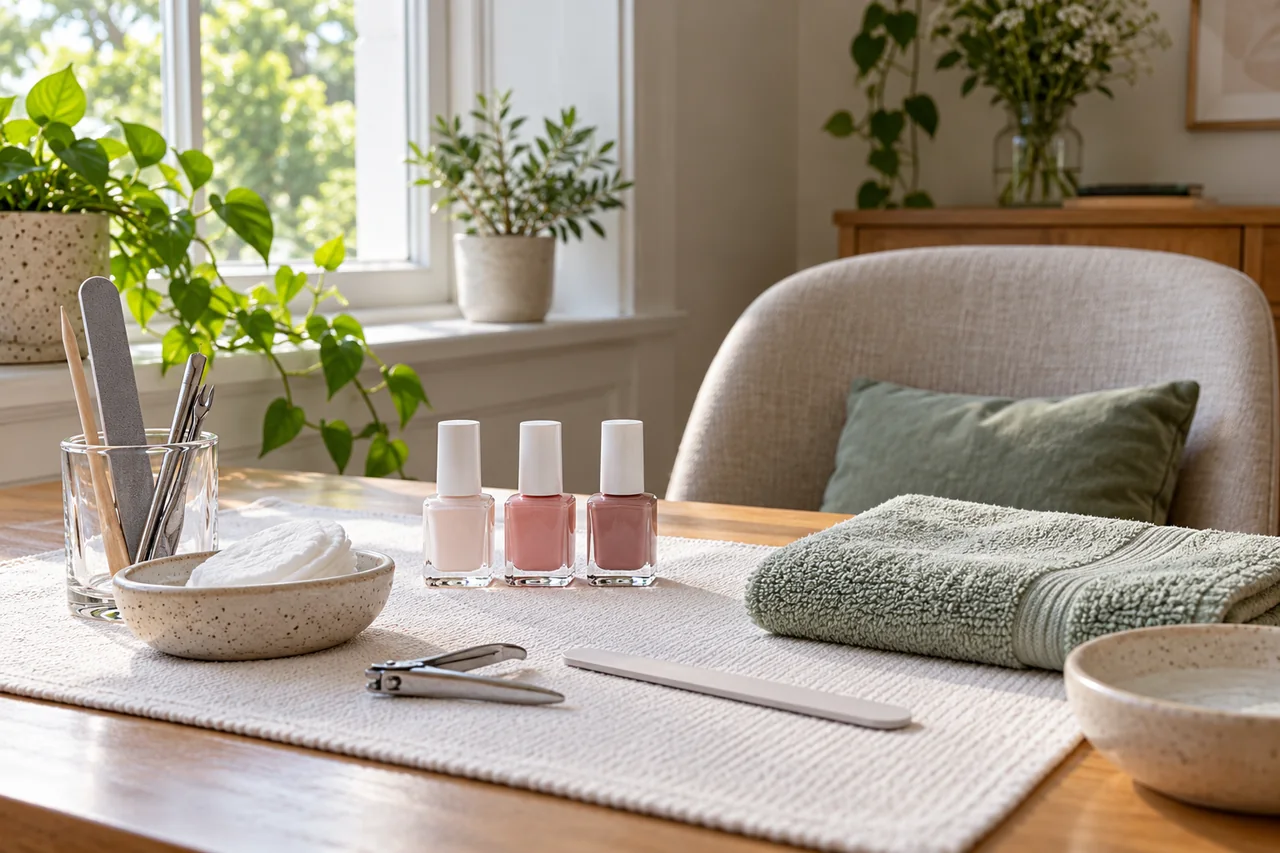
Record interruptions, repeated reaching and searching for items. Dust and loose fibres can complicate work; a clean calm space is enough without a laboratory setup. Keep open bottles away from direct heat and follow storage guidance. Before adopting shaking, cooling or other tutorial tricks, check the actual product directions. A method shown for one formula may not transfer to another.
Compare two labelled samples
Mark samples A and B on the back and use the same intended products. Change just one step on B, such as a more controlled colour application. Compare fully dried samples in the same light: is B more even or simply darker? No difference may mean the suspected step is not the main issue. Treat this as personal learning, not an independent product test.
If the problem persists despite following directions, record the product, shade, purchase date and combination for a factual manufacturer enquiry. Avoid buying multiple correction products immediately. The consistency may simply not suit your technique, and a small visual flaw may be acceptable for ordinary wear.
Frequently asked questions
Are bubbles always caused by shaking the bottle incorrectly?
No. One observation cannot establish a cause. Follow preparation guidance and review the layer sequence and application rather than assuming one common internet explanation fits every case.
Should I immediately apply streaky polish more thickly?
Not automatically. Check whether transparency is intended and which layer sequence is specified. A thicker film changes application and drying. A sample comparison with one change is more informative.
Questions and experiences
Share a question or a useful experience about this topic. Every contribution is checked before publication. Comments may be written in different languages.
Loading reader contributions…
Opening the form sets a necessary session cookie. No email address is required. Publication is subject to moderation and is not guaranteed. For deletion requests: Contact