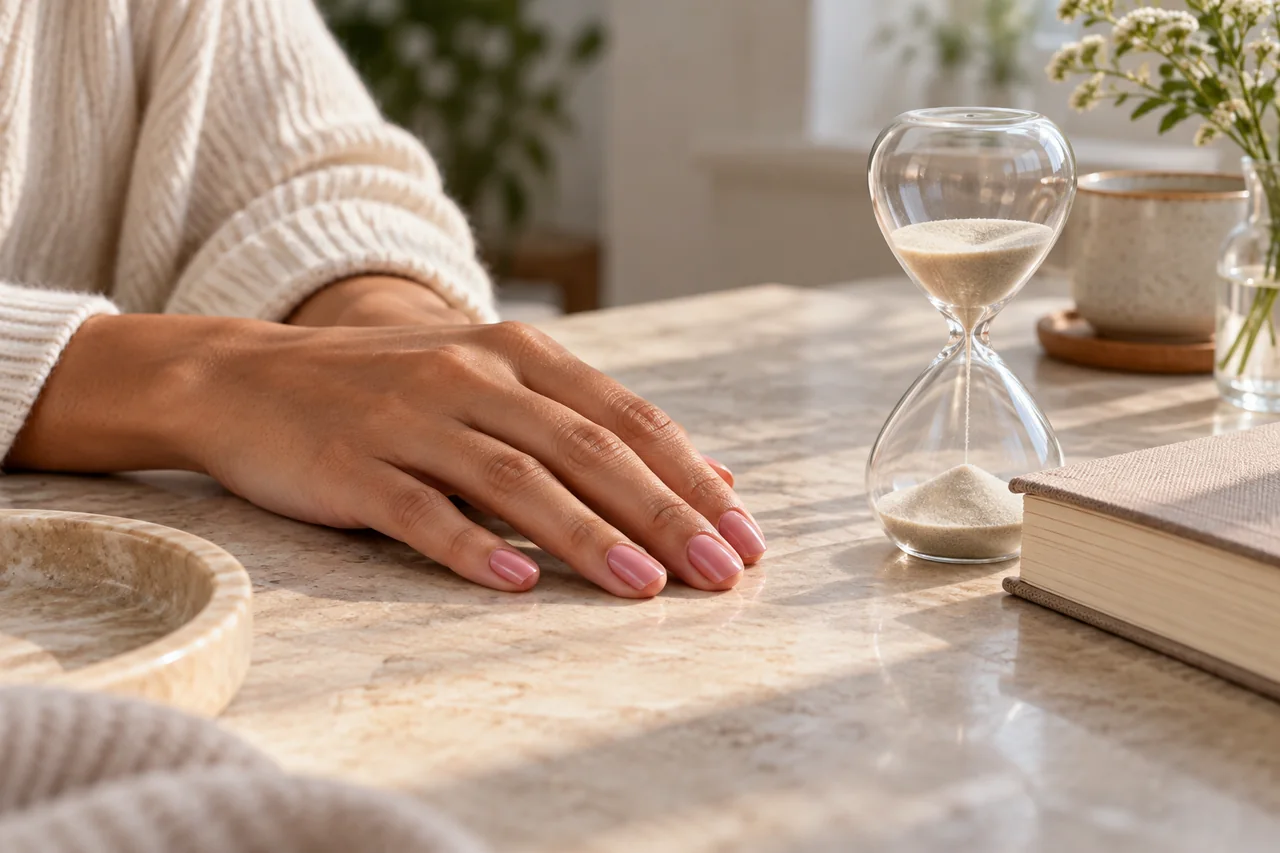
A touch-dry surface and a finish ready for everyday pressure are not the same thing. A realistic schedule is more useful than a universal drying-time claim.
Work backwards from the next activity
When will you need your hands normally again? Shoes, keys, a jacket and packing a bag may be the real timing problem before leaving home. Allow for the entire intended layer sequence. If there is not enough time, postpone or choose a simpler look. Ignoring instructions does not make a tight schedule more workable.
Read what a time claim refers to
An instruction may concern the interval before another layer rather than readiness for every activity. Read the wording, required base and finish carefully. Adding a different top product changes the combination. If unclear, ask the manufacturer with the product line, shade and intended sequence rather than relying on a broad internet time estimate.
Keep application comparable
Personal timing notes are more useful when the routine stays similar. A much heavier application changes the situation. Follow directions and aim for a controlled even layer; “thin” does not mean a brush so dry that repeated corrections become necessary. Consider whether technique, rather than another drying shortcut, is the useful next change.
Prepare a quiet activity
Start a podcast or programme before polishing, set your chair comfortably and clear unnecessary items. A new craft activity creates more hand movements than listening. Avoid repeatedly pressing the surface to check progress; that can create the very marks you are watching for. Use product guidance and your own previous observations.
Be cautious about improvised shortcuts
Cold-water baths, hairdryers or an arbitrary oil shown in a video are not universal solutions for your polish. Check whether the manufacturer intends the extra step. The US Food and Drug Administration warns about nail products around heat or open flames, so improvised heating does not belong in the plan. A specifically intended drying aid is different from a homemade shortcut, but still has instructions and limits.
Keep useful personal notes
Record date, combination, intended layer count and planned quiet time. Note any marks from ordinary activities without deliberately stress-testing the surface. “Reached into a tight bag too early” suggests a larger personal buffer, not a universal number of minutes. Compare several similar applications before calling the routine reliable.
If time is consistently short, choose another time or a simpler design, such as a single accent. Keeping nails plain between selected occasions is also a deliberate choice. Your routine should fit your life rather than becoming a permanently rushed obligation.
Frequently asked questions
Can I use the waiting time from another product?
Not reliably. Formulas and layer sequences vary. Follow your own combination’s guidance and add a personal buffer; someone else’s experience is not a guarantee.
How should I check whether polish is dry?
Avoid constantly pressing the fresh surface. Follow the planned process and allow enough time before normal activities. Use accidental marks as feedback for next time, not a reason to conduct pressure tests.
Questions and experiences
Share a question or a useful experience about this topic. Every contribution is checked before publication. Comments may be written in different languages.
Loading reader contributions…
Opening the form sets a necessary session cookie. No email address is required. Publication is subject to moderation and is not guaranteed. For deletion requests: Contact