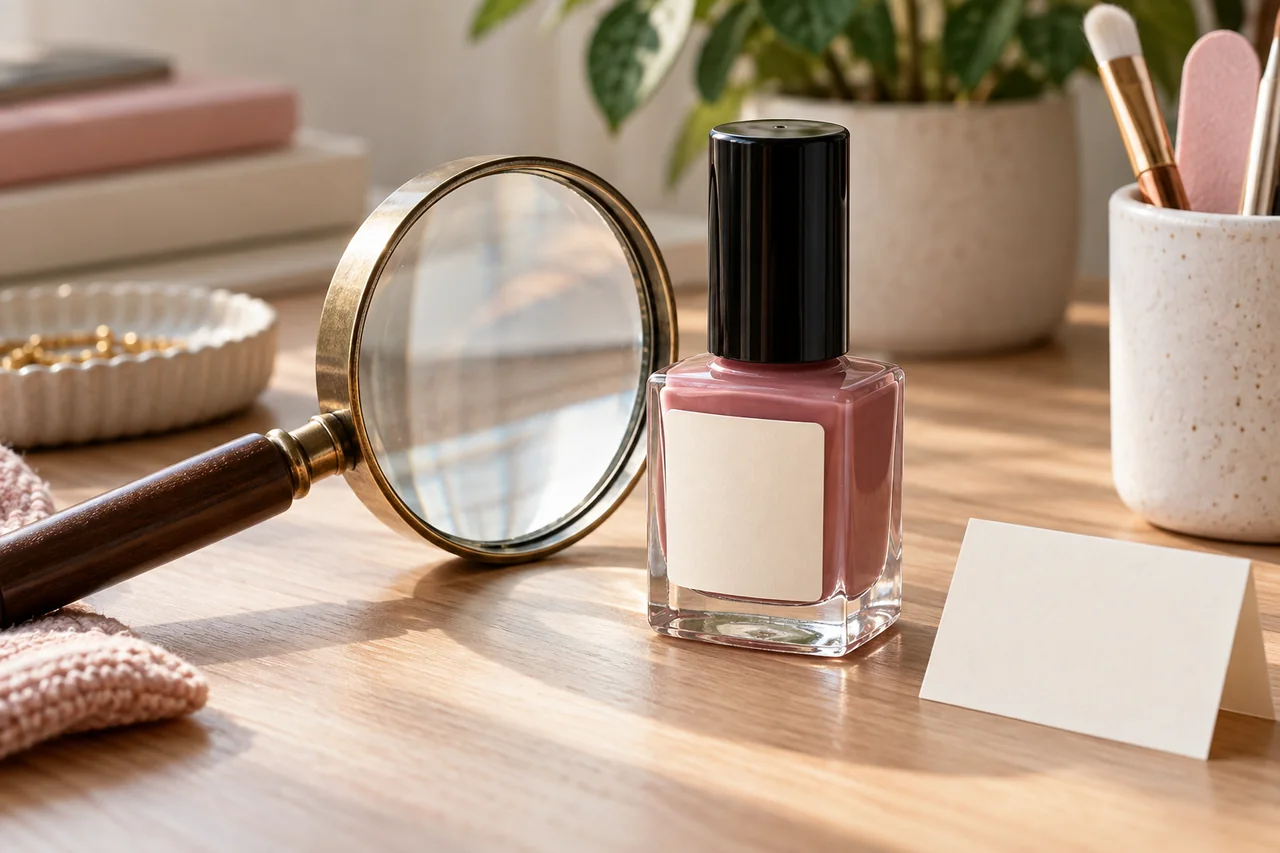
A product’s front label and attractive results are only part of the information needed. Read the intended process and warnings before committing to it.
Identify the actual product
Read the full name and purpose: ordinary polish, light-cured product, remover or another accessory. “Gel” can mean different things in a line name and an advertising description. Record the exact name, not just the colour. Any need for a lamp, activator or extra components should be clear before purchase, not discovered while unpacking.
Find the relevant EU label information
Article 19 of the EU Cosmetics Regulation includes requirements concerning the responsible person and address, contents, durability information, precautions, batch, function and ingredients, with details and exceptions in the legislation. Practically, you need to locate the information and connect it to a specific product. A front-only advertisement may be insufficient; request a readable packaging photograph. This check supports informed use, not a complete legal compliance assessment.
Treat warnings as decisions
Professional-use wording is not simply praise. EU Regulation 2020/1682 restricts HEMA and Di-HEMA Trimethylhexyl Dicarbamate in nail products to professional use and requires an allergy warning. Such labelling is not an invitation to try the product at home after a short video. Ask for an alternative suited to your intended use. Keep the complete packaging or a readable private photograph rather than relying on shortened recollection.
Record durability and opening information
Keep the stated durability information with the bottle. A period-after-opening symbol refers to opening, not your first completed manicure. Record that date. A general claim that all polish lasts exactly two years cannot replace product-specific guidance. An unusual change or damaged container is not automatically harmless because of a date. Ask the manufacturer with the name and batch when uncertain.
Use ingredients as information, not diagnosis
An ingredient list helps identify a product and discuss medically established allergies. An unfamiliar word alone does not diagnose a danger or personal reaction. Equally, absence of one advertised ingredient does not establish tolerance of the entire formula. After symptoms, the full label is more useful for assessment than a shopping-description summary or a list of guesses.
Check an online offer before buying
Look for the exact name, intended application, complete warnings, identifiable supplier and understandable product details. Ask specifically about omissions; “everyone uses it” is not an answer. Neither a very low nor a high price proves adequate information. If details remain unclear, choose an understandable alternative.
Keep name, shade, batch, purchase date, supplier, opening date and directions in a private record. This supports repurchasing, enquiries and recognising changes to a product line. Share only necessary details when contacting a manufacturer. The goal is knowing what you own, how it is intended to be used and which question remains unresolved.
Frequently asked questions
Does HEMA-free mean allergy-free?
No. It refers to one substance, not personal tolerance of the whole product. After previous reactions, seek assessment rather than testing a succession of free-from products yourself.
Can I transfer the contents into another container?
Original packaging with its information makes a private collection easier to identify. An unlabelled container separates the product from its warnings and batch. Identity and intended use should remain clear, including while travelling.
Questions and experiences
Share a question or a useful experience about this topic. Every contribution is checked before publication. Comments may be written in different languages.
Loading reader contributions…
Opening the form sets a necessary session cookie. No email address is required. Publication is subject to moderation and is not guaranteed. For deletion requests: Contact