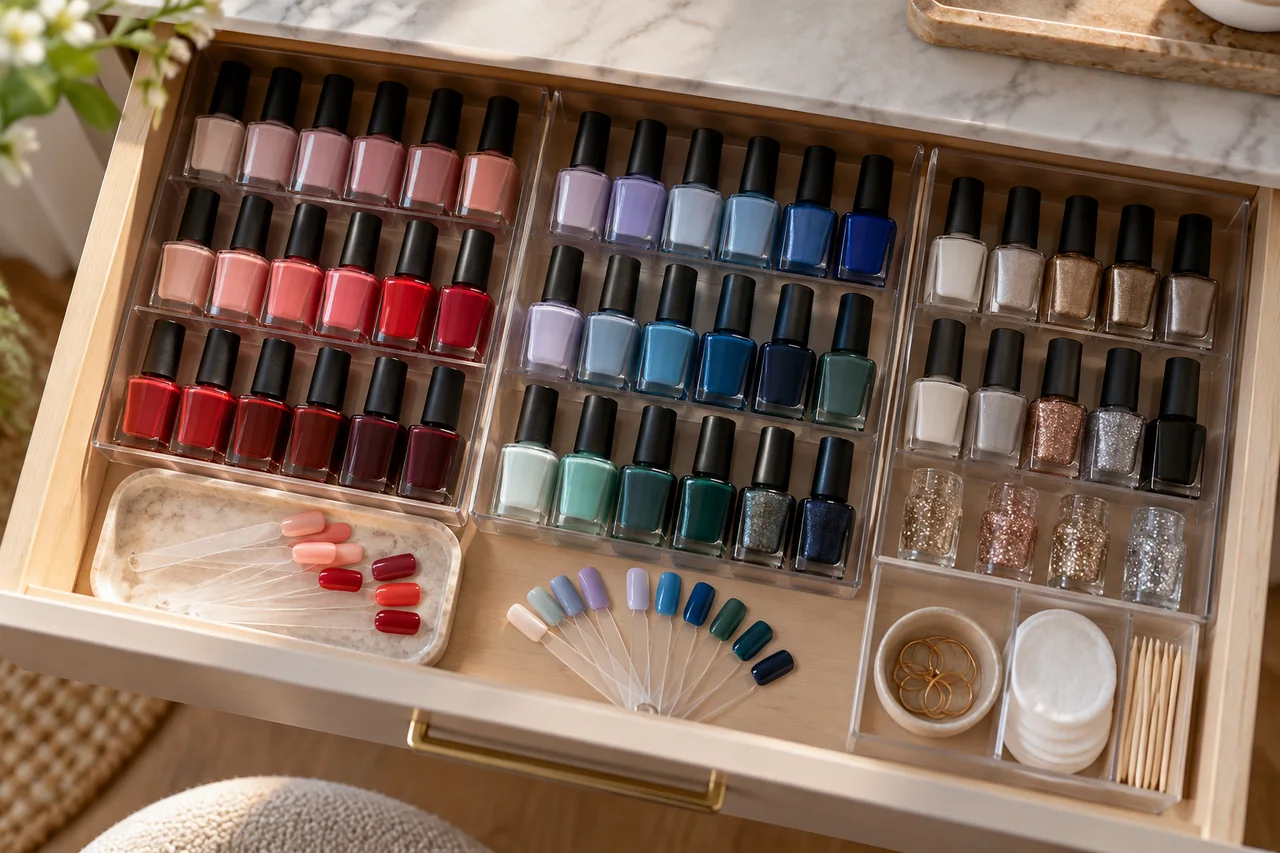
A useful collection starts with knowing what you own, how it is intended to be used and which colours you actually wear. A larger storage box is not the first requirement.
Record without judging the collection
List product name, shade number, system and accessories. Mark missing information as unknown rather than guessing. Separate products with unclear directions from regularly used ones and avoid trying them while sorting. A large count is neither a quality mark nor a reason for self-criticism. A paper list is enough if it helps you find and understand the products.
Separate systems first
Keep ordinary colour polish, its bases and finishes, and other systems clearly distinguished by the actual instructions. A front-label effect name may not explain the process. Within a known system, choose one main organising rule: most-used shades at the front, occasion colours together or colour families. Keep other details in the inventory instead of creating many conflicting categories.
Make comparable samples
Use sample surfaces suitable for the product and follow its directions. Number samples to match bottles and record layer count and any base or top product. View similar colours together in the same light to distinguish hue, opacity and finish. A sample shows that application on that surface, not a guaranteed effect on every nail. It is a selection aid, not an objectively perfect shade.
Preserve readable information
Record opening dates where known; unknown is more honest than inventing an old date. Keep readable label photographs and instructions without treating the list as a replacement for packaging. Do not assume a universal usable life or decant for a uniform appearance. A sample or unchanged external appearance alone cannot establish that a product remains suitable. Ask the manufacturer about unclear information.
Choose storage and purchases deliberately
Follow storage warnings, keeping bottles stable and frequently used products accessible. Travel with a small selection rather than the whole collection. Do not improvise household mixtures for dried or unusual products; consult intended options and local collection guidance for disposal.
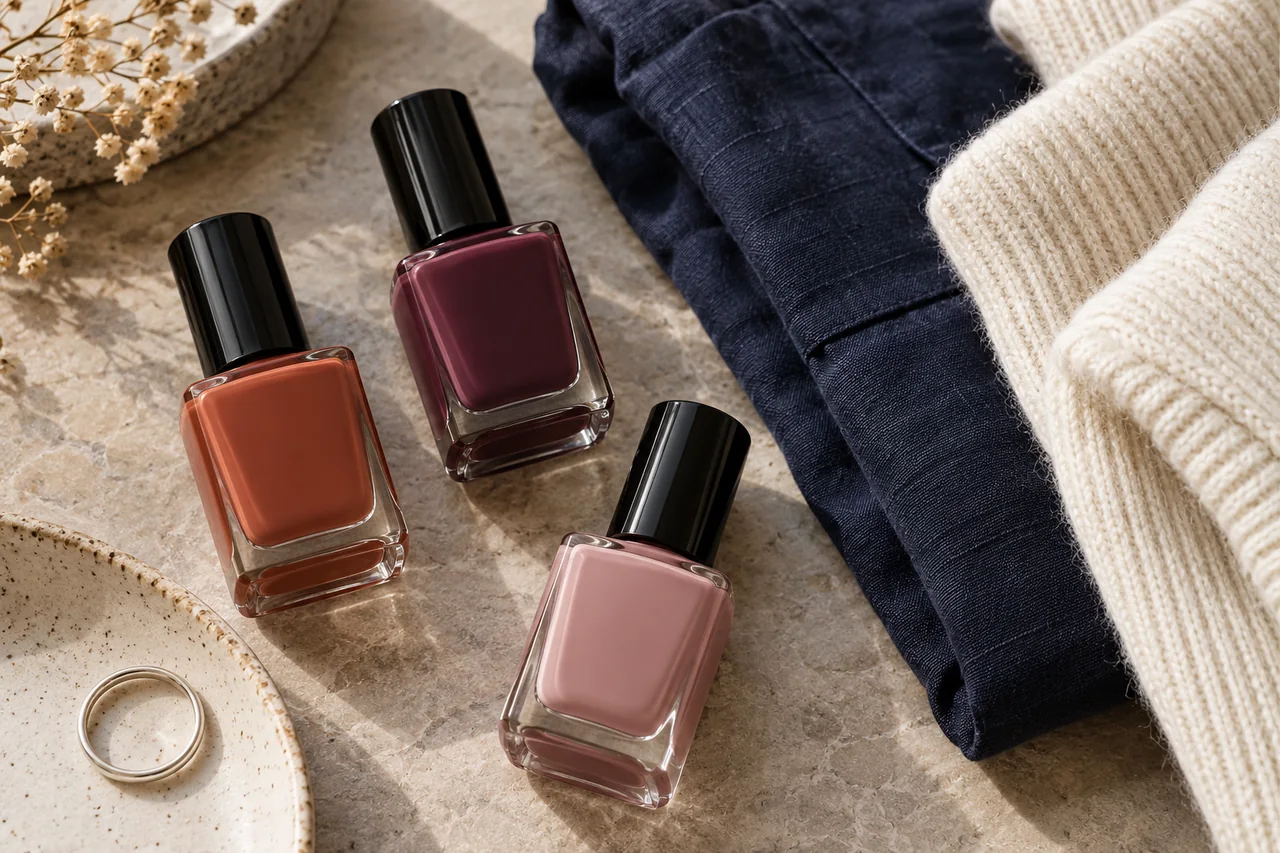
Before buying, name the gap: an opaque dark colour for an outfit or a sheer base for a design. Compare with your samples. Similar colours are not automatically a mistake if both are used deliberately. Keep a wishlist noting the expected difference; if you can no longer explain it later, the purchase may be unnecessary.
Maintain a short practical record
Useful fields include your own ID, full name and shade, system, sample layers, opening information and usage category. Update after purchases, empty bottles or deliberate removal from the collection. For a limited period, tally use if helpful for organising, not as a competition. Keep unresolved items apart with a specific next question so every tidy-up does not postpone the same uncertainty.
Frequently asked questions
Must I buy a sample stick for every colour?
No. Start with shades you often confuse or compare. Suitable comparable conditions and clear labels matter more than complete coverage at any cost.
Is seasonal sorting useful?
It can be if that is how you choose colours. Keep other shades findable and do not label them unsuitable. A colour can be worn regardless of season or trend.
Questions and experiences
Share a question or a useful experience about this topic. Every contribution is checked before publication. Comments may be written in different languages.
Loading reader contributions…
Opening the form sets a necessary session cookie. No email address is required. Publication is subject to moderation and is not guaranteed. For deletion requests: Contact