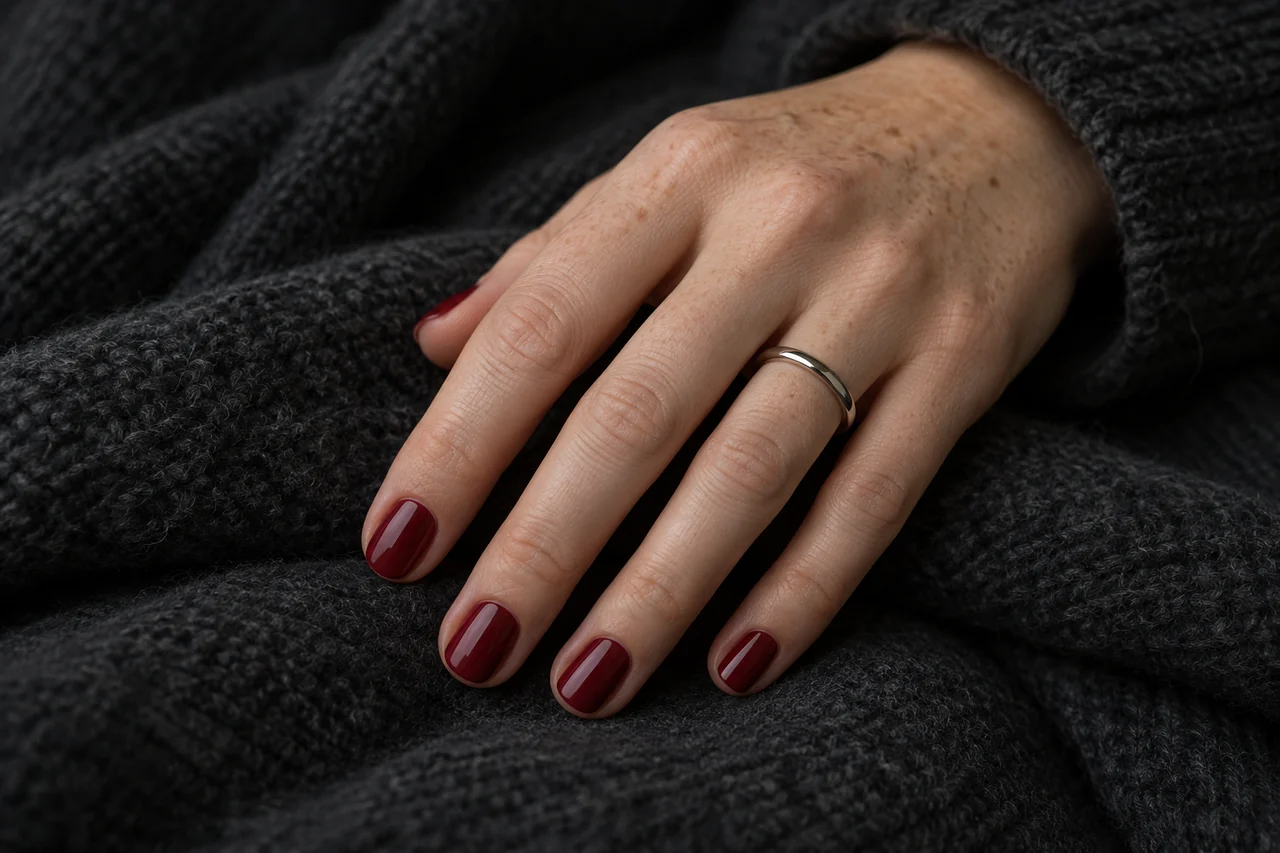
Dark polish can be a deliberate choice on short or long nails. Berry, blue and near-black brown may look similar at a distance but different close up. Choose through your own wardrobe and preferences, not rules about permitted colours for particular hands.
Look at the actual dark colour
Compare two or three existing samples in even light, noting red, blue, green or brown character, then step back. If two look almost identical in ordinary use, different names do not justify buying both again. Decide whether you want recognisable colour or a near-black effect. That determines which subtle differences matter.
Use your existing outline
Fill a sketch of your current nail shape with dark colour. A short round or softly square outline can remain unchanged; dark polish does not require length. If the area feels too strong, compare a sheerer effect or a limited accent before reshaping. Comfortable everyday length remains a useful foundation at any colour intensity.
Treat contour as a design frame
Dark colour makes the painted outline visible. Decide between a plain block and an intentionally interrupted surface. For home practice, use suitable ordinary polish as directed and a manageable process. Judge the whole hand from normal distance rather than demanding magnified precision. A fresh controlled attempt may be better than adding decoration to conceal an unwanted area.
Compare finishes separately
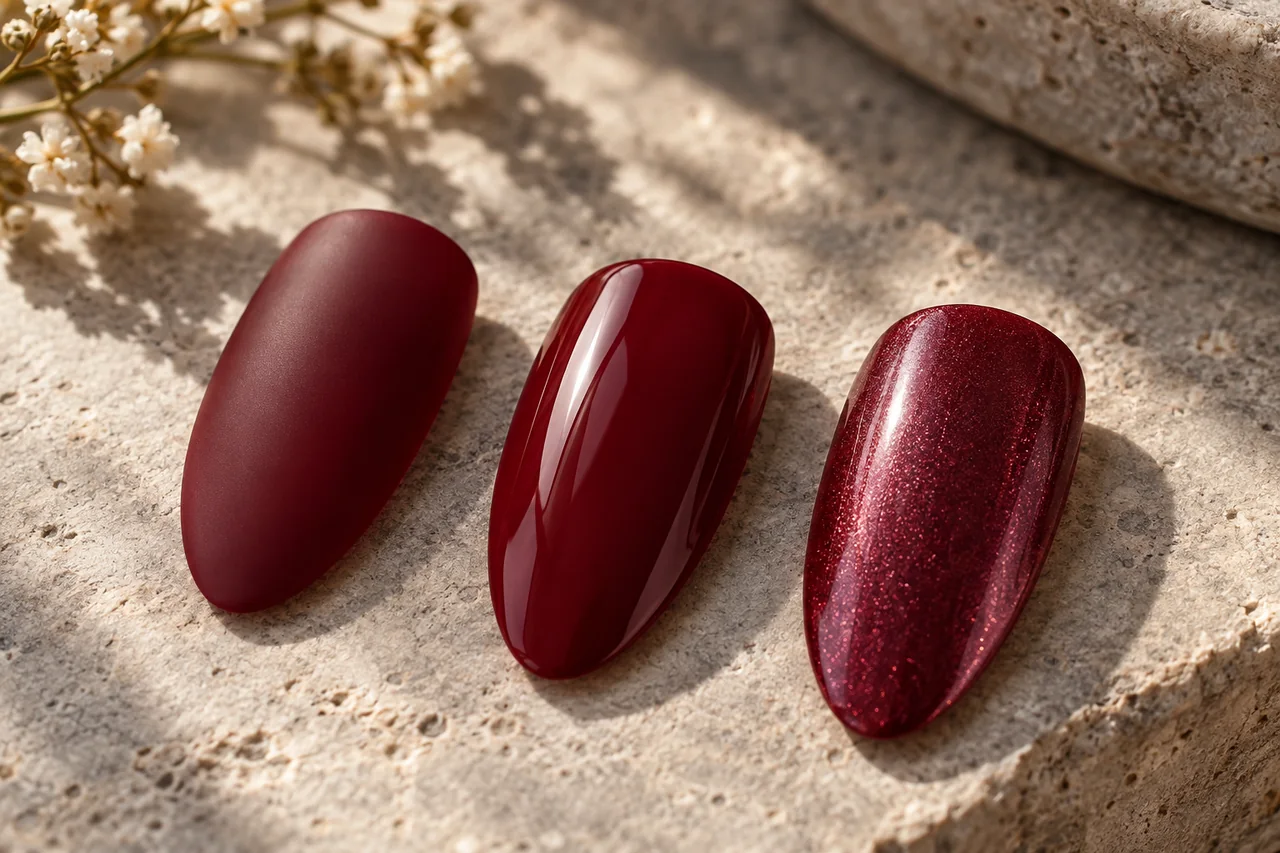
Similar dark shades can look different in gloss, matte or fine shimmer. Keep hue close for the comparison. Shimmer adds light points; a quieter finish leaves the outline more prominent. Neither is inherently higher quality or more practical. Check the products and combinations intended for the chosen effect. One dark accent can also limit the overall intensity.
Compare real clothing and purposeful details
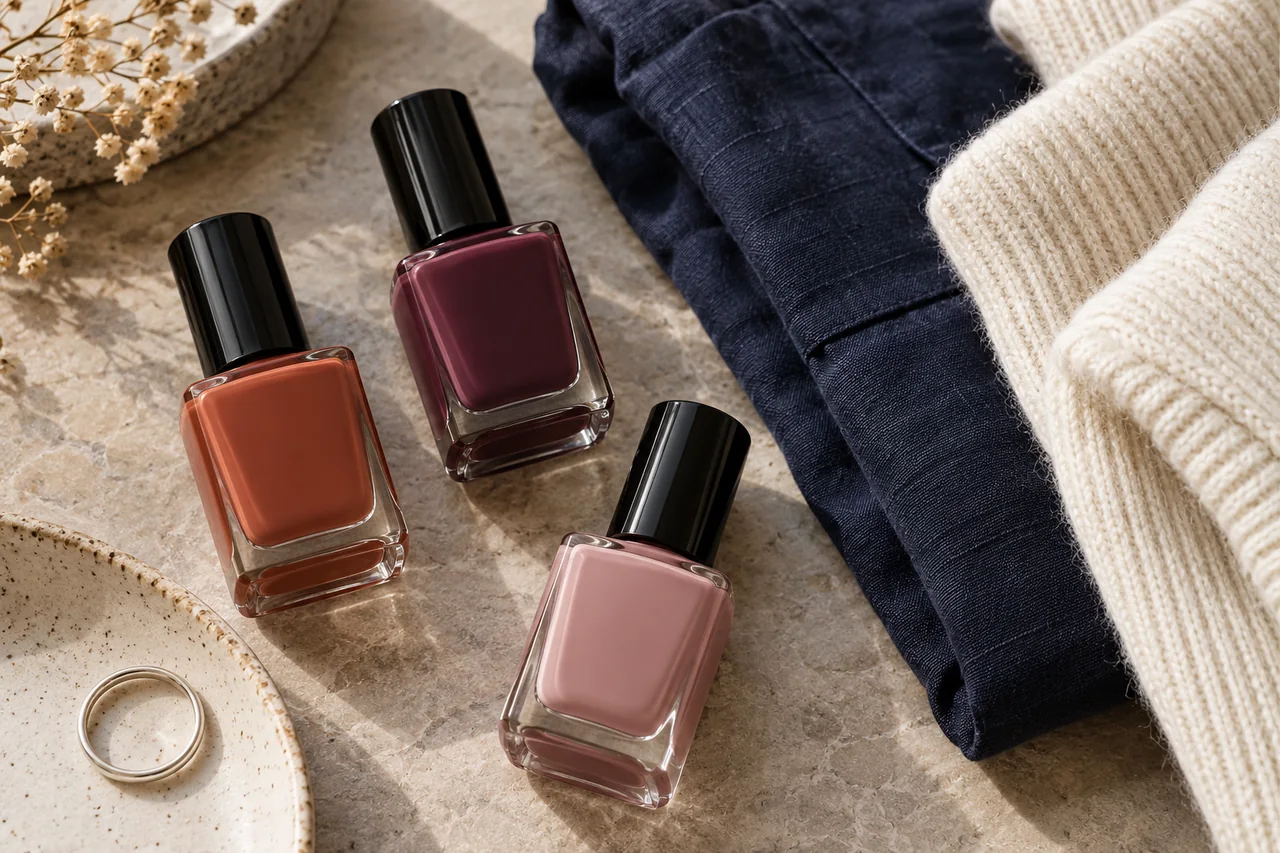
Look beside a light and dark top with normal jewellery. Dark nails may act as a strong accent against pale cloth or connect more with a dark outfit. Matching lipstick or shoes is optional.
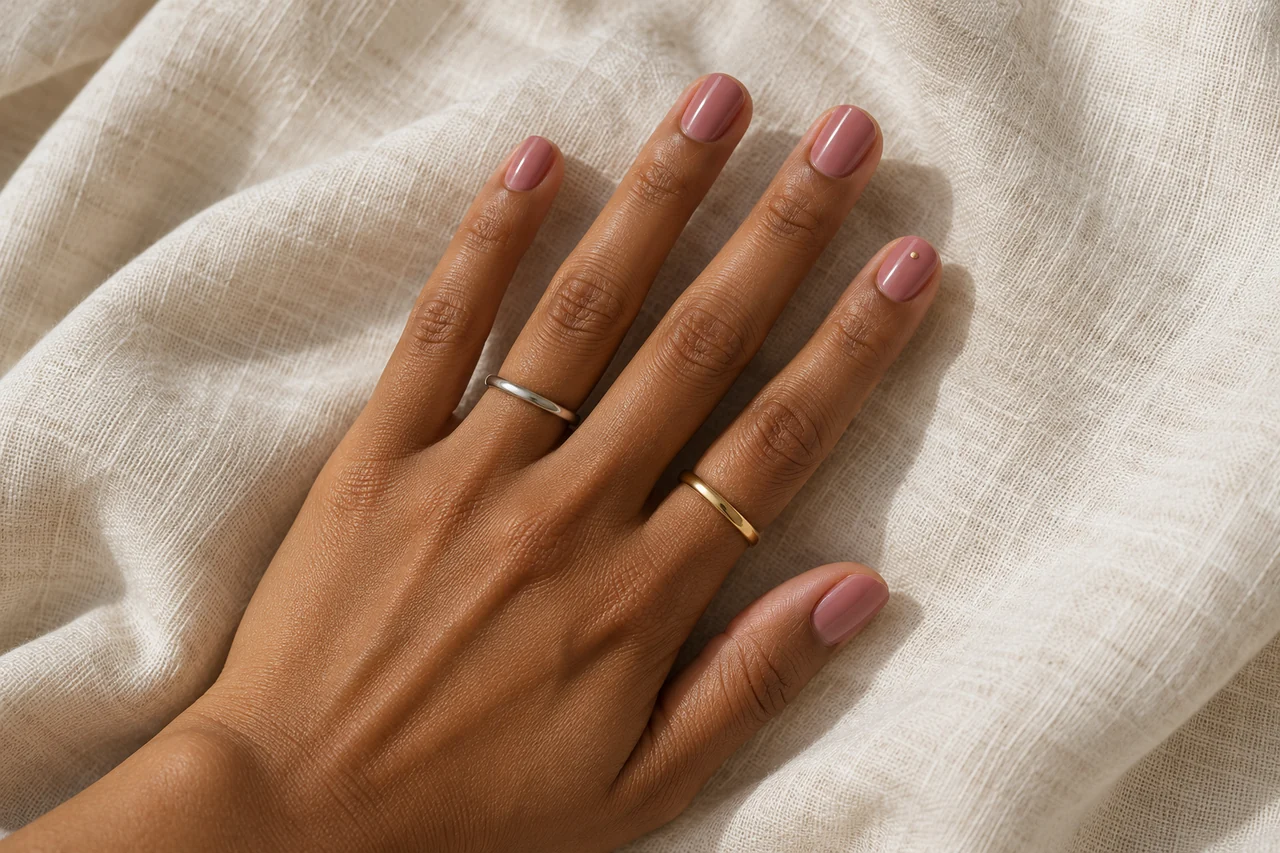
If adding a detail, give it one job: a pale line divides the area, a dot adds a focus, or shimmer changes the reflection. Compare one addition with plain colour. Preferring the plain version is a complete decision, not a missed opportunity.
Record the practical result
After wearing, ask whether you saw the colour character often enough, enjoyed the finish and want to keep the shape. If a dark red mostly appeared black, decide whether that was right or whether you want a clearer red next time. Change one factor rather than dismissing all dark nails as severe or collecting many shades that serve the same role.
Frequently asked questions
Can I wear dark polish on very short nails?
Yes. Compare it on your existing shape and choose by preference. Pale colour or artificial length is not required for a coherent manicure.
Why can different dark shades appear alike?
Lower light and greater viewing distance can make subtle differences less visible. Check samples in daylight and your usual surroundings.
Must dark polish match lipstick?
No. Repetition or deliberate contrast can both work. View the combination with your clothes rather than assuming a fixed rule.
Questions and experiences
Share a question or a useful experience about this topic. Every contribution is checked before publication. Comments may be written in different languages.
Loading reader contributions…
Opening the form sets a necessary session cookie. No email address is required. Publication is subject to moderation and is not guaranteed. For deletion requests: Contact