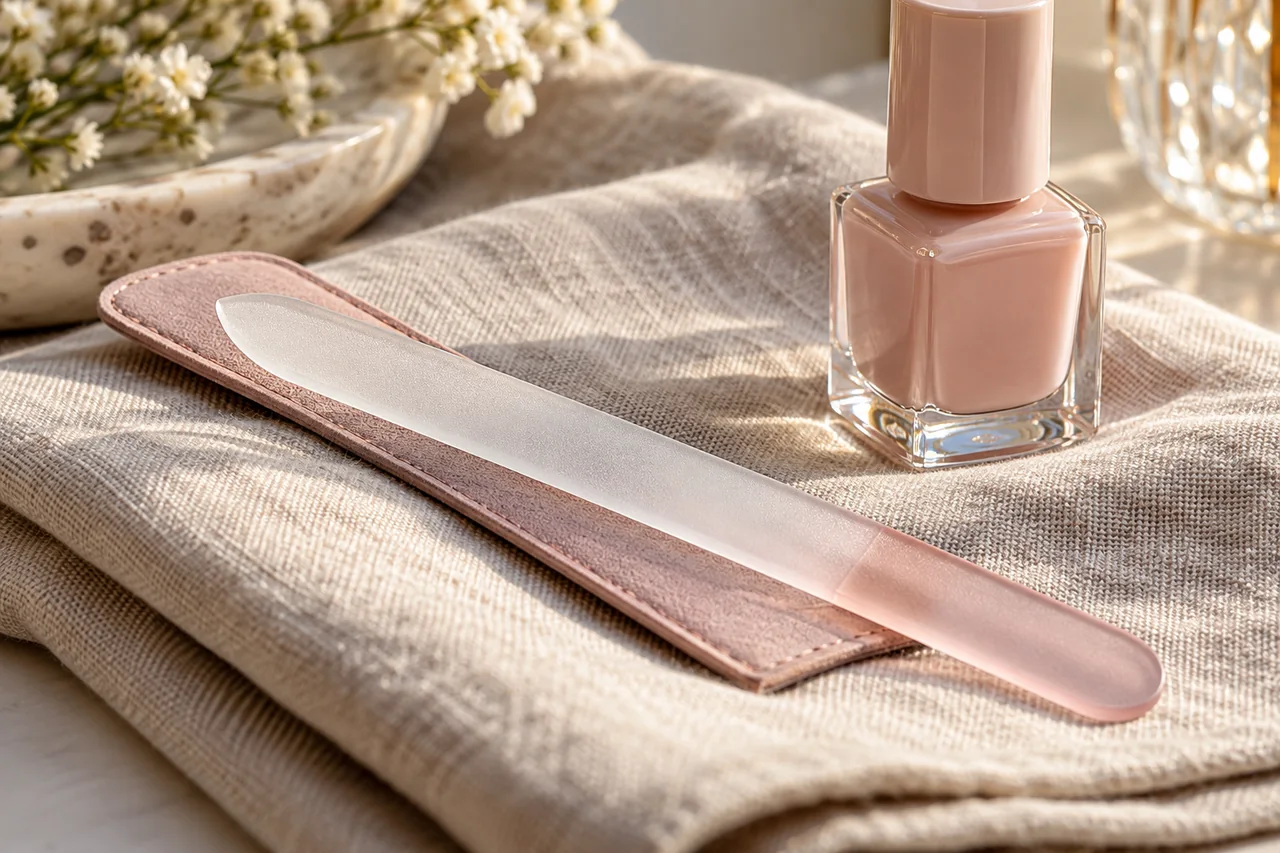
Decide whether you want to smooth one rough edge or change the overall outline before reaching for a file. A small correction need not become a major reshaping.
Separate the goal from the starting point
Inspect the nails calmly. A rough corner is a different task from changing every nail’s shape. Consider a comfortable everyday length and, if helpful, keep a private starting photograph. Long pointed references require a different starting length from a short natural nail. Ask whether the proposed outline is realistic rather than copying its name alone.
Choose an appropriate intact tool
Use a file explicitly intended for natural nails and your task. Material, cleaning and use instructions matter more than a universal grit number from a tutorial. Coarse enhancement tools do not automatically belong in a simple home routine. Check the surface and grip; damage is not an advantage because it removes material quickly. One suitable file may cover the task without a collection.
Use small movements and pauses
The American Academy of Dermatology recommends one filing direction when smoothing rough edges rather than repeatedly sawing back and forth. Work conservatively and look after a few movements. Avoid filing from memory while watching something else. Aim for an outline you like, not the narrowest possible silhouette. Stop if pressure or pain occurs. Shaping the edge does not require thinning a healthy nail surface.
Compare at normal distance
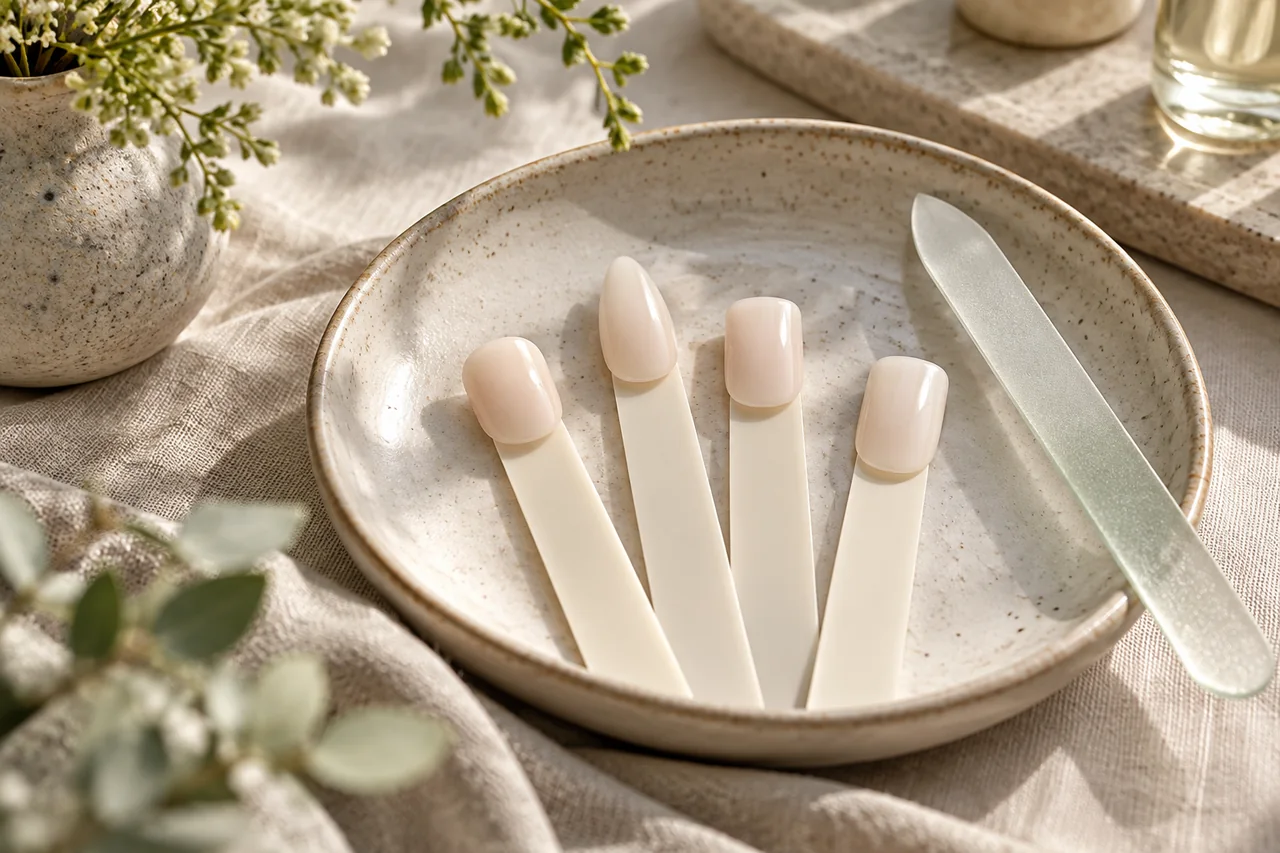
Rest both hands together and compare the overall intention: round, straighter or softly square. Natural differences need not disappear through further filing. If one tiny angle becomes absorbing, pause or look from conversational distance. A shared colour can unite the later design without perfectly identical outlines.
Do not use sides or surface as shortcuts
A shape does not become suitable by filing deeply at the sides or thinning the nail plate. If more free length is needed, adjust the design instead. A restrained curve may give a short oval impression. Ask a professional to explain a suitable shape when uncertain. A digital reference does not show the original nail or all treatment steps.
Review comfort and care for the file
Try ordinary activities without deliberately pulling or stressing the nails. Note whether a particular corner catches fabric or interferes with typing. Recurrent issues or changes deserve advice rather than progressively stronger filing or an automatic purchase of artificial reinforcement.
Clean and store the file according to manufacturer guidance, using a case if appropriate. Keep a plain-language note of the comfortable shape. You do not need to master every technique; a clear request and limits help a future salon appointment.
Frequently asked questions
Must I buff the surface before applying polish?
Not as a universal rule. This article concerns the free edge, not thinning the nail plate. Follow product-specific preparation and avoid unnecessary abrasion. Seek advice for unclear or problematic nails.
Which grit is right for everyone?
One universal number oversimplifies different tools and nails. Use an explicitly suitable file and its directions. Ask before using a tool whose purpose is unclear.

Questions and experiences
Share a question or a useful experience about this topic. Every contribution is checked before publication. Comments may be written in different languages.
Loading reader contributions…
Opening the form sets a necessary session cookie. No email address is required. Publication is subject to moderation and is not guaranteed. For deletion requests: Contact