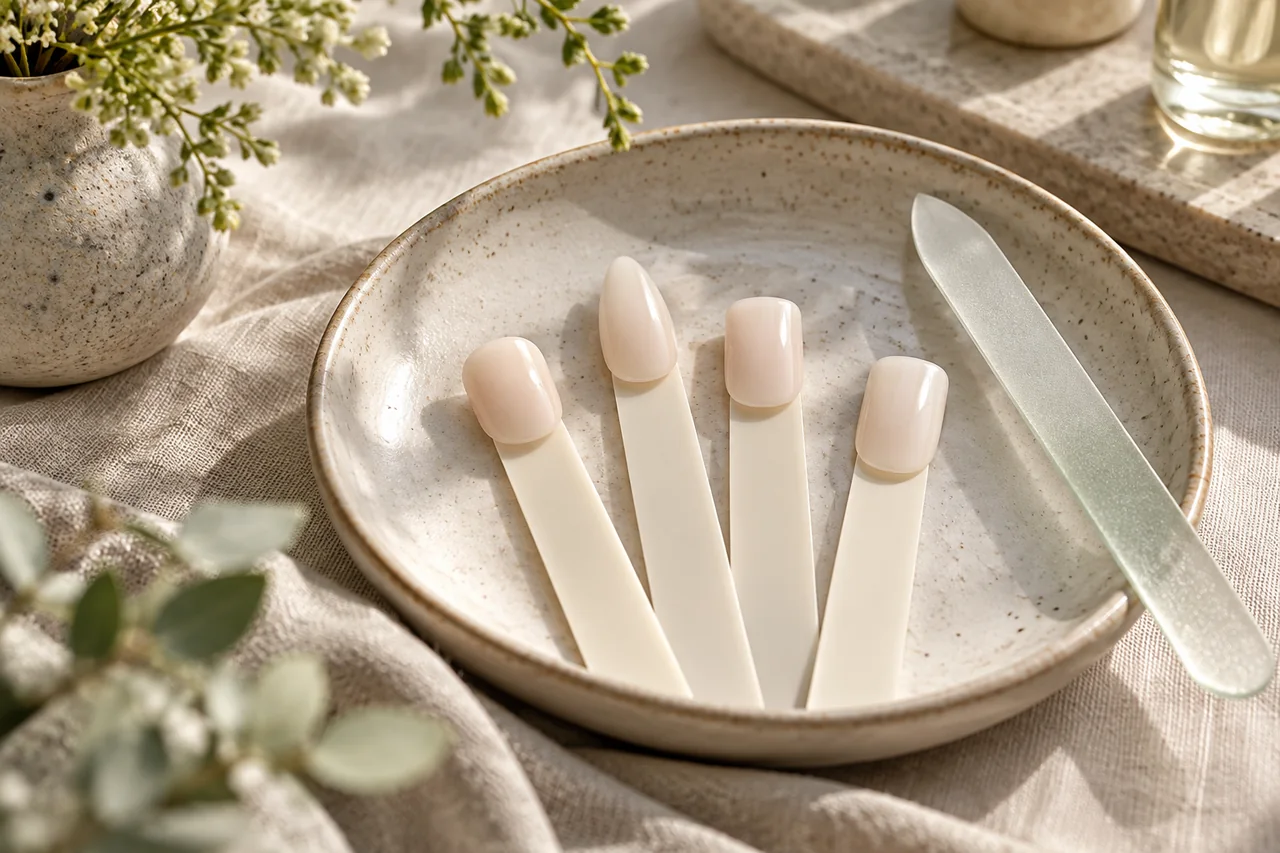
A nail shape works best when you enjoy both its appearance and its everyday use. Begin with your hands in action rather than a photograph of a supposedly ideal shape.
Start with ordinary hand movements
List three frequent tasks, such as typing, playing an instrument, inserting contact lenses or opening fastenings. Consider whether you want to do them with the proposed shape. Workplace hygiene and safety rules come before styling; record actual requirements rather than inferring them from other people’s photographs. A shape that needs constant careful handling may suit an occasion more than your normal week.
Describe the outline clearly
Round nails have a softly curved free edge. Oval shapes make a longer soft outline. Square nails have a relatively straight front and distinct corners; squoval combines a straighter outline with rounded corners. Salons and shops do not use names entirely consistently. Add a sketch or plain description, such as “short and fairly straight, with soft corners”, rather than relying on the label alone.
Work within the available length
Look at the free edge, not just the whole visible nail. Some elongated references use extensions. Filing the sides more aggressively cannot reproduce that shape from a very short free edge. Begin near your existing outline. A photograph with relaxed fingers can record the starting point, but camera angle and distance make it unsuitable as an exact measurement.
Separate shape from design
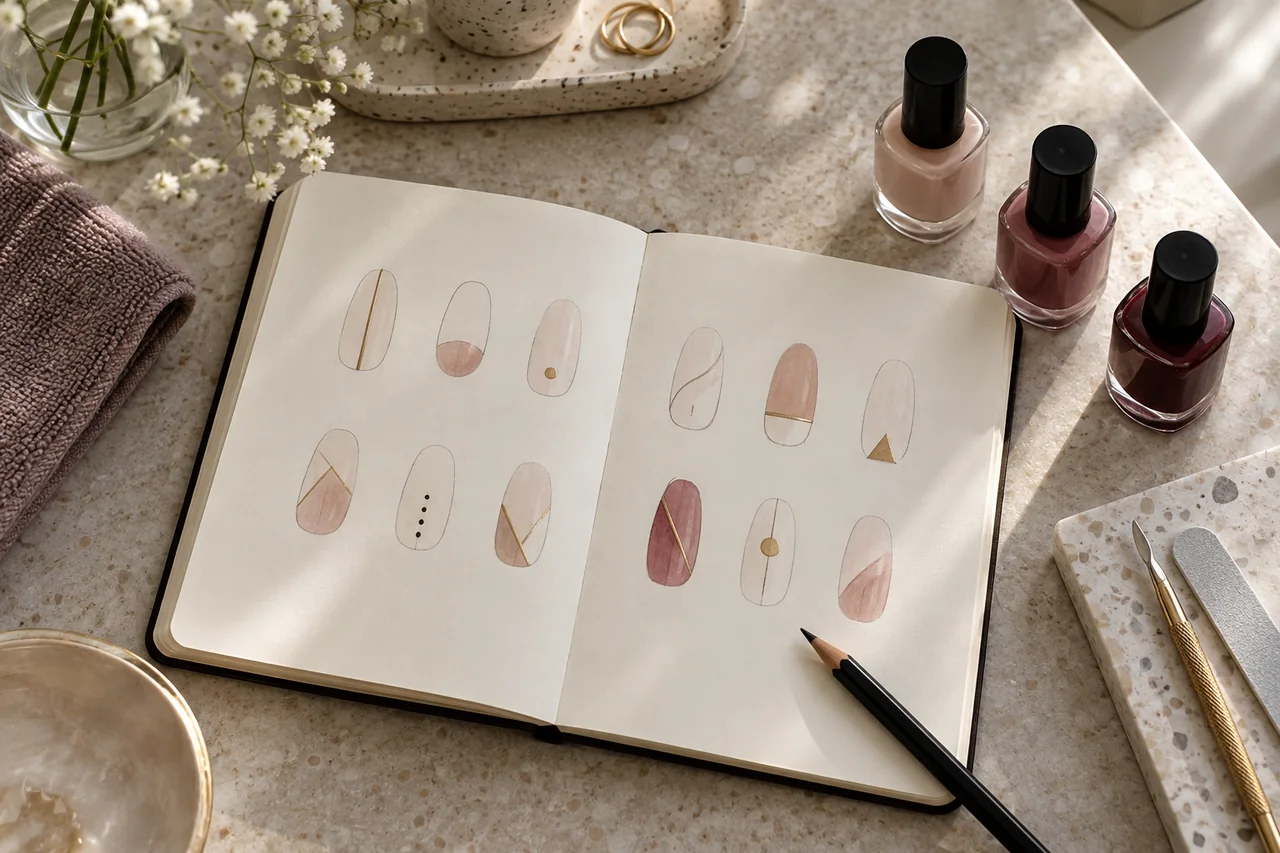
Draw simplified outlines at roughly equal lengths and fill them with the same colour. Add patterns or tips only in a second version. This helps distinguish a preferred outline from a striking design. Comparing a short dark nail with a long sheer one changes too many things at once. At a salon, compare similar-coloured samples in the same light if possible.
Choose through three questions
Which outline do you like without extra decoration? Which suits frequent hand movements? Which fits your maintenance plans? Mark each as suitable, uncertain or unsuitable rather than inventing a scientific score. One clear practical obstacle may outweigh several attractive pictures. If two options remain, start with the smaller change. You need not alter length and shape simultaneously.
Make the salon request specific
State shape, length and a limit: short softly square nails, little free edge, no pronounced points. Explain how you use your hands and discuss the proposed outline on one nail before work continues across all of them. Stop if treatment becomes uncomfortable or your limits are ignored. Visible nail problems need assessment rather than a concealing design.
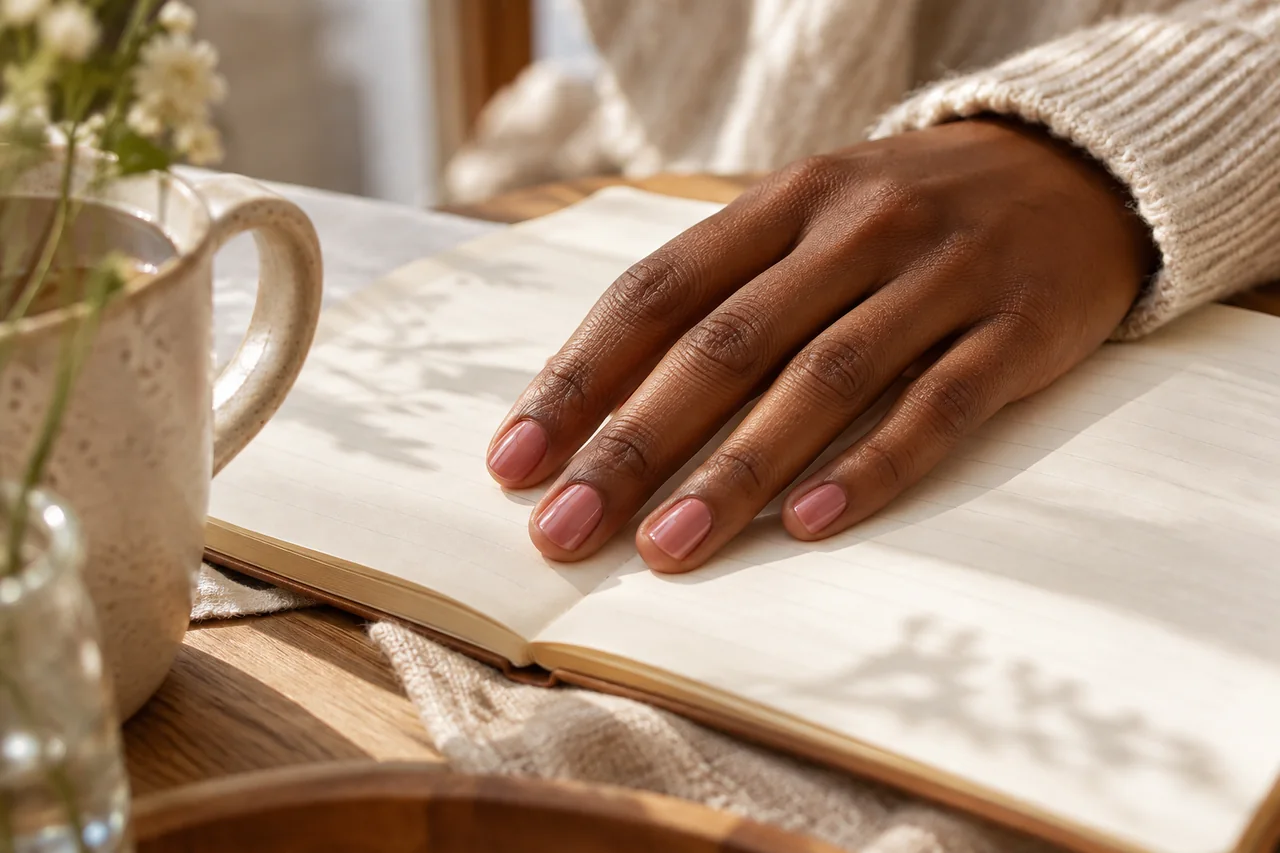
After ordinary activities, note precise issues, such as a right index nail interfering with typing or corners catching knitwear. Avoid blaming your hands for a practical mismatch. Keep a successful result as a private reference in similar light and refine your own request over time.
Frequently asked questions
Must I make my fingers look longer?
No. An elongated effect is one possible style preference, not a condition for attractive hands. Choose a shape you like that suits your life; it need not correct your body.
Can very short nails have an almond shape?
A pronounced almond outline needs enough free length. Do not request strong side filing just to copy a photograph. A short oval impression or a surface design may be a better alternative.
Questions and experiences
Share a question or a useful experience about this topic. Every contribution is checked before publication. Comments may be written in different languages.
Loading reader contributions…
Opening the form sets a necessary session cookie. No email address is required. Publication is subject to moderation and is not guaranteed. For deletion requests: Contact