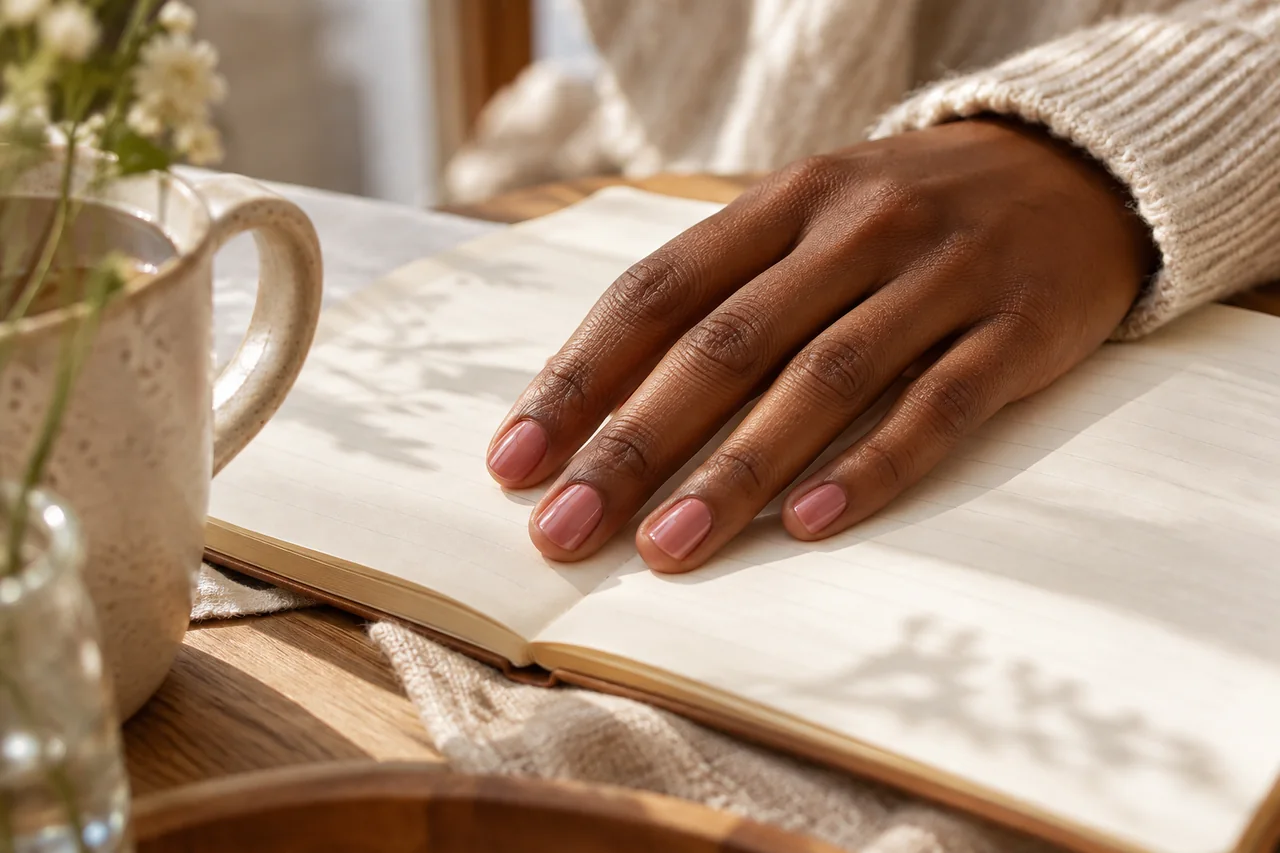
Short nails offer room for colour and detail without needing a crowded design. Start with the space you have and the effect you want to notice.
Look at the existing surface
Rest your hand on a neutral background. Notice differences between broader and narrower nails; the thumb often offers different space from the little finger. The same motif need not be the same size everywhere. Draw five simplified shapes in roughly your proportions. This is a design sheet, not a plan to change the nail bed. Natural variation can remain visible without aggressive reshaping.
Choose the main point of interest
Do you want a unified block of colour or a small detail discovered close up? An even shade can create a calm effect, one line or dot a graphic effect, and a sheer or shimmering finish a softer one. Write the aim in a sentence. If it contains three competing ideas, choose one main idea first.
Check the density of the pattern
Try the motif on the smallest drawn shape. If it remains readable there, it is easier to adapt to the others. If dots or flowers merge into a blob, remove an element or leave more space instead of automatically adding contrast. View the sketch at arm’s length. Everyday hands are not normally seen at the magnification used in tutorials.
Compare three versions
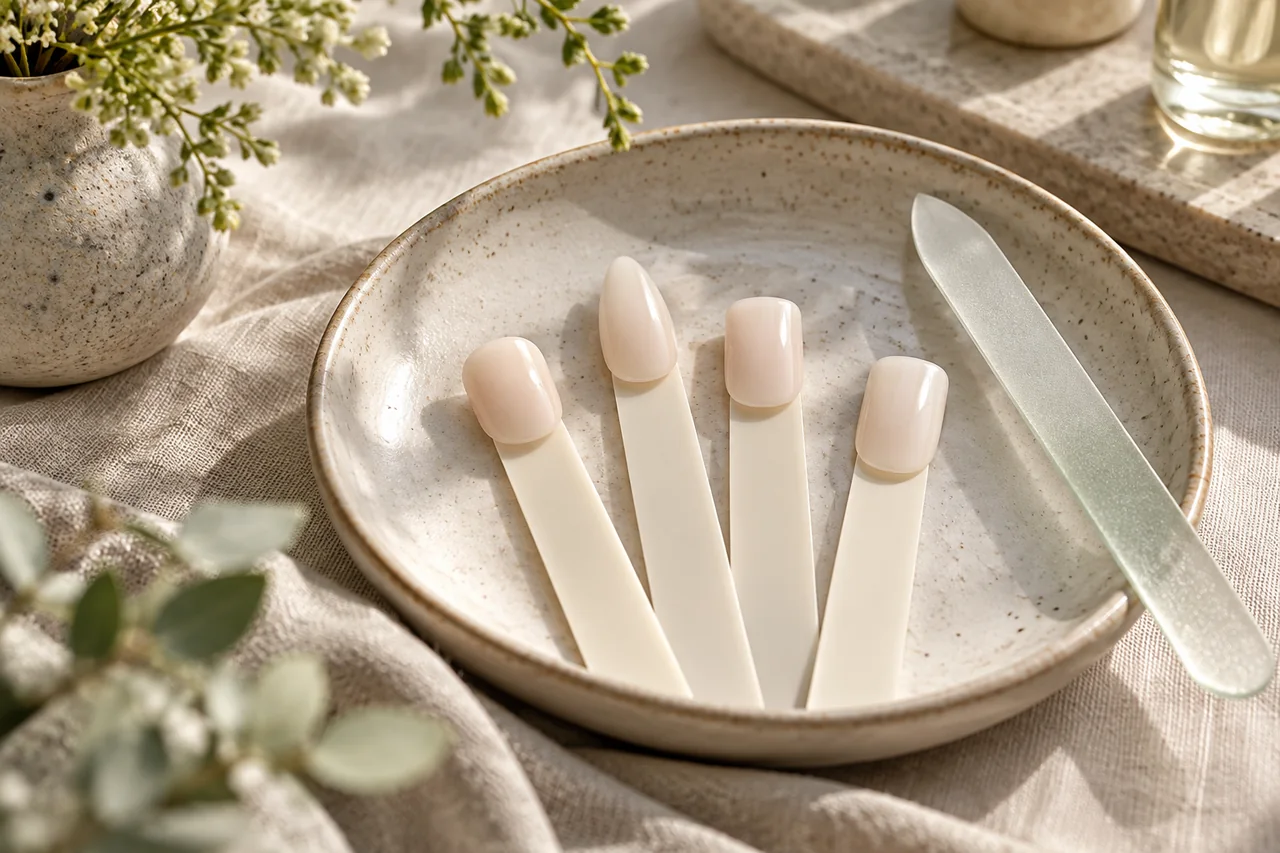
Use the same base colour for an all-over version, a version with one small accent and a version with a narrow tip or an unpainted area. Choose the one that communicates your intended effect without explanation. More complicated does not mean better. If you are learning fine details, practise on a loose sample stick before planning them on your nails.
Keep length suited to ordinary use
Follow any workplace requirements and judge your normal movements rather than adopting a universal millimetre target. Try typing, a small chain clasp or a zip with your current length; do not deliberately stress-test the nails. Use that feedback for the next shape. Short nails can carry dark or bright colour as well as pale shades. Compare samples with familiar clothes and jewellery, changing colour, opacity or finish one at a time.
Simplify while keeping the idea
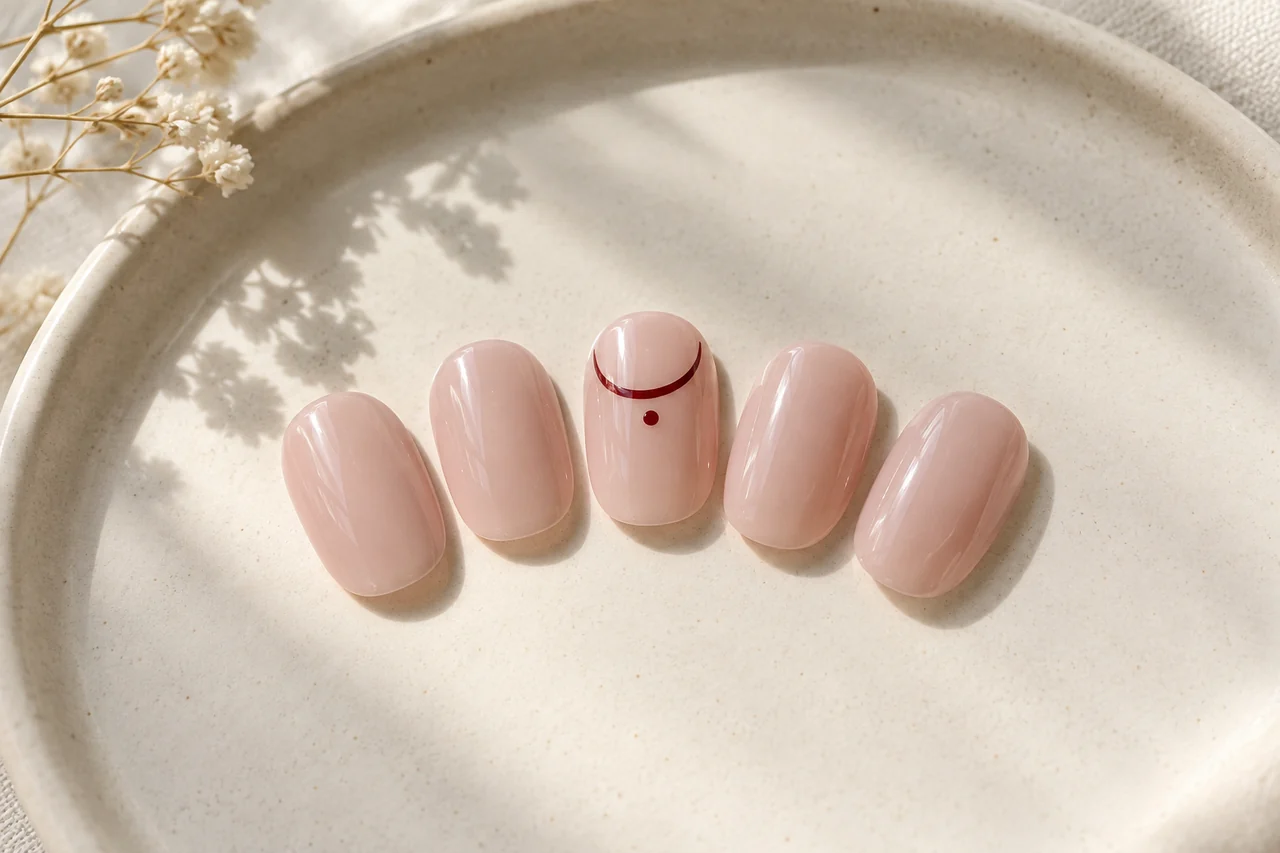
Suppose you want a playful look but have little fine-brush practice. Three flowers on every nail become unclear at actual size. Keep one flower on an accent nail and make the others plain. The idea remains, the application is more manageable and small differences matter less. After wearing it, decide whether you liked the number of accents. Next time, change that one feature rather than buying a new collection of tools.
Frequently asked questions
Can short nails have a French design?
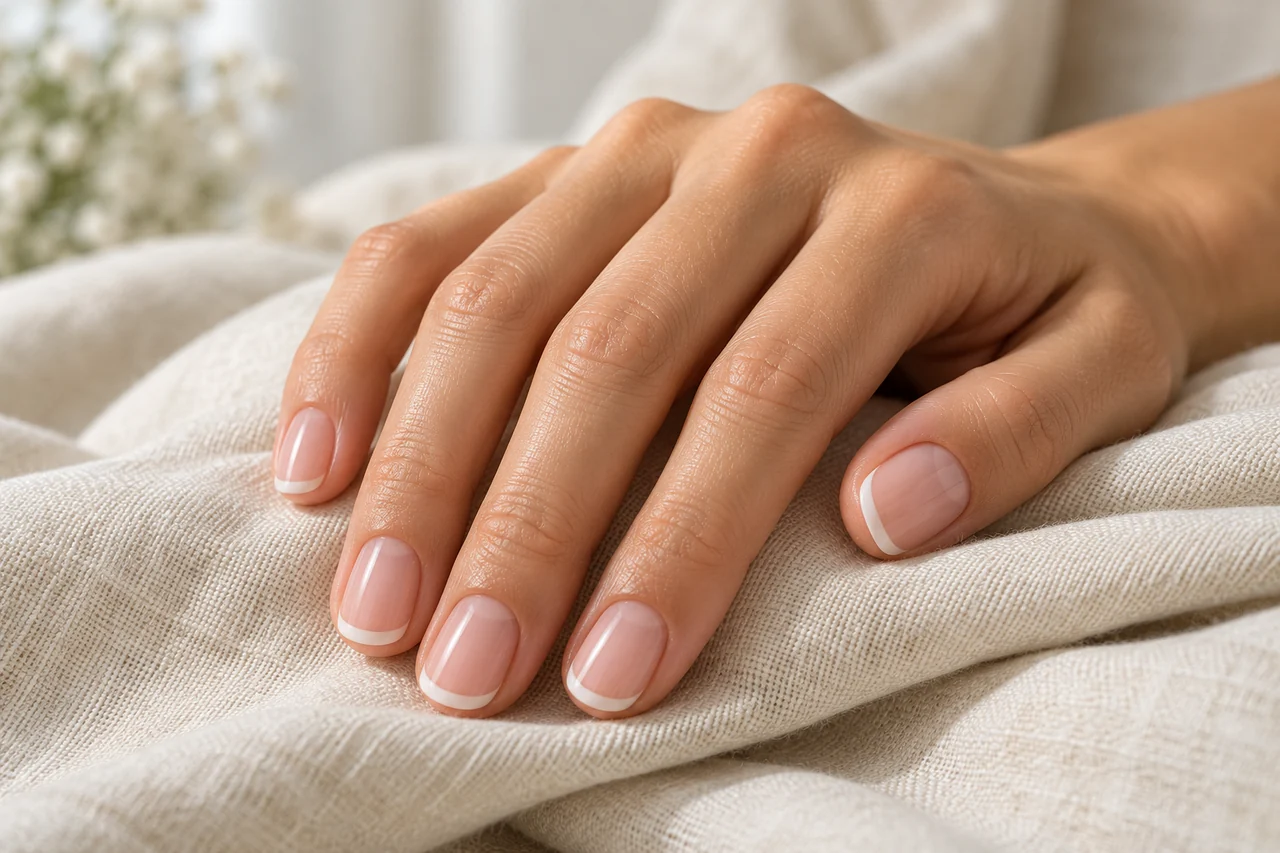
Yes. Fit the tip to the available surface. A broad pale area divides the nail visually, while a narrow line can emphasise its outline. Compare both in a sketch.
Must every nail look exactly the same length?
A shared colour or repeated detail can connect a design even when natural surfaces differ. Precise uniformity need not be the goal; comfort and the overall impression matter.
Questions and experiences
Share a question or a useful experience about this topic. Every contribution is checked before publication. Comments may be written in different languages.
Loading reader contributions…
Opening the form sets a necessary session cookie. No email address is required. Publication is subject to moderation and is not guaranteed. For deletion requests: Contact