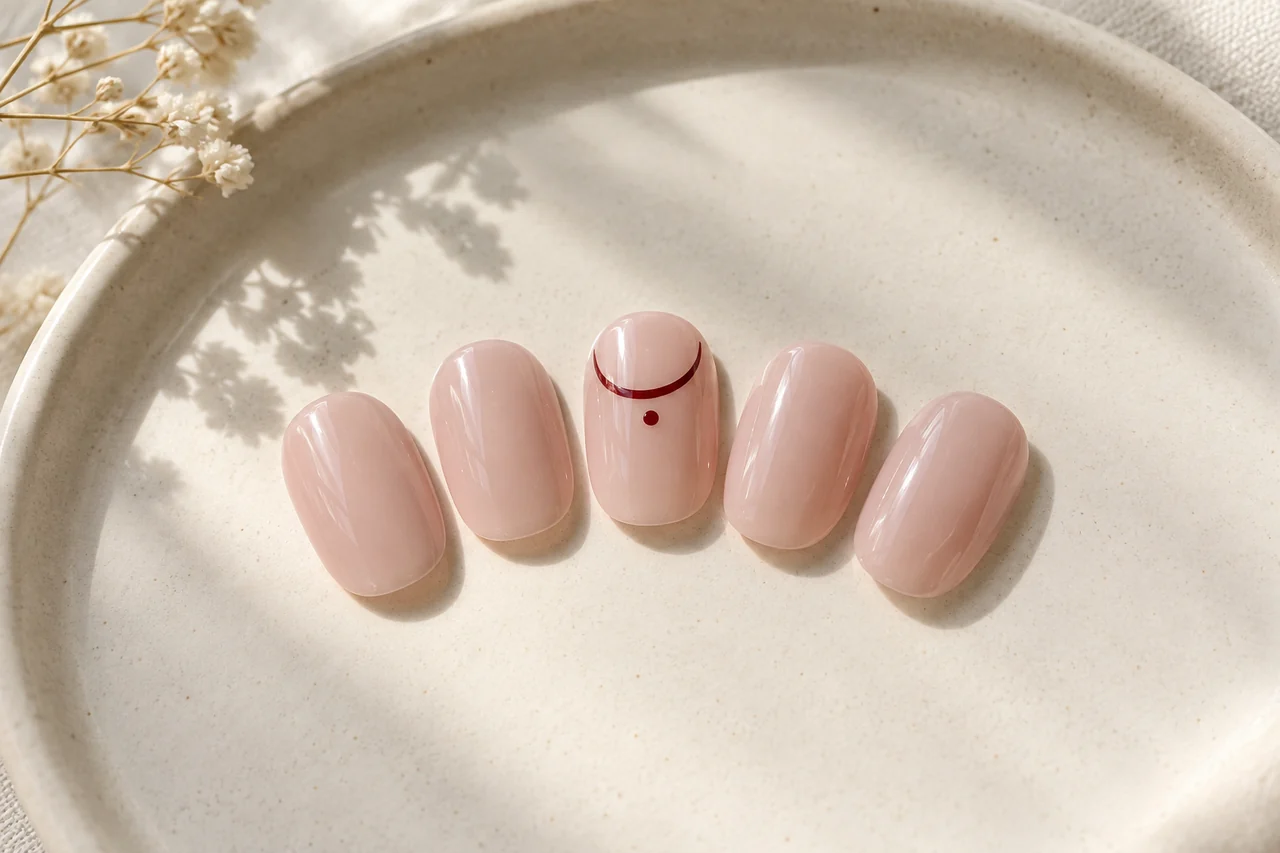
An accent nail need not be on the ring finger or cover a whole surface. Choose where you want the detail and what distinguishes it, without needing raised decoration or a new colour collection.
Name the accent’s job
Decide whether it contributes contrast, a personal motif or another reflection. Changing colour, texture, length and decoration together can turn it into a separate second look. Start with one task. A small red dot over quiet rose gives a different emphasis from one fully dark nail. Put the aim into a sentence before choosing the finger.
Compare positions on a sketch
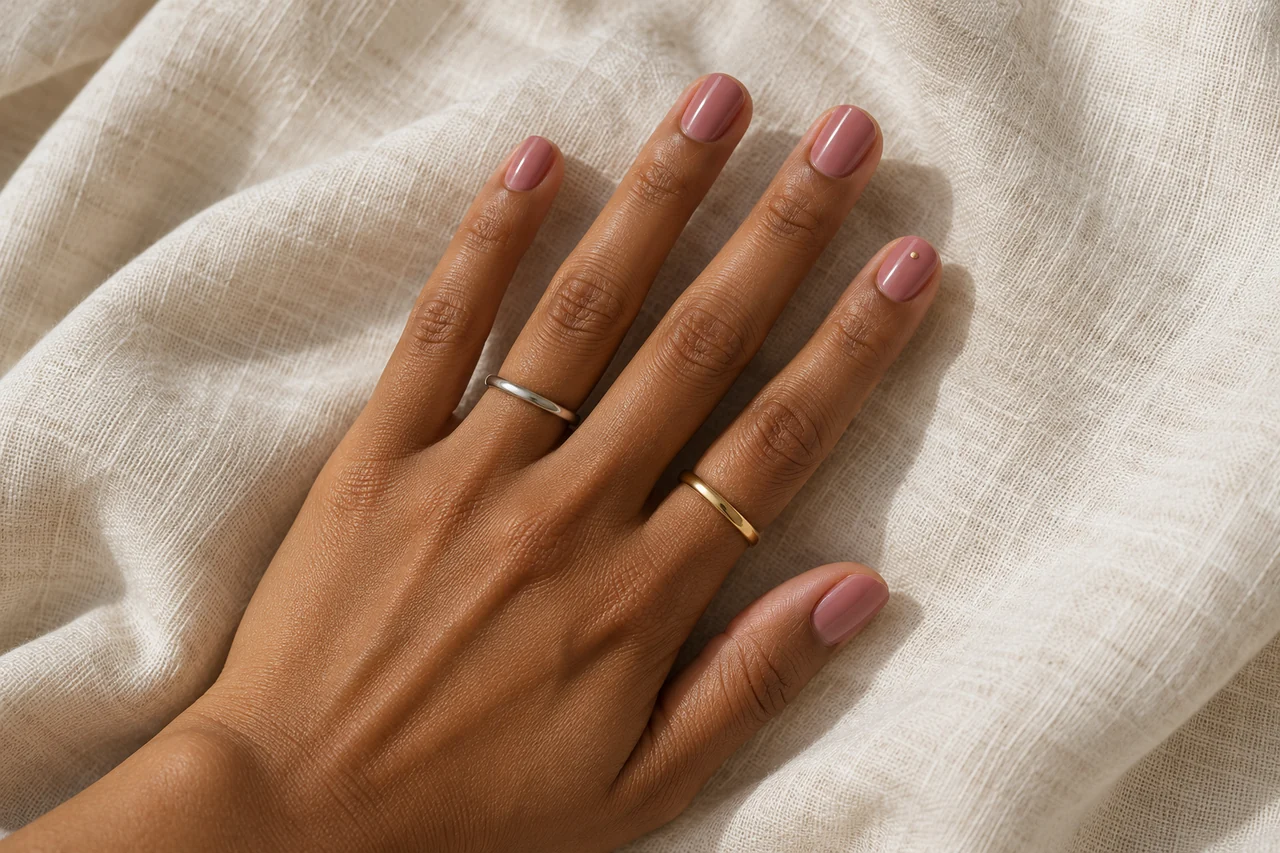
Draw five outlines and place the same accent on the ring finger, thumb and index finger in separate versions. Consider ordinary hand positions: you may see a thumb detail often while holding a cup, while another position photographs more clearly. Include rings. An accent nearby concentrates attention; another position spreads it. No finger is compulsory.
Fit the motif to the surface
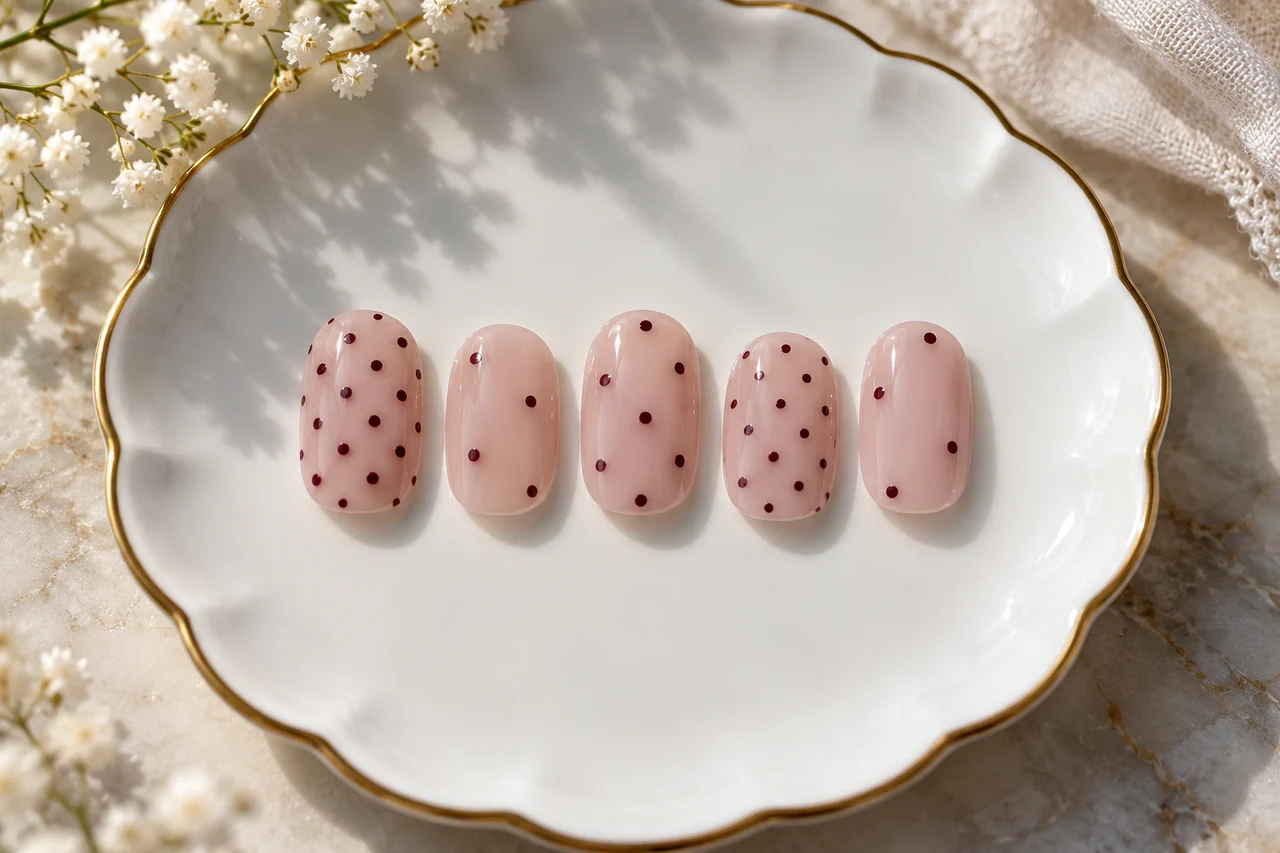
Draw the same motif small with plenty of background and larger. Is the small version visible at your intended distance? Does the larger one take more space than wanted? For dots, lines and flowers, one simplified form may read better than many tiny details. Plain surrounding nails already frame it, so extra decoration may be unnecessary.
Choose the connection with the rest
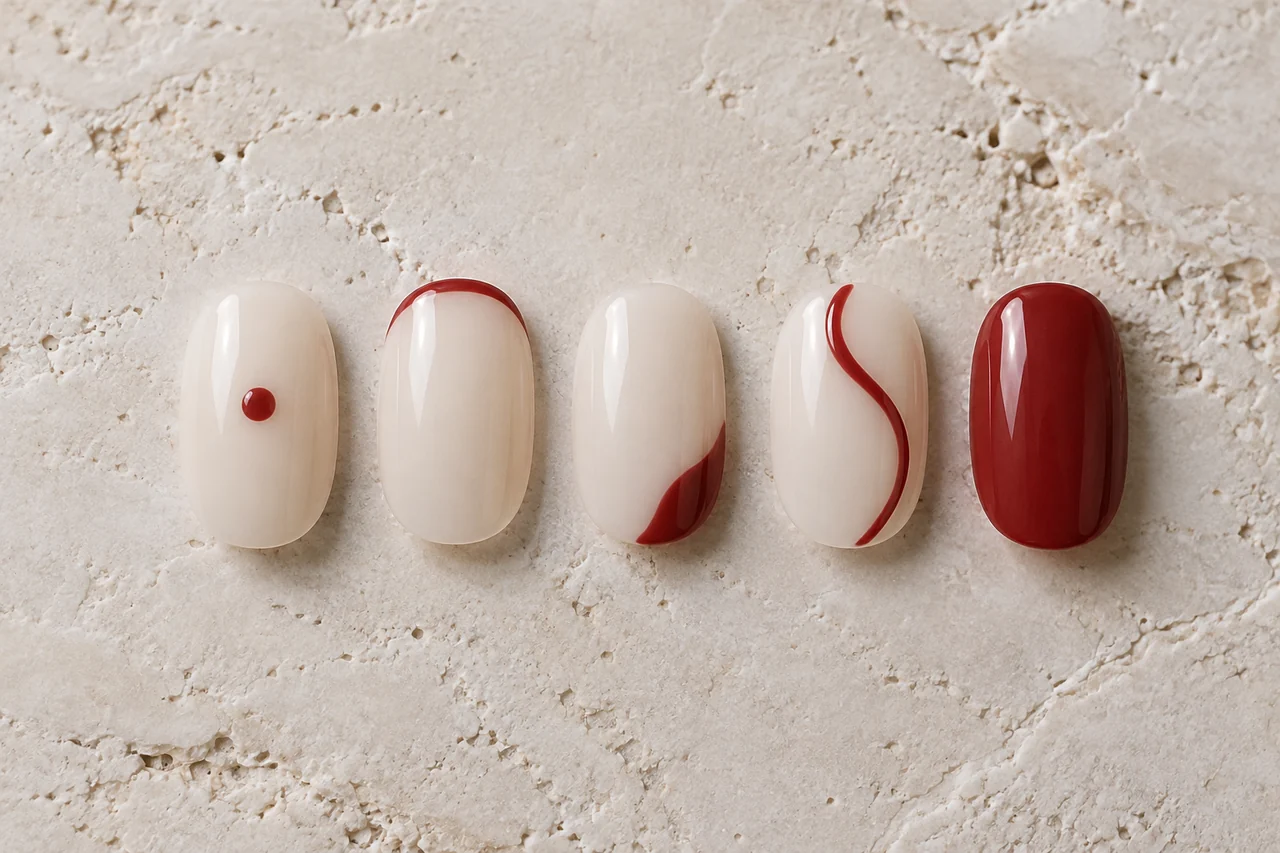
An accent can share the base colour but vary the pattern, use another colour with the same finish or become the only effect surface. Decide what stays connected. A complete contrast can also be deliberate. Compare whether a pattern difference is clear enough, a colour contrast suits the base or a special finish appeals in ordinary room light.
Balance one hand or both
Use one accent on each hand, only one hand or different positions. Sketch all ten nails to judge the amount. Identical accents create repetition; one alone produces deliberate asymmetry. Ask whether each addition improves the original idea, because several can quietly turn an accent scheme into a full pattern system needing another layout.
Keep the first attempt simple and review it
For ordinary-polish practice, follow appropriate product and tool directions and learn a new motif on a suitable sample. A dot, small corner or narrow tip is enough; household glue and craft decorations are unnecessary. At a salon, specify finger, motif, shade and agreed extra work.
After wearing, note whether you saw the accent often, liked its size and enjoyed it with jewellery. Move the same motif if the position was wrong. If the location worked but the effect was too strong, change size or contrast first. A familiar base with one adjustable detail can become a useful personal standard.
Frequently asked questions
Must the ring finger be the accent nail?
No. Choose a position you like with your jewellery and ordinary hand use. A sketch helps compare options.
How many accent nails make sense?
Begin with one and assess it. Another may repeat or balance the idea but is optional. The desired total amount of pattern matters.
Can the accent be only a small dot?
Yes. One clear dot can express a complete idea. Check whether size and contrast are visible enough at the distance that matters to you.
Questions and experiences
Share a question or a useful experience about this topic. Every contribution is checked before publication. Comments may be written in different languages.
Loading reader contributions…
Opening the form sets a necessary session cookie. No email address is required. Publication is subject to moderation and is not guaranteed. For deletion requests: Contact