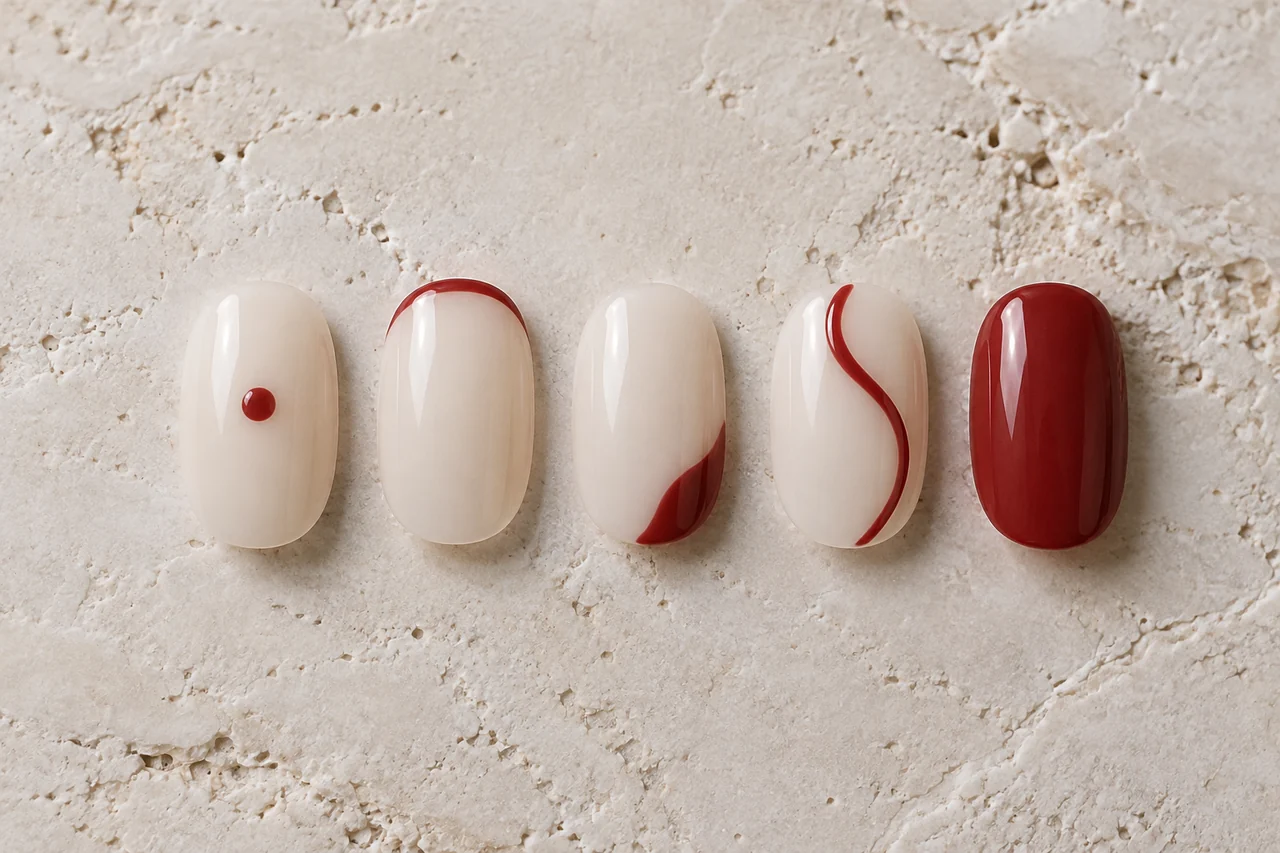
Different nail designs can belong together without repeating every motif. A shared colour or shape makes variety easier to plan, using simple original patterns and colours you already have.
Set the shared language
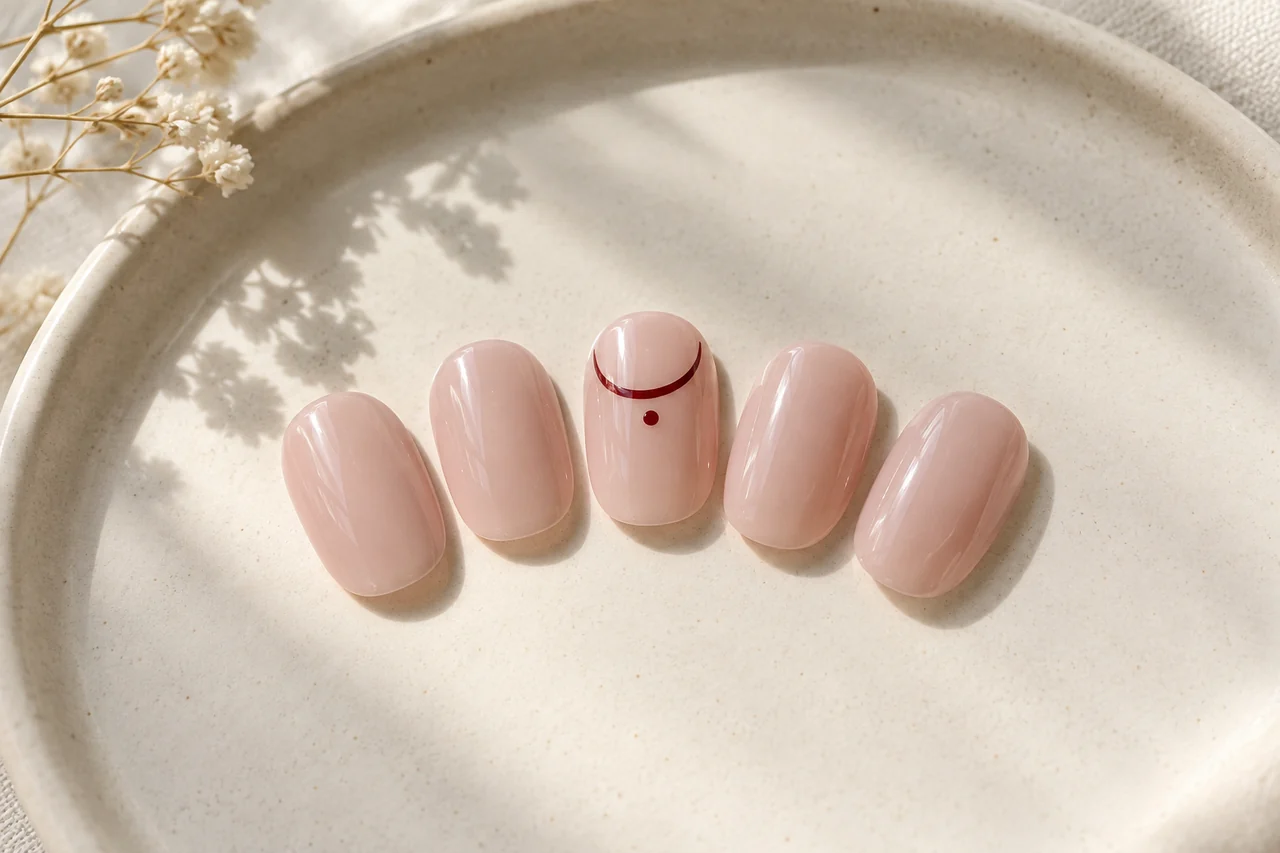
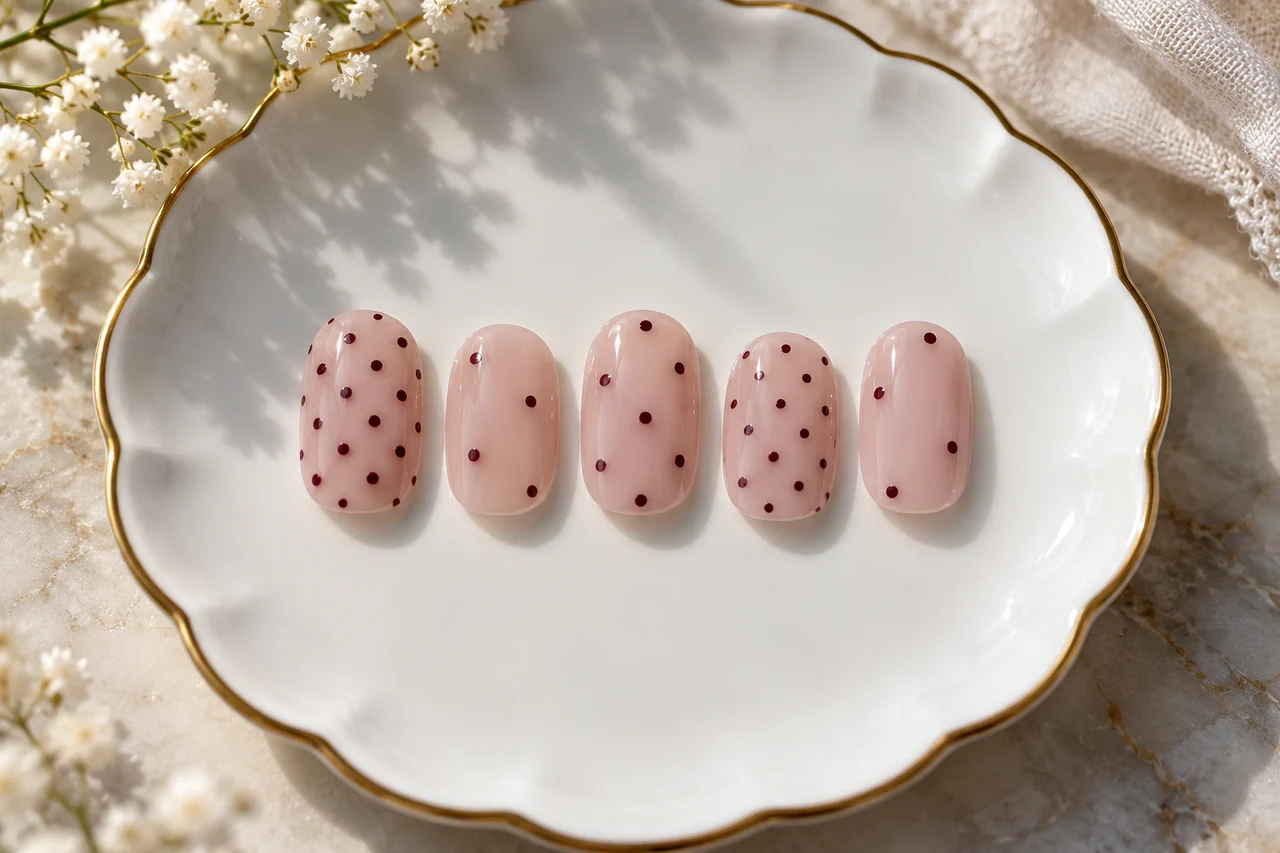
Begin with one base and accent colour: sheer rose with dark-red dots, lines and corners, for example. Alternatively, repeat one curved shape across several colours. Choose one starting strategy. Changing colours, shapes and finishes everywhere makes it harder to tell which difference you enjoy. Limits give the first design more control without removing variety.
Sort motifs by visual weight
Sketch a dot, line, coloured tip, corner and full-colour surface. Even in one shade, they have different prominence. For a balanced result, avoid unintentionally placing all large areas on one hand and tiny details on the other. View the sketches together and notice where attention goes. A deliberate focal point is different from discovering an accidental imbalance afterwards.
Draw all ten nails
Make two rows of five outlines, labelled privately by position. Add three motifs first and leave the rest blank, then expand slowly. Ten different inventions are unnecessary. A repeated element in another position can connect hands, and mirrored designs can work too. Keep approximate nail proportions so a broad thumb motif is not assumed to fit unchanged on the little finger.
Choose a visible form of connection
Colour, shape, line width or finish can hold the design together. “Playful” alone leaves much open; describe round forms, small dots or clear pale contrasts. With the same colours, motifs can vary. With the same shape, colours can vary. With shared line width, positions can change. Choose a reliable link rather than relying on a vague mood.
Limit the new technical challenge
For ordinary-polish practice, learn one new motif at a time on suitable samples and follow product directions. If dots already work, add a simple line rather than lace and a gradient together. A salon can explain which parts fit the appointment. Contrast between one full-colour nail and a fine detail may communicate more clearly than many complex techniques.
Review with your wardrobe and keep a legend
Compare sketches with two familiar outfits and usual rings. Some details may blend into a patterned sleeve, which can be welcome. Decide where you personally enjoy seeing an accent.
Save the final sketch with base, accent, motifs and intentionally plain areas. Mark two favourite elements to retain next time and replace just one other part. “Different on each nail, always rose and dark red, mostly fine lines and only one fully coloured nail” gives useful freedom while explaining priorities.
Frequently asked questions
Must all ten nails be different?
No. A few different motifs with repetition can create the look. Choose the amount of variation you actually want.
How many colours should I use?
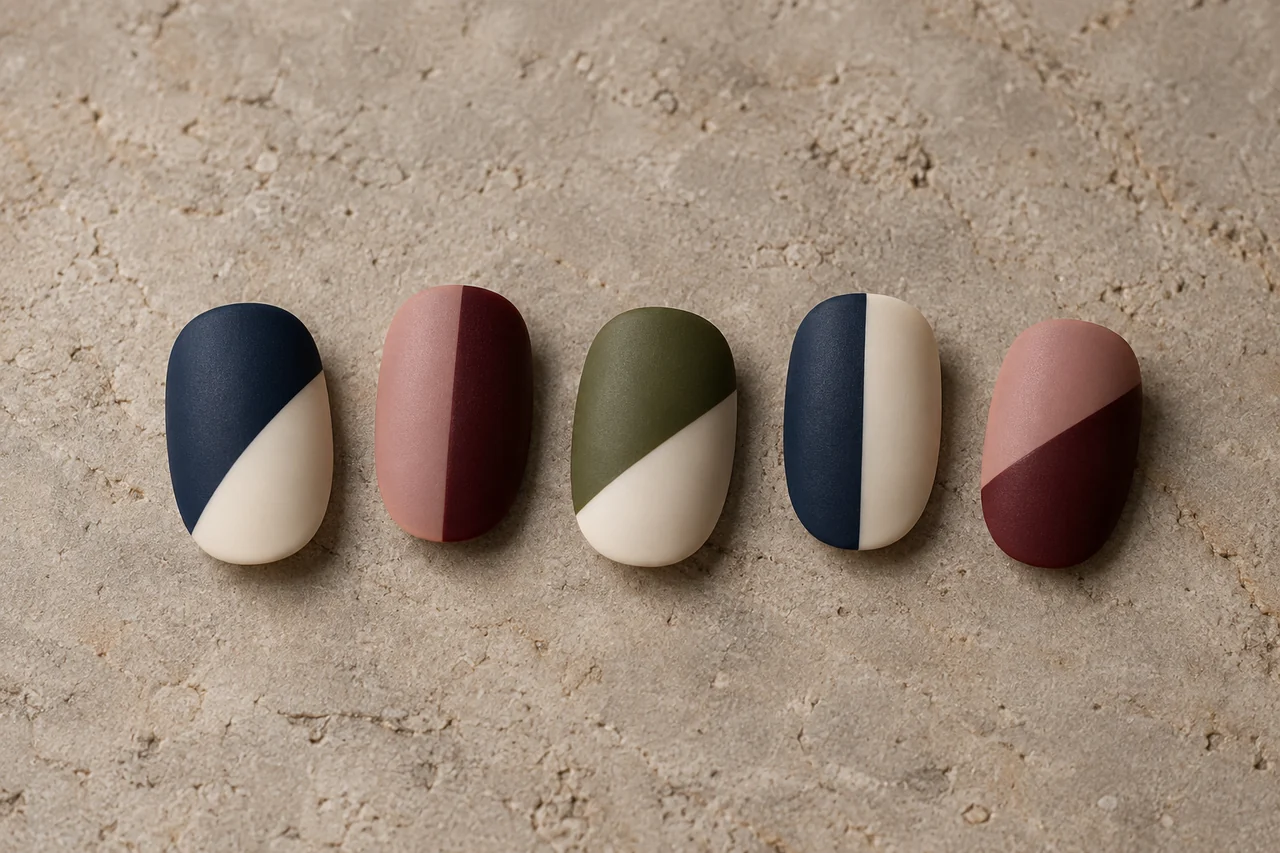
Start with a base and one accent. Once the layout works, add another shade deliberately. A limited palette helps you judge shape and placement separately.
Can one hand remain simpler?
Yes. Deliberate asymmetry can be part of the design. Connect the hands through the same base or a repeated small dot, for example.
Questions and experiences
Share a question or a useful experience about this topic. Every contribution is checked before publication. Comments may be written in different languages.
Loading reader contributions…
Opening the form sets a necessary session cookie. No email address is required. Publication is subject to moderation and is not guaranteed. For deletion requests: Contact