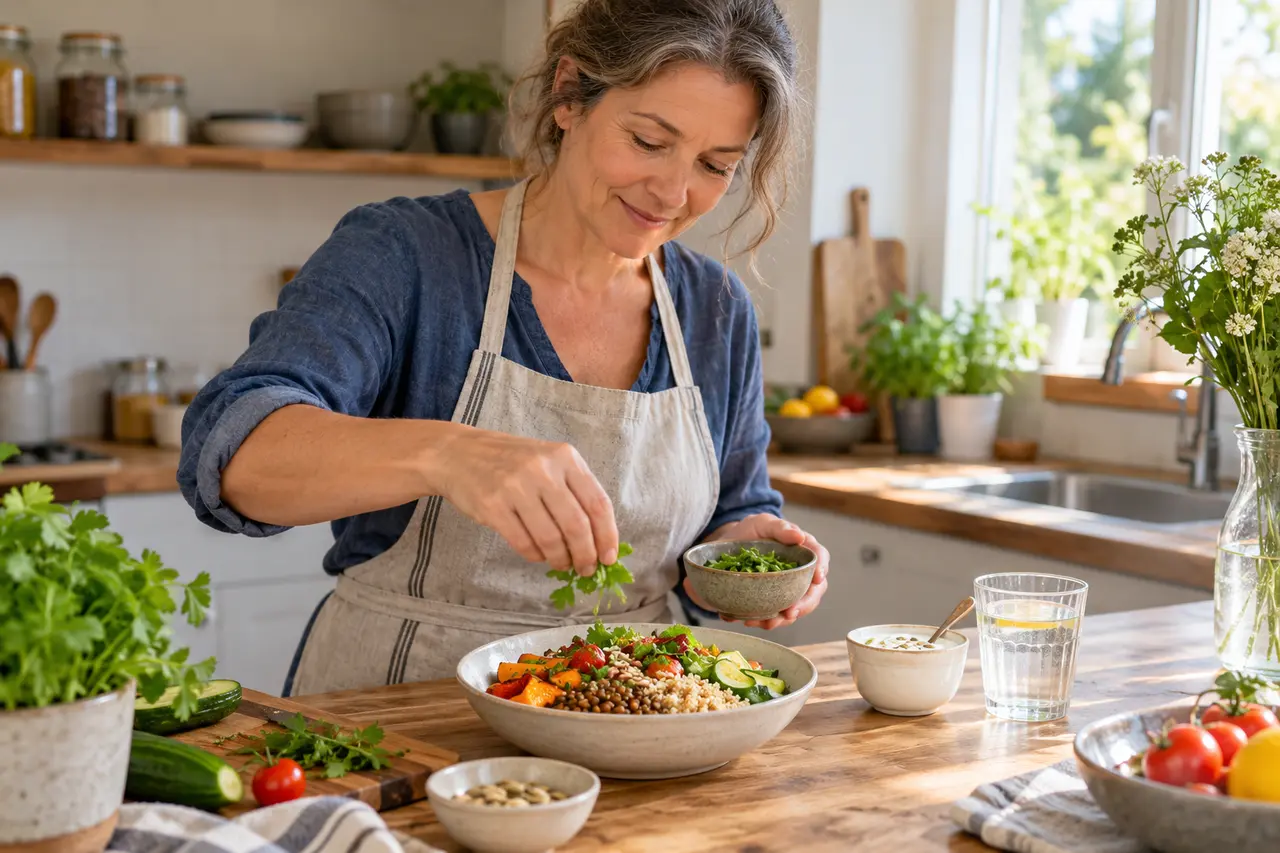
Feeling full sooner often changes more than portion size. You may skip meals or find familiar dishes suddenly too rich. The aim is to keep food practical, enjoyable and nourishing. There is no single special diet that everyone taking a GLP-1 medicine needs to follow.
Start with a manageable meal
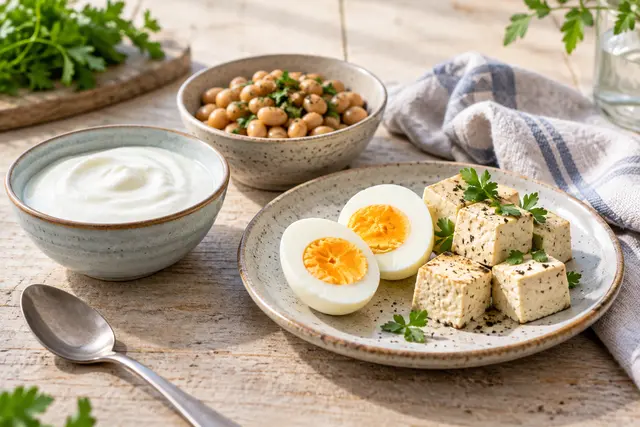
Build a small portion that feels comfortable to eat. Include a protein food, such as eggs, yoghurt, fish, tofu or pulses, alongside vegetables or fruit and something like bread, potatoes or rice. A little plant oil, nuts or seeds can complete the selection. Think about variety across the day rather than weighing every meal against a perfect formula. Your personal dietary requirements still take priority.
Notice early fullness
Eating slowly and pausing during a meal may help you recognise when you have had enough. You do not have to clear your plate. If larger portions feel uncomfortable, smaller meals at predictable times may be easier. Continuous grazing, however, does not automatically provide enough nutrition. If useful, record what you actually eat and drink on a few typical days. You do not need a detailed calorie account to identify missed meals or a very limited food range.
Explore tolerance without a long banned-food list
Very rich, fried or strongly spiced dishes can worsen symptoms for some people. This does not create a universal ban on fat, seasoning or enjoyable food. Try one manageable change: a smaller serving, a milder preparation, or cooked rather than raw vegetables. Changing everything at once makes it harder to see what helped and may unnecessarily narrow your diet. Follow your own advice for allergies or medical dietary restrictions.
Use a flexible daily framework
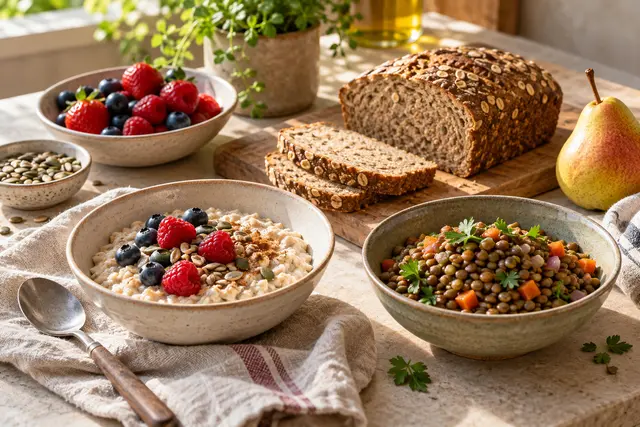
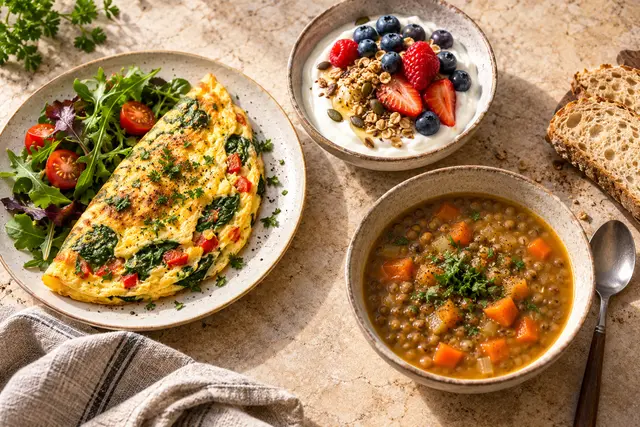
Breakfast might be yoghurt or a protein-rich plant alternative with oats and fruit. Lunch could be potatoes with cottage cheese or tofu and cooked vegetables. For an evening meal, bread with egg or hummus and a vegetable side may suit you. These examples are not a calculated daily allowance. Quantities, additional meals and food choices depend on your needs, tolerance and any agreed nutrition treatment. Eating very little is not a measure of treatment quality or personal success.
Know when support matters more
Contact your care team if you repeatedly struggle to manage meals, avoid food through fear, become noticeably weaker or lose weight unexpectedly quickly. Persistent vomiting, reduced urination or marked dizziness may indicate dehydration. Severe, ongoing abdominal pain needs urgent medical assessment. A qualified dietitian can assess your intake and help you find workable options. Do not adjust your medication dose yourself because eating has become difficult.
Common questions
Do I need to cut out carbohydrates?
No universal carbohydrate restriction follows from GLP-1 treatment. Bread, oats, rice and potatoes can be part of a varied diet. Diabetes or other conditions may call for an individually agreed approach.
Are liquid meals always better?
No. A drink may help in a particular situation, but it does not automatically replace balanced meals. Discuss regular meal replacement with a professional, especially if you can barely tolerate solid food.
Questions and experiences
Share a question or a useful experience about this topic. Every contribution is checked before publication. Comments may be written in different languages.
Loading reader contributions…
Opening the form sets a necessary session cookie. No email address is required. Publication is subject to moderation and is not guaranteed. For deletion requests: Contact