Menopause does not require an expensive special diet. Varied food supports general health without reliably making hot flushes disappear. A structure that fits hunger, working hours, preferences and budget is most useful. Rather than replacing your whole diet, gradually add to familiar meals.
General information, not a diagnosis or an individual treatment recommendation. Discuss persistent or concerning symptoms and treatment choices with a qualified healthcare professional.
Begin with the day you already have
For three typical days, note when you eat and what is difficult. Mornings may be rushed, breaks unavailable or cooking too much in the evening. Identify the organisational gap first. A recipe cannot replace groceries, and a strict rule cannot create a lunch break. Simplify one part this week before adding further food goals.
Assemble meals from a few components
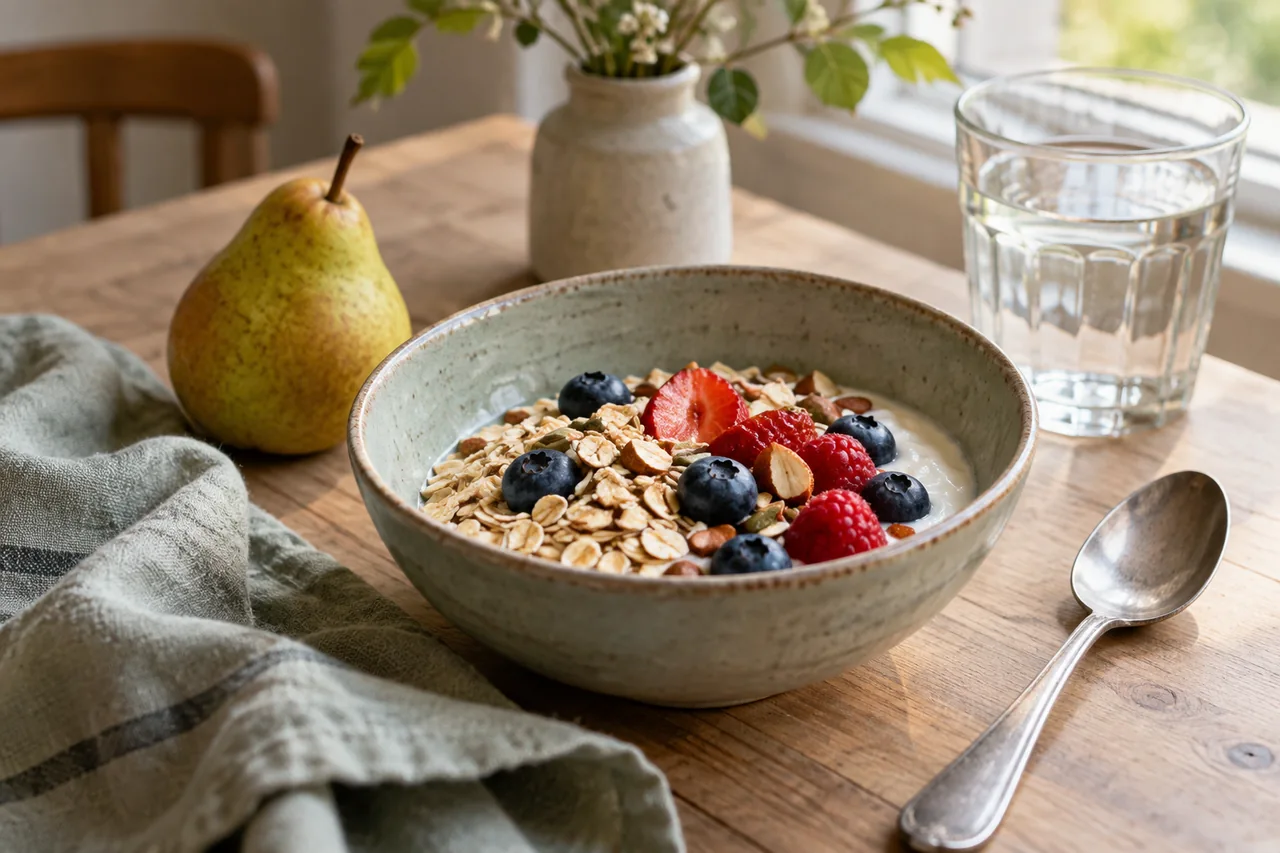
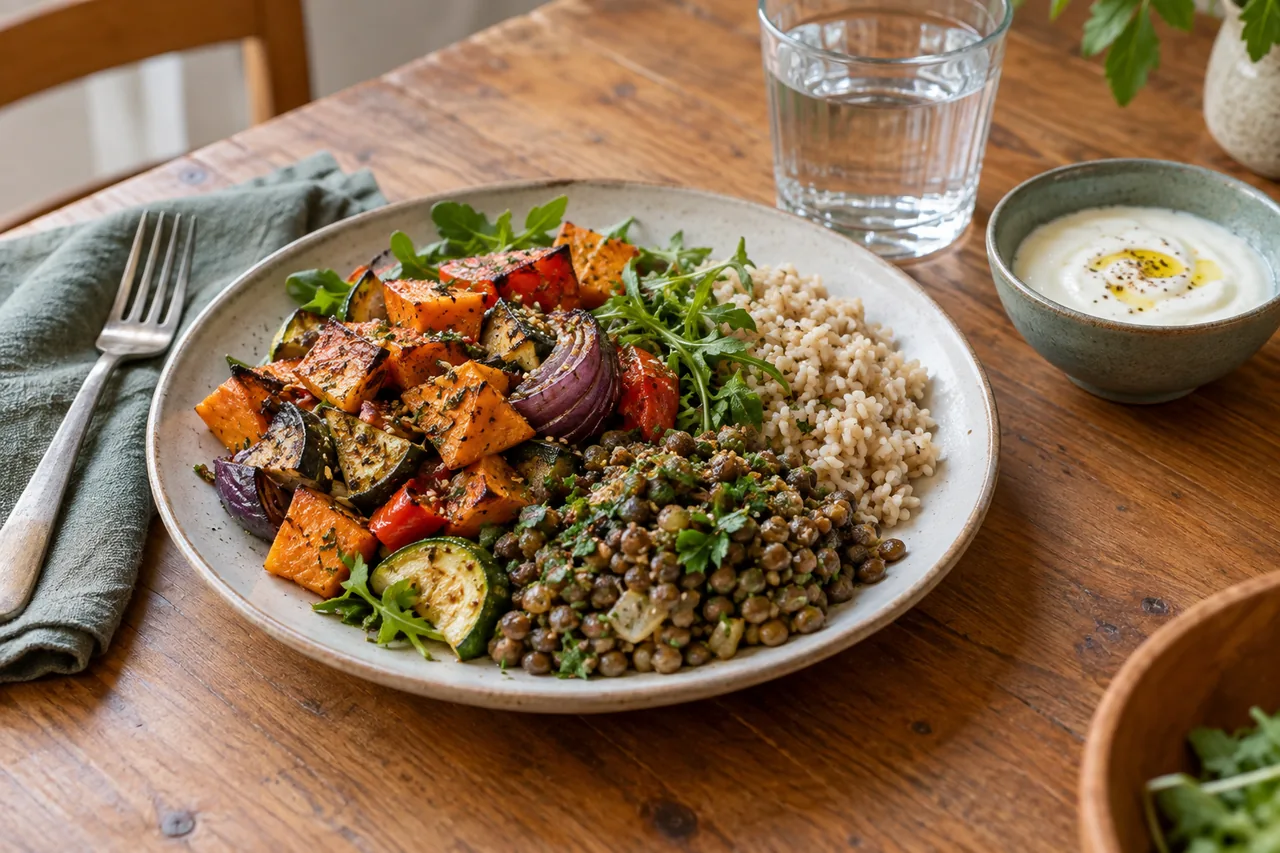
A practical pattern combines vegetables or fruit, a satisfying base and a protein source, with oils, nuts or other additions as appropriate. Examples include potatoes with beans and vegetables, wholegrain bread with eggs and tomatoes, or oats with yoghurt and fruit. This is not a rigid plate calculation. Portions depend on appetite and needs, and the principle can accommodate different cuisines and traditions.
Keep useful supplies rather than a perfect menu
Have two or three dependable combinations available. Frozen vegetables, plain dairy or suitable alternatives, pulses, oats and shelf-stable basics may save time. Choose things people actually enjoy: unwanted stores become waste. Note preparation times. A quick meal should work when tired without requiring a new set of instructions.
Make drinks straightforward
Keep a drink where you work or spend time. Water is a simple option; unsweetened tea can add variety. If hot drinks feel uncomfortable during flushes, try a preferred temperature without making a universal ban. Follow any prescribed fluid restriction. Evaluate practical usefulness rather than chasing blanket litre targets or expensive detox drinks.
Introduce plant variety gradually
If pulses or wholegrains are unfamiliar, add a tolerable amount to a known meal: lentils in sauce, beans in soup or oats at breakfast. Everything need not change overnight. Persistent digestive symptoms deserve assessment. Repeatedly excluding more foods without guidance may make adequate nutrition harder unnecessarily.
Include enjoyment and flexibility
Shared food, traditions and pleasure in flavour contribute to quality of life. An invitation or cake does not invalidate a workable pattern. Consider what supports most days instead of demanding an ideal from every meal. Avoid rules that damage social contact or self-worth. Frequent anxiety, guilt or loss of control around eating may need professional support more than another nutrition guide.
Review one point after two weeks
Assess whether shopping and meals are easier, food is satisfying and variety remains. Keep useful combinations and replace one impractical idea. Vegan eating, chronic illness, significant intolerances or intended weight change may benefit from qualified advice. Supplements do not automatically correct a chaotic routine. A useful plan remains affordable and achievable during demanding weeks.
Frequently asked questions
Must I eliminate carbohydrates?
No. Wholegrains, potatoes, fruit and pulses can belong in a balanced diet. Particular conditions or treatment goals may require individual advice, but menopause alone does not require excluding all carbohydrate foods.
Do I need a menopause cookbook?
No. Familiar meals can often be adapted. A cookbook helps if recipes fit your taste, skills and budget; menopause in the title proves no special health benefit.