When appetite falls, protein intake can shrink without you noticing. Occasionally having a slice of bread instead of a full meal is one thing; a lasting pattern deserves a closer look. The aim is dependable nourishment, not the highest possible protein intake at any cost.
Why protein deserves attention
Protein supplies building blocks for tissues and many body functions. Weight loss may include loss of fat-free mass as well as fat; fat-free mass is not the same as muscle alone. The joint nutrition advisory from several professional societies therefore highlights both adequate nutrition and strength training. Neither offers a guarantee against every loss. Activity, starting condition, illnesses and total energy intake also matter. A single shake will not reliably solve the problem of eating almost nothing.
Use smaller opportunities across the day
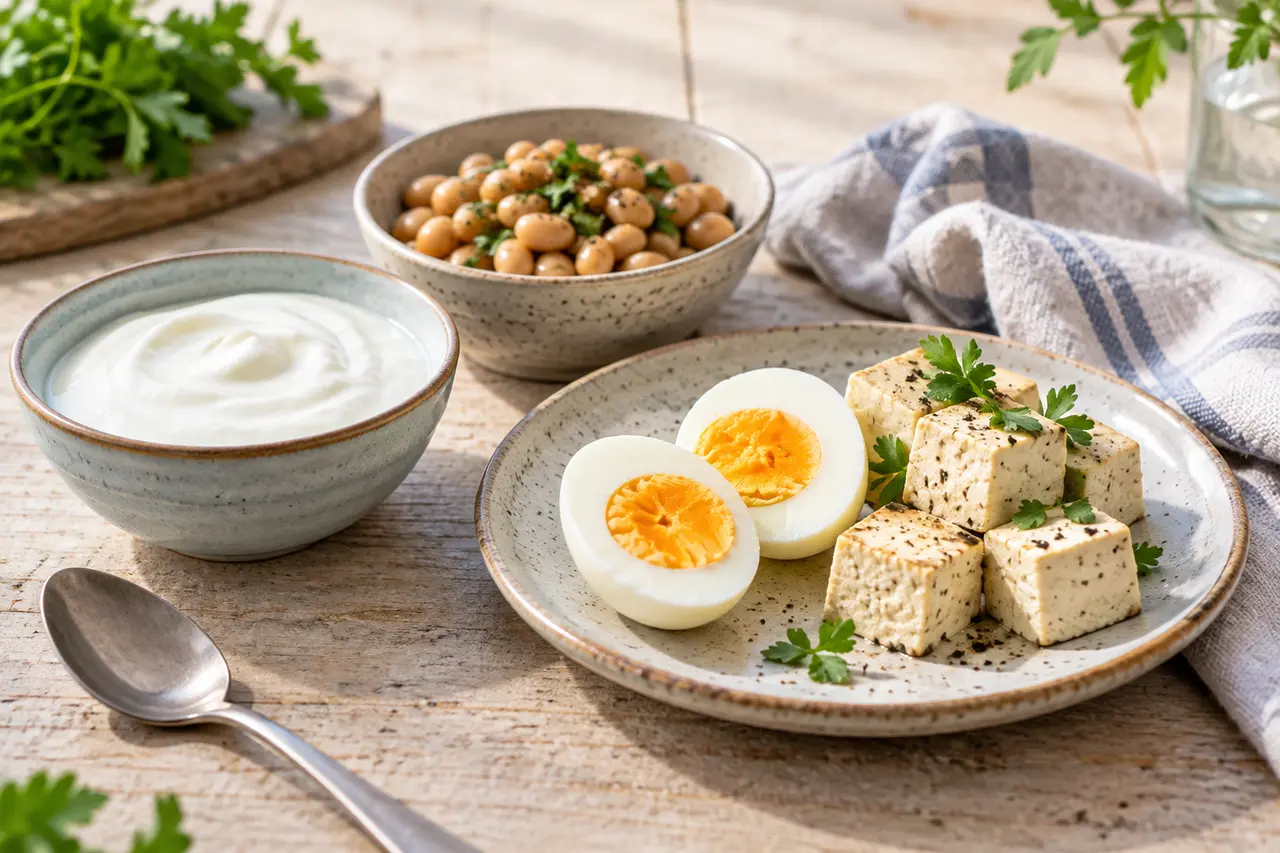
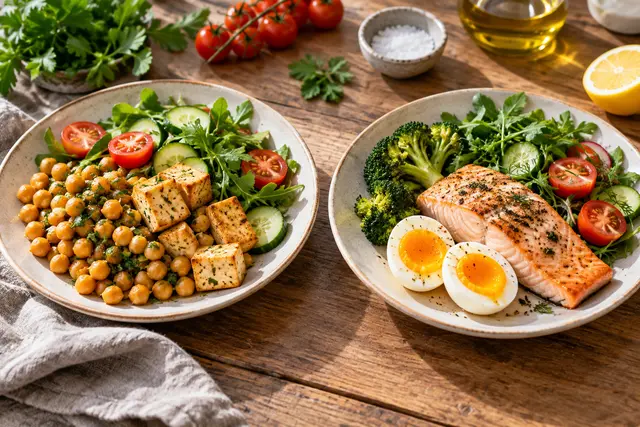
Look for the protein food in each meal. Breakfast might include yoghurt, cottage cheese, eggs or a protein-rich soya alternative. Lentils, beans, tofu, fish or poultry can contribute at lunch. Add hummus, cheese or egg to an evening sandwich. These are choices, not a compulsory menu. Select foods you tolerate, enjoy and can afford. Smaller portions at different times can contribute together, without forcing one large serving that feels unpleasant or displaces everything else.
Agree an individual amount
Online advice gives different grams per kilogram of body weight. These figures do not always refer to the same population or calculation method. Age, kidney function, nutritional status and training needs affect planning. Simply multiplying a figure by a higher body weight can be particularly unhelpful. Ask a qualified dietitian for a clear target translated into food examples, and ask when it should be reviewed. Weighing everything indefinitely is neither necessary nor useful for everyone.
Read labels and assess drinks
Compare the protein in the portion you will actually eat. A prominent “high protein” claim does not establish that a product improves your meals. Some plant drinks contain considerably less protein than milk or soya drinks. A protein powder may be a useful addition in selected circumstances, but it is not compulsory and is not automatically a complete meal. Discuss suitability if you have allergies, kidney disease or already take several supplements. Avoid buying an entire range before identifying a need.
Watch strength as well as food
Record simple everyday changes: is carrying groceries harder, do you need more help standing up, or is recovery becoming difficult? These observations have several possible explanations and deserve assessment if they persist. A body-fat scale cannot diagnose protein deficiency. If nausea or uncomfortable fullness repeatedly limits your food choices, that problem needs attention first. Forcing more protein despite strong aversion is not a sensible long-term plan. Your team can help adjust the wider care approach.
Common questions
Do I need a shake with every meal?
No. Ordinary foods can provide protein. A supplement is one possible aid for a specific need, not a requirement for successful treatment.
Will lots of protein alone protect my muscles?
No. Muscles also need appropriate loading and adequate overall nutrition. A suitable introduction to strength training and assessment of persistent weakness matter too.
Sources & further reading
- Nutritional priorities to support GLP-1 therapy for obesity: joint advisory
- Deutsche Gesellschaft für Ernährung: Gut essen und trinken
Sources checked:


Questions and experiences
Share a question or a useful experience about this topic. Every contribution is checked before publication. Comments may be written in different languages.
Loading reader contributions…
Opening the form sets a necessary session cookie. No email address is required. Publication is subject to moderation and is not guaranteed. For deletion requests: Contact