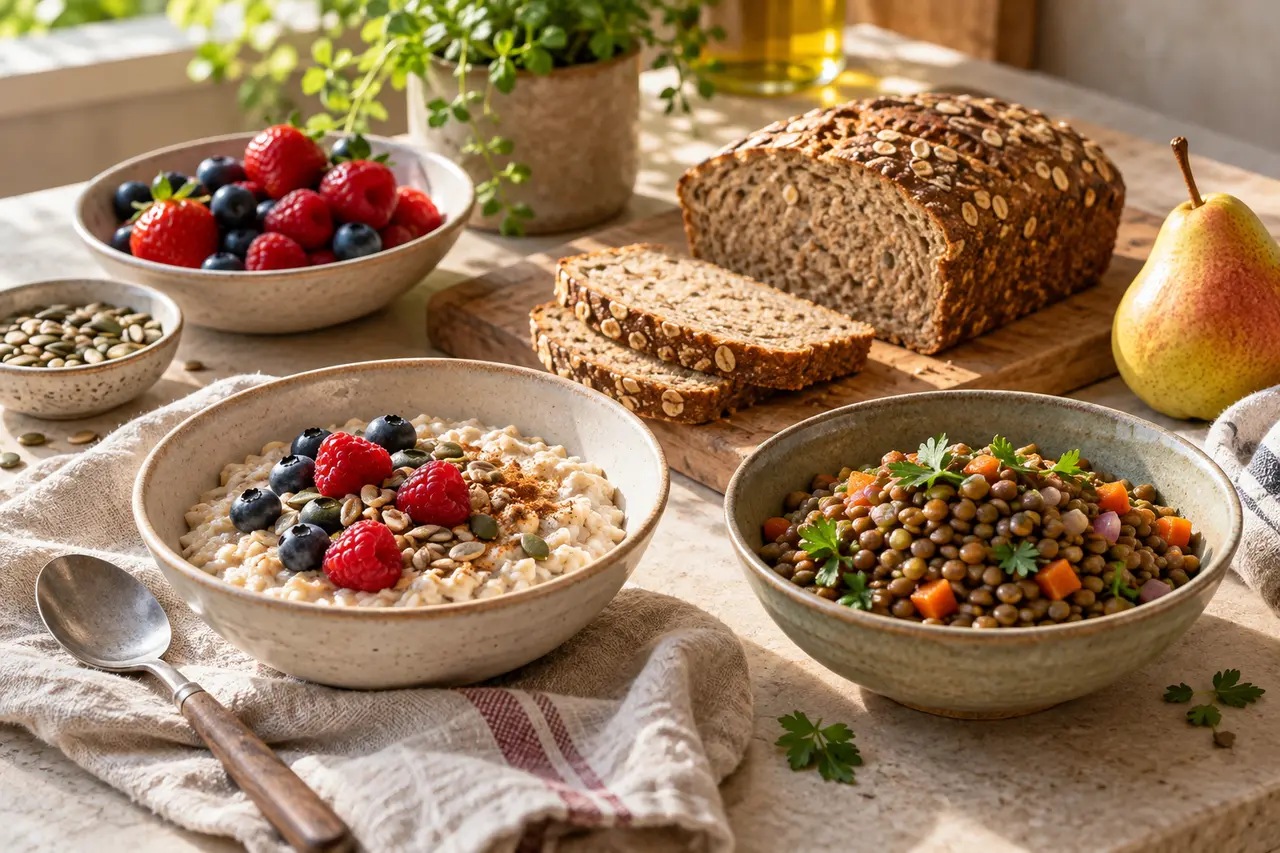
Smaller portions can mean less fruit, vegetables and whole grains without you intending it. Fibre then deserves attention. More is not automatically better, though: a sudden large increase may make a sensitive gut uncomfortable. A gradual change that you can observe is often more practical.
Find fibre in ordinary foods
Fibre comes from plant-food components that are not fully digested in the small intestine. Oats, wholegrain bread, vegetables, fruit, pulses, nuts and seeds provide different types. There is no single superfood you must use. A varied selection can fit your tastes and tolerance. If you currently eat very little, trying to meet everything with a huge bowl of bran is unlikely to be helpful. Energy, protein and other nutrients still need room in your meals.
Start with one change
You might add some oats to yoghurt or a small serving of cooked vegetables to a familiar dish. If that works comfortably, another change can follow later. This sequence makes it easier to notice links between food and symptoms. It is not a fixed medical escalation schedule. Some conditions and prescribed low-fibre diets require a different approach. Ask before changing established clinical advice on the basis of a general recommendation you have read online.
Do not reduce constipation to one cause
Eating less, changes in activity, dehydration and medicines can all affect bowel habits. Fibre alone does not solve every case of constipation. If problems continue, record the pattern, stool consistency and accompanying symptoms for your care team. Less frequent bowel movements need a different assessment from severe pain with vomiting. Marked abdominal swelling, persistent pain or vomiting require medical advice rather than taking increasingly large quantities of fibre. Do not let a food experiment delay care for significant symptoms.
Think about fluids and supplements
Fibre supplements have product-specific instructions and require appropriate fluids. A universal drinking target is unsuitable for everyone, particularly with some heart or kidney conditions. Ask a professional if you want to use a supplement or take several medicines; spacing may matter for particular products. Do not swallow dry powder as though it were a harmless shortcut. Food and supplements are not automatically equivalent, and tolerance may differ. Your existing fluid instructions remain relevant even when you change your fibre intake.
Use a simple observation, not constant monitoring
For a few days, note what you changed, how your abdomen felt and whether passing stool became easier. There is no need for a perfect chart. If food rules keep narrowing your diet or make eating frightening, say so openly. The aim is a varied, comfortable eating routine. Continuing constipation, blood in the stool or significant new symptoms should not be managed for weeks through repeated food experiments without assessment.
Common questions
Are raw foods always better?
No. Cooked vegetables and porridge can provide fibre too. Preparation can follow your tolerance; raw is not a universal marker of nutritional quality.
Should I remove all fibre if I feel bloated?
Not automatically. Consider the amount, how quickly it changed and the specific foods involved. Recurrent or severe symptoms need individual assessment rather than permanent exclusion of whole food groups.



Questions and experiences
Share a question or a useful experience about this topic. Every contribution is checked before publication. Comments may be written in different languages.
Loading reader contributions…
Opening the form sets a necessary session cookie. No email address is required. Publication is subject to moderation and is not guaranteed. For deletion requests: Contact