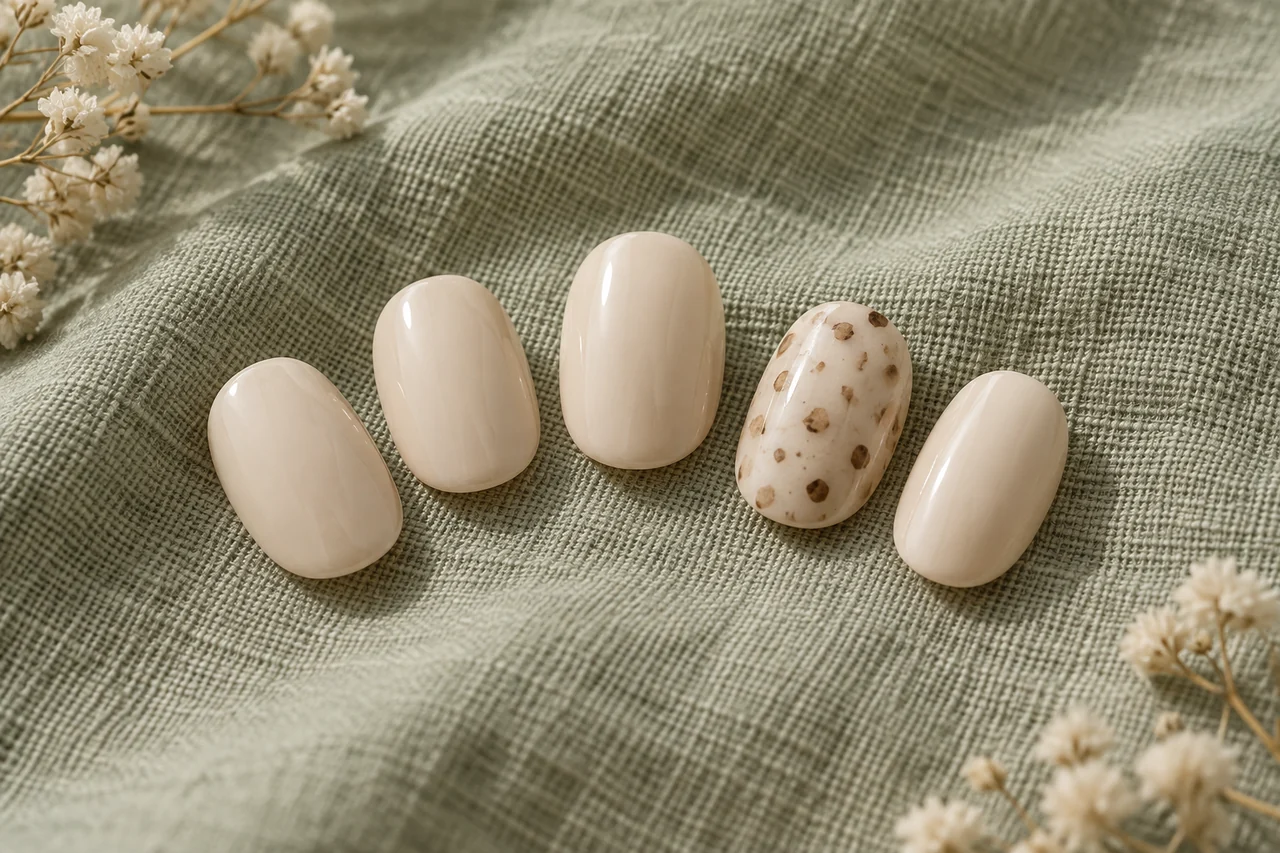
Irregular spots, open outlines or curved stripes can suggest animal patterning without realism or full-hand coverage. Build original simple forms rather than copying a brand, garment or another nail design exactly. Naturalistic colours are optional.
Choose one family of shapes
Draw spots separately from curved stripes. Spots might be filled marks, open outlines or irregular rings; stripes vary through length, bend and spacing. Start with one family so you can identify what you like. An abstract association is enough without reproducing a species precisely, leaving freedom for scale and colour.
Make irregularity deliberate
Place a few larger forms, then smaller ones with adequate gaps. Check for an unintentionally crowded corner by rotating the sketch and viewing from farther away. Keep a focal area if you want one. Identical marks in an even row look more graphic; both approaches are valid when chosen consciously.
Limit the initial palette
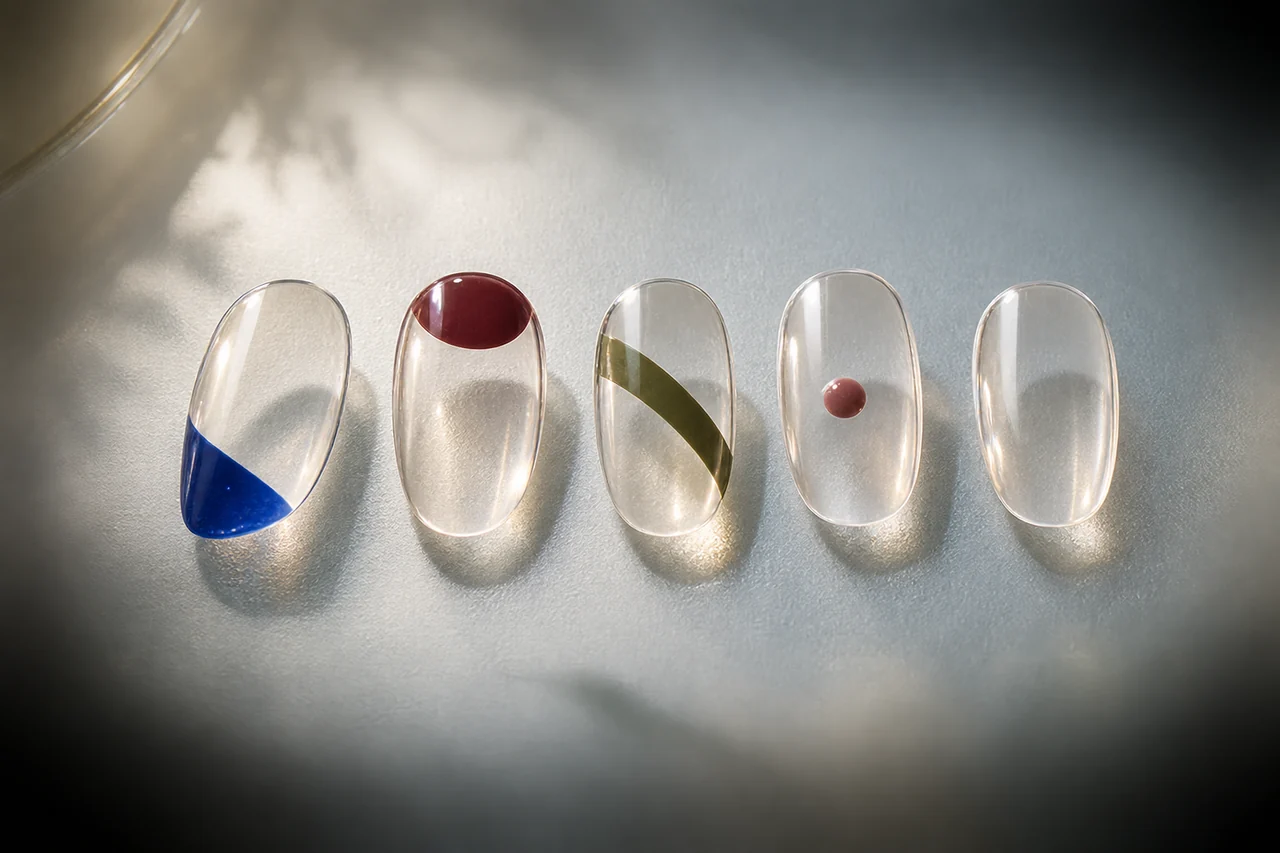
A base and darker pattern colour can suffice. A third shade may later fill selected interiors. Compare strong and softer contrast. Brown on cream is one option, not a requirement; navy on rose or dark shapes on transparency can work differently. Borrow the rhythm of natural patterning rather than every exact colour.
Compare three densities
Draw the same motif sparsely, moderately and densely, retaining colour and approximate mark size. The densest version is not necessarily most expressive: when background disappears, individual forms may become harder to read. On short nails, compare a few larger clear elements with a mixed-size pattern and a single patterned accent framed by plain nails.
Include calm surfaces and manageable execution
One or two patterned nails per hand can be framed by plain colours from the design. They are intentional quiet areas, not unfinished ones. If all nails carry the motif, reduce density where needed. Choose accent positions by your hand use and jewellery, not an assumed ring-finger rule.
Practise a few simple forms on suitable samples with ordinary polish as directed. Organic patterns allow small differences without endless corrections. Avoid craft paint and improvised glue. For a salon, bring an original sketch with base, pattern shade, density and placement, and confirm additional effort first.
Review the actual pattern mix
Compare with a typical sleeve, bag and rings. Choose a deliberate mix or a quieter counterpoint based on what you see, without assuming only one pattern is allowed. After wearing, identify whether form, contrast or distribution worked best. Change one feature next time to develop a recognisable personal version rather than collecting unrelated images.
Frequently asked questions
Must animal print be brown and black?
No. An abstract family of shapes can use other colours. Choose the colour effect independently of resemblance to real fur.
How can I avoid random-looking spots?
Plan several main shapes, then assess gaps. Shared colour or a recognisable shape family connects deliberate irregularity without making every mark identical.
Can I copy a photograph exactly?
For an original design, translate the basic idea into your own drawn shapes. Do not treat someone else’s photographs as freely reusable publication content. Your own sketch can explain the request independently.
Questions and experiences
Share a question or a useful experience about this topic. Every contribution is checked before publication. Comments may be written in different languages.
Loading reader contributions…
Opening the form sets a necessary session cookie. No email address is required. Publication is subject to moderation and is not guaranteed. For deletion requests: Contact