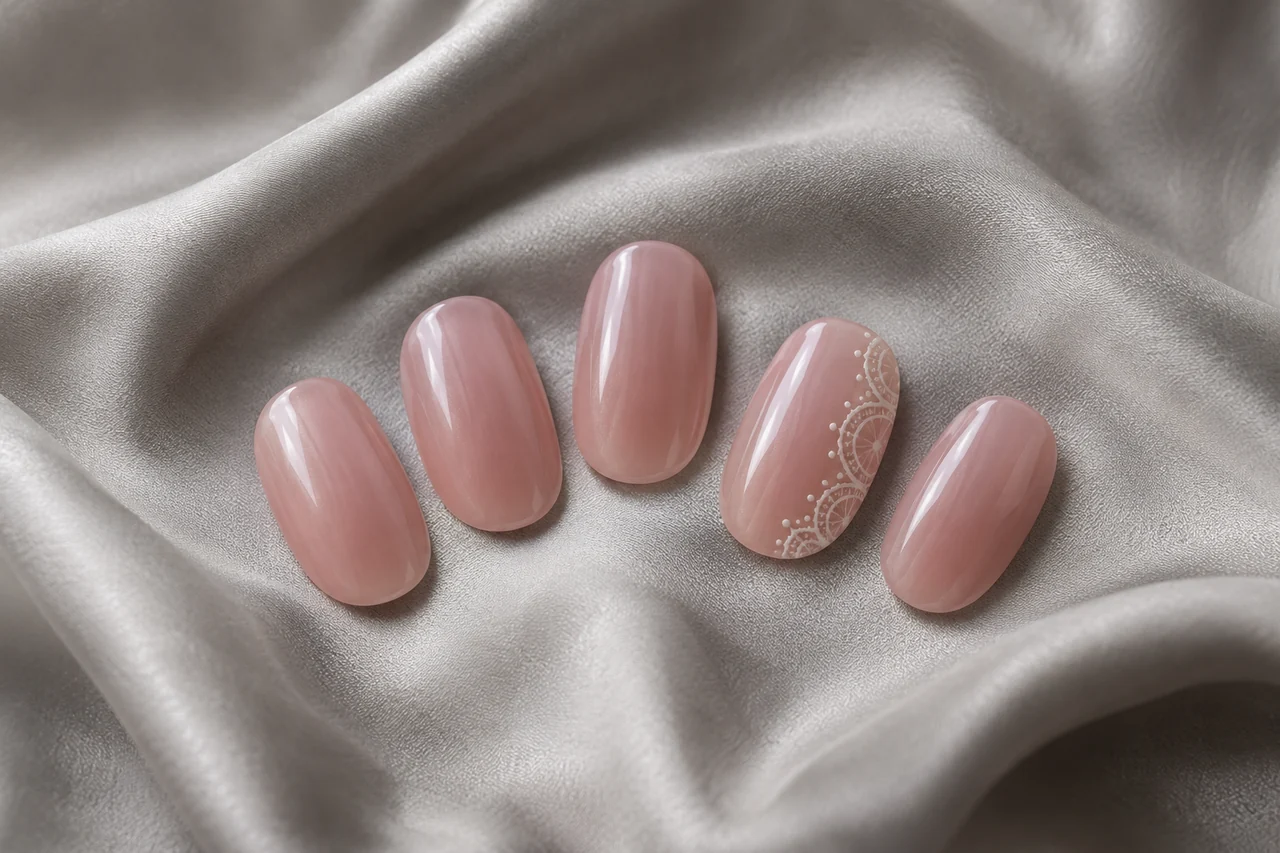
A lace effect does not need every thread of a textile pattern copied at miniature scale. A border or small section can communicate the idea more clearly than a dense design covering the whole nail.
Build an original motif from simple forms
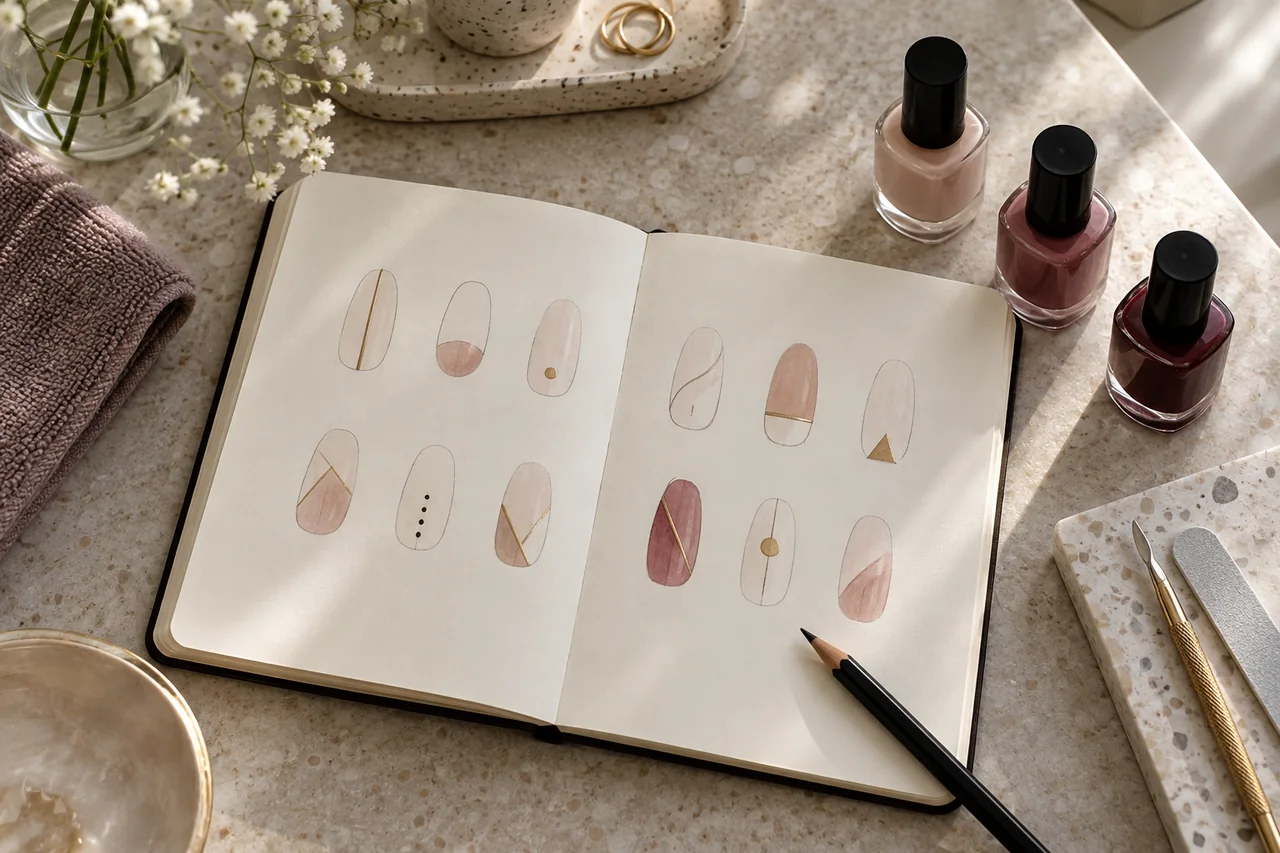
Begin with a row of small arcs, then add dots or a second offset row. Draw it large first and again at approximately your nail size. If the smaller version becomes an unclear pale patch, remove elements rather than making every line more intricate. You are developing an original motif, not needing to reproduce someone else’s photograph or protected design exactly.
Choose where the border sits
A border along an edge, across the nail or on one side leaves different amounts of calm surface. A side fragment can preserve a sheer base; a crosswise border divides the area more strongly. Set the direction before adding detail so the arcs fit the available space. On short nails, leave enough gaps for the structure to remain readable.
Balance contrast and detail
White lines on a near-white base are quieter than the same lines on navy. Closely related shades can support more detail; stronger contrast with fewer elements can be clearer from farther away. Neither is inherently more elegant or festive. A black-and-white sketch shows structure, but actual polish shades can soften the effect substantially.
Decide the whole-hand extent
Draw five outlines and fill one before adding another. Consider rings, patterned clothes and sleeves together. A small accent may leave other favourite details more visible, while a richer combination can also be deliberate. Decide the extent beforehand instead of decorating every remaining blank nail automatically.
Choose an appropriate execution
A lace look may be painted or made with intended cosmetic decorations. Ask the salon which technique suits your desired detail and product system. Follow directions for any decorative nail product used at home. Real lace fabric and improvised glue are unnecessary. Begin with one border on a suitable sample and check whether the intended finish preserves its spaces and lines.
Connect the occasion and explain the brief
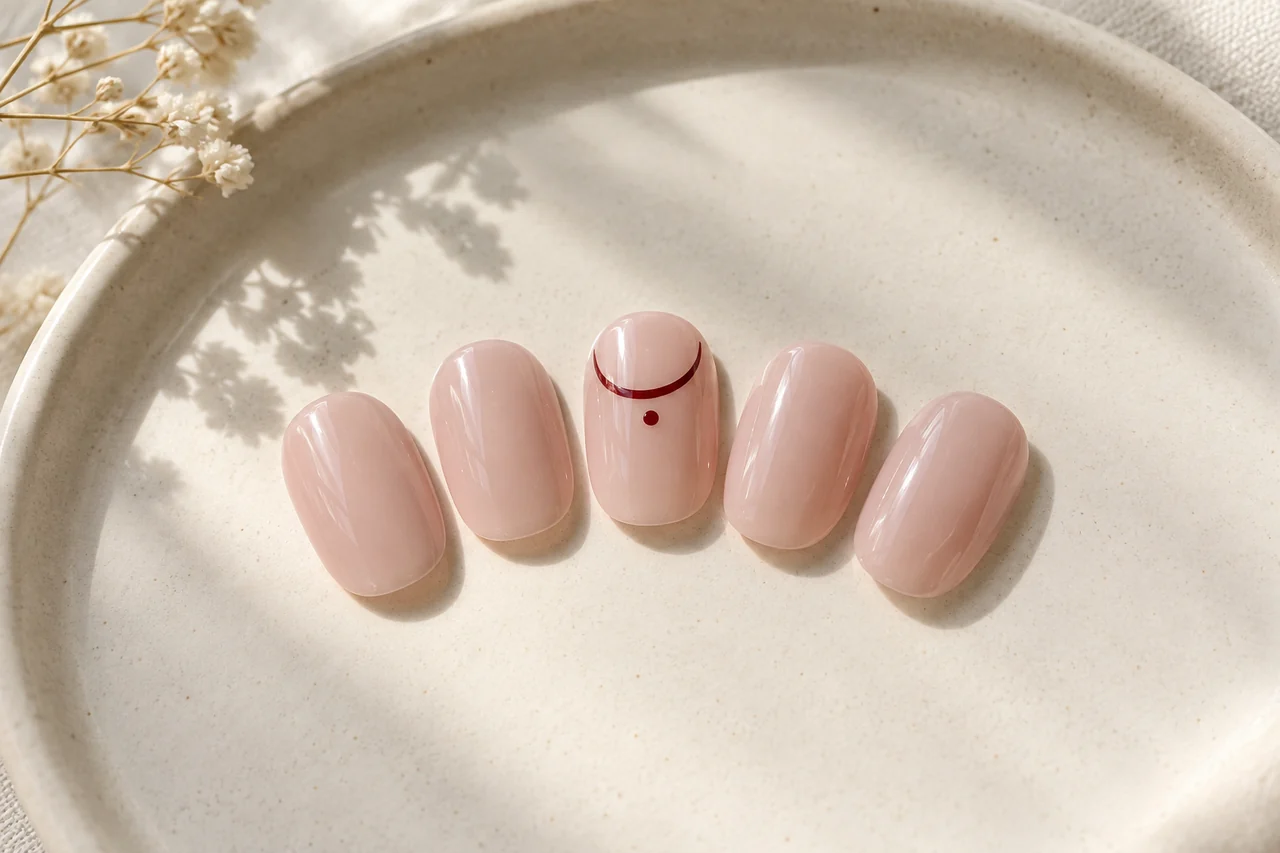
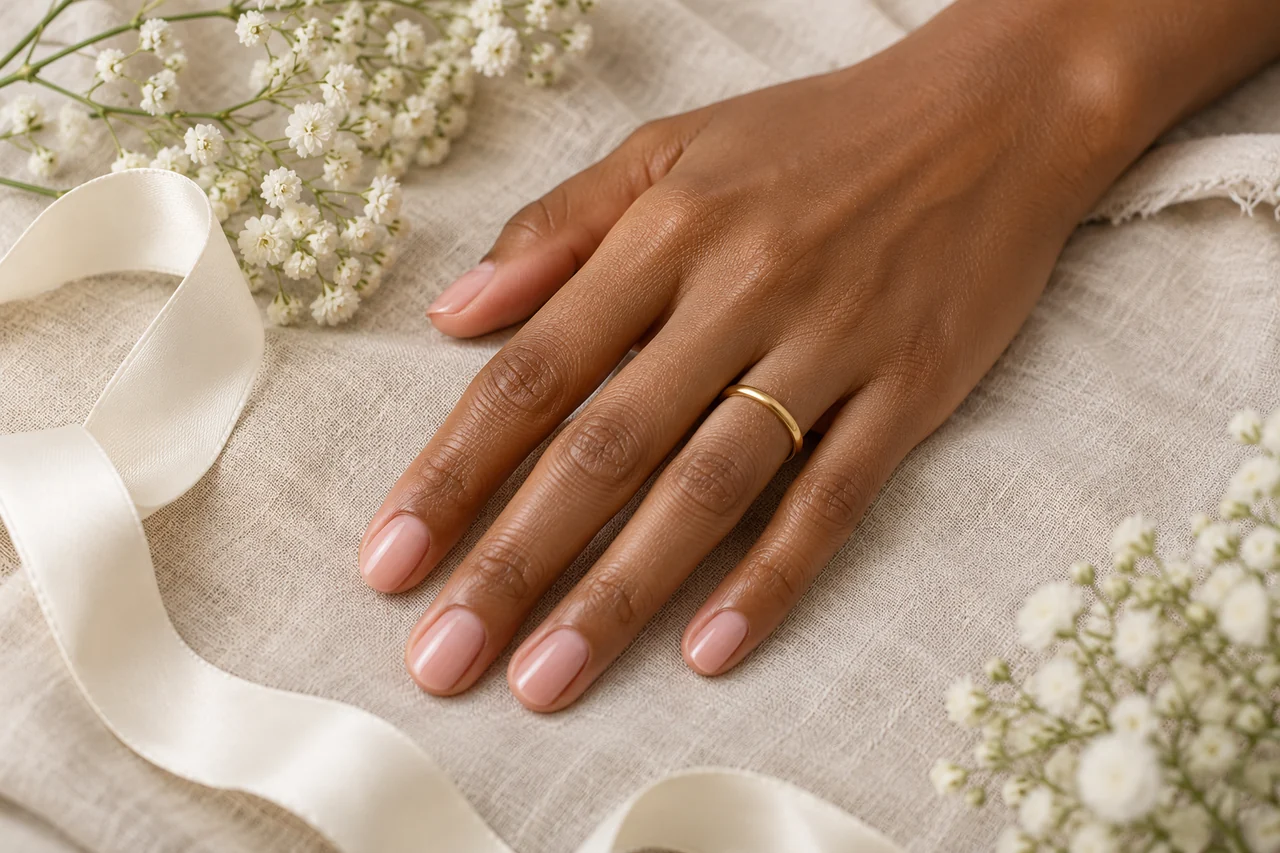
For a wedding, borrow an abstract idea such as curved lines or open spacing from a dress rather than copying its exact lace. Compare with the fabric and planned jewellery. A dark border on a sheer base can take the same idea into everyday styling; an elaborate event does not demand elaborate nails.
A clear request might be: “One side border per hand, small white arcs and a few dots, plenty of sheer rosy space, other nails plain.” Ask about added time and complete price. On a sample, describe lines as too dense or contrast as too strong rather than only saying “more delicate”.
Frequently asked questions
Are lace nails only for weddings?
No. Colour, contrast and extent can change the effect. A small dark border differs from white patterning over a milky base.
Do I need actual lace on the nail?
No. Treat it as a drawn pattern. Do not substitute fabric scraps or household glue for appropriate cosmetic products.
How can I explain “fine” more clearly at a salon?
State the number of rows, position and amount of free surface. A small sketch with a few arcs usually communicates more than an undefined adjective.
Questions and experiences
Share a question or a useful experience about this topic. Every contribution is checked before publication. Comments may be written in different languages.
Loading reader contributions…
Opening the form sets a necessary session cookie. No email address is required. Publication is subject to moderation and is not guaranteed. For deletion requests: Contact