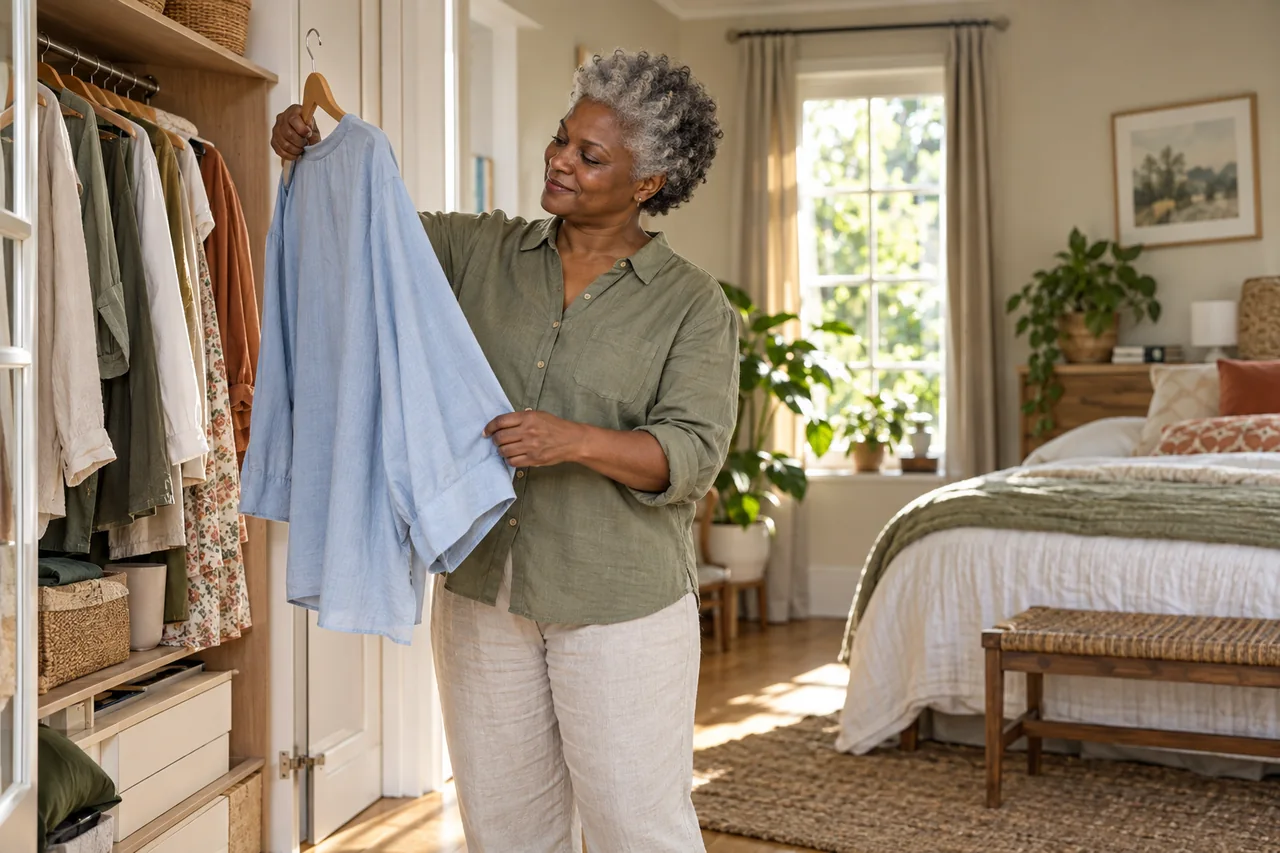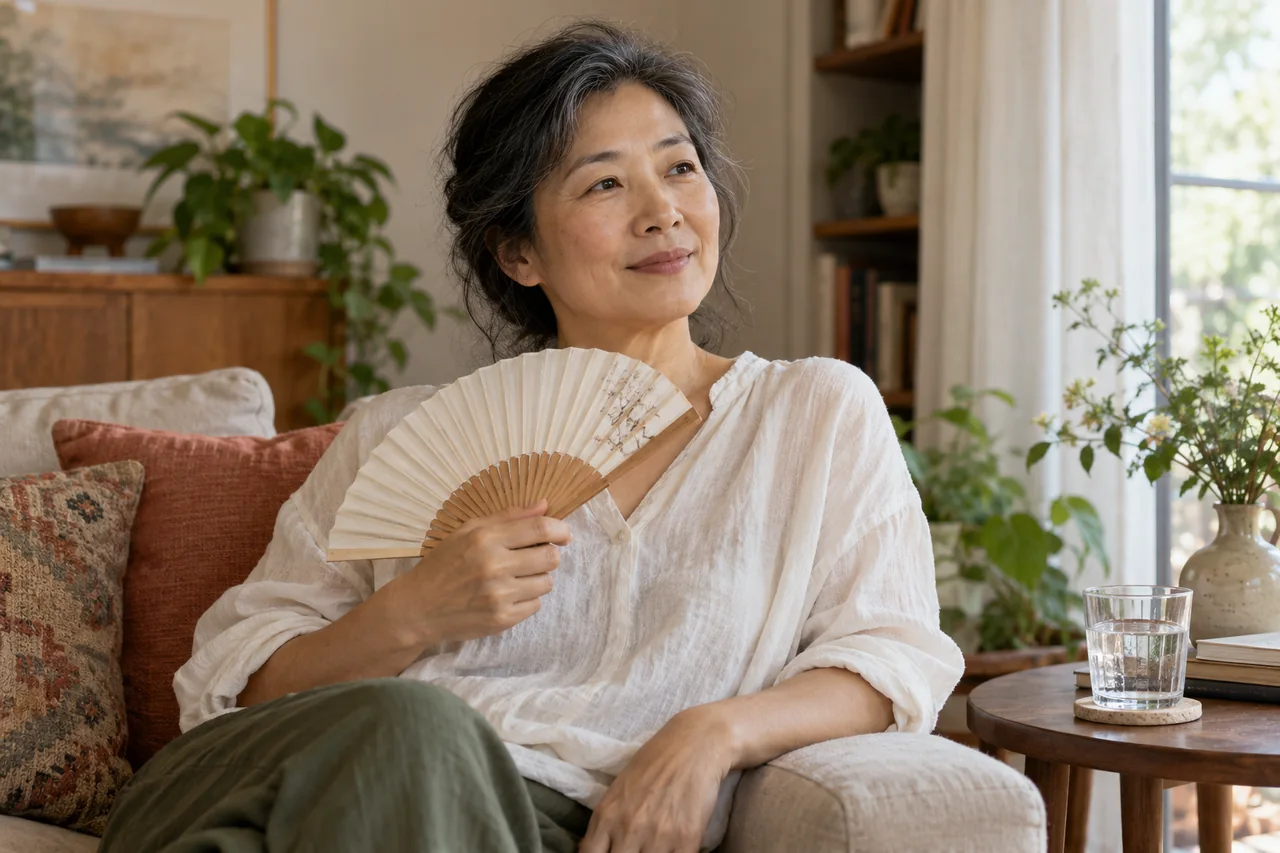
When heat begins, being able to change something quickly may help. A prepared setting matters more than a complicated plan. Removable layers, airflow and an accessible drink can improve the moment. They are comfort measures, not replacements for treatment of troublesome hot flushes, and can be adapted for home, work and travel.
General information, not a diagnosis or an individual treatment recommendation. Discuss persistent or concerning symptoms and treatment choices with a qualified healthcare professional.
Choose the hardest setting
Begin with the meeting room, crowded train or bed where heat is most difficult. Each has different constraints: a seat may change at work while a layer can be removed in transit. Identify what you control. One prepared step creates options without remaking the entire home or wardrobe.
Test clothing for movement and changing
Several light layers can offer flexibility, but fit and personal feel matter. Check whether a layer comes off easily while sitting and whether seams or cuffs irritate. Natural fibres are not automatically superior in every setting; construction and blends also matter. Choose actual comfort rather than a label suggesting health benefits.
Use airflow sensibly
A fan may help when its noise and airflow suit you. Avoid unnecessarily irritating dry eyes or a sensitive neck. Place it securely with safe cables and discuss shared-room preferences. Extreme environmental heat also requires general heat-protection measures: a fan alone cannot prevent overheating. Circulatory problems or confusion are not merely comfort issues.
Prepare a genuinely portable kit
A light spare top, soft cloth and securely closed drink may suffice. Consider hygienic storage for used clothing. Keep the kit small enough to carry. A spare item at work or in the car may be more useful than repacking daily. Adapt contents to experience; unused products need not occupy permanent space.
Make night-time changes simpler
Keep dry nightclothes and an easily replaced cover nearby if needed. Separate bedding layers can fit two people’s different warmth preferences. Discuss this practically: separate duvets say nothing about affection. Avoid extensive night-time rearrangements that increase wakefulness. Frequent sleep-destroying sweats need medical discussion as well as better bedding organisation.
Keep cooling skin-friendly
A comfortably cool cloth or drink may be enough. Do not leave unprotected ice on skin for long periods. Extreme cold can be unpleasant and problematic with sensitive skin or poor circulation. Do not add essential oils to force a stronger cooling sensation. Altered sensation or relevant illness may warrant advice. The goal is comfort, not maximum intensity.
Keep useful elements after a week
What was accessible and comfortable? Did a garment work, was a fan too noisy, was the spare kit used? Remove unnecessary parts and improve one bottleneck. This shows practical value without proving fewer flushes. Ongoing severe difficulty or unusual changes in sweating deserves advice rather than increasingly elaborate purchases.
Frequently asked questions
Does a fan stop the hormonal hot flush?
It may improve perceived comfort without automatically changing the mechanism. Frequent, severe or sleep-disrupting flushes may need additional treatment discussion.
Do I need specialist cooling clothing?
Not necessarily. Try existing light layers and changing arrangements. Specialist items may feel pleasant but should justify their cost through actual usefulness, not their marketing label.