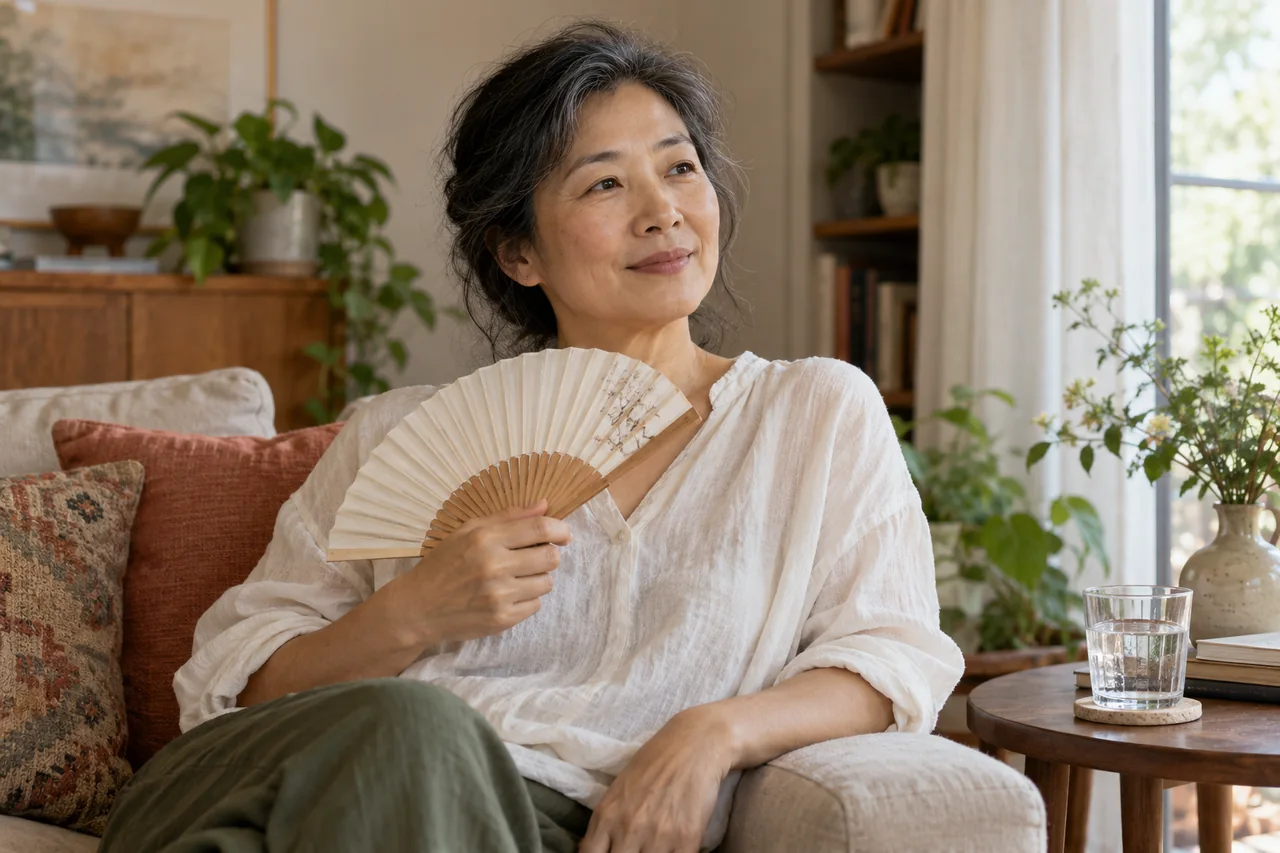
Body changes and fluctuating warmth can make getting dressed unexpectedly demanding. You do not need a new identity or an entirely new wardrobe. A few adjustments to fit, layers and accessibility may help. Your style can stay familiar, evolve or do both. The aim is to move freely and feel comfortable in everyday life.
General information, not a diagnosis or an individual treatment recommendation. Discuss persistent or concerning symptoms and treatment choices with a qualified healthcare professional.
Start with a real situation
Choose one difficult area: office work, outdoor tasks, leisure or a special event. Put together an entire outfit and move around in it for a few minutes. Identify the actual problem, such as a tight waistband, scratchy collar or awkward jacket. A specific observation is more useful than deciding the whole wardrobe has failed. Resolve one practical obstacle without sorting everything at once.
Check fit while sitting
An item can look suitable standing up but feel uncomfortable at a desk. Sit, raise your arms, walk and reach for something. Notice pressure and freedom of movement. Size labels are only a guide: cuts with the same stated size may fit very differently. Choosing another size or shape is a practical decision for the body you have today, not a personal setback.
Plan layers deliberately
An easily removed outer layer can help when warmth changes. Check that the outfit underneath also suits the occasion, so taking off a jacket does not leave you uncomfortable about your appearance. A scarf or waistcoat may help if easy to handle. Use your experience: no single fabric or uniform is ideal for everyone with hot flushes.
Build a dependable set of outfits
Choose several combinations that work without much thought. Keep private reference photos if useful or hang matching pieces together. A spare top at work can provide reassurance. Consider washing requirements and drying time so useful clothes are not continually unavailable. The collection need not be minimal; it should provide reliable options on rushed mornings or after poor sleep.
Alter existing clothes where practical
A small tailoring adjustment, a different underlayer or moving a button may restore comfort. Check whether the fabric and condition justify the effort. Temporarily separate problematic items instead of struggling with them every morning. You do not have to decide immediately whether they should leave permanently. A clear area of currently wearable clothes reduces frustration and impulsive purchases.
Shop to fill a specific gap
Before buying, describe the missing function and which existing pieces a new item should match. Set a budget and check return options. A menopause-branded collection is not automatically better than ordinary well-fitting clothes. Assess actual comfort, construction and care needs. Something useful only in very limited circumstances may not be a priority. Sleeping on the decision can prevent an unsuitable purchase.
Keep your perspective kind
Body changes can bring feelings; clothing should not intensify them every day. You need neither become inconspicuous to seem age-appropriate nor follow every trend. Enjoy colour, jewellery and favourite pieces. A trusted companion may help if mirrors or sizes are distressing. A successful look can be lively, comfortable, distinctive or simply yours, without needing to appear younger or thinner.
Frequently asked questions
Are natural fibres always better for hot flushes?
Not automatically. Construction, fit, blends and activity influence comfort. Test clothes in real use. Whether you can move comfortably and adjust layers is more informative than a blanket judgement about fibre.
Should I immediately give away everything that no longer fits?
You do not have to. First create an accessible area with comfortable current choices and store other items separately. This makes daily dressing easier without forcing every emotional or practical decision at once.