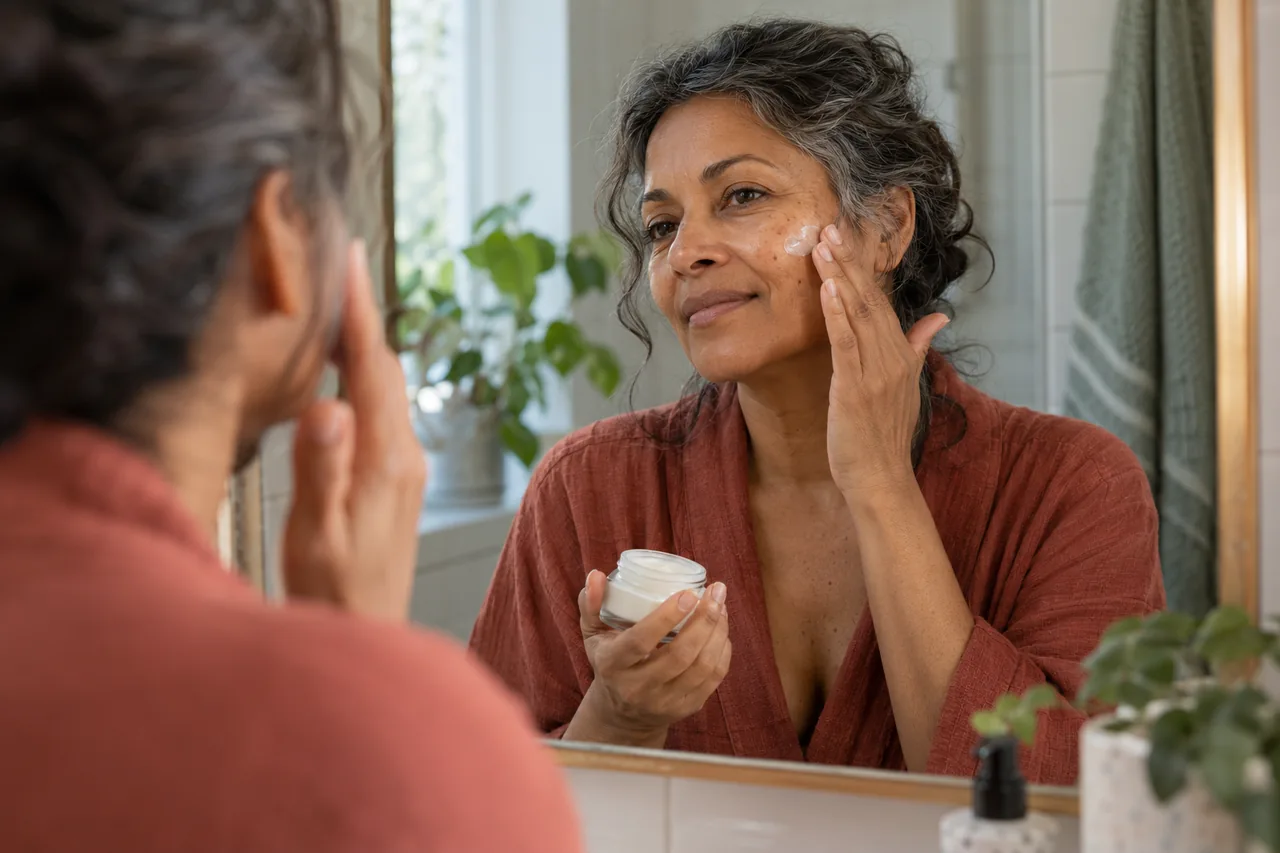
Make-up should look and feel right to you. If your skin becomes drier or hot flushes occur, an old routine may suddenly feel heavy or impractical. That does not mean you must wear make-up differently at a certain age. Small adjustments can help familiar products work comfortably on days when your needs change.
General information, not a diagnosis or an individual treatment recommendation. Discuss persistent or concerning symptoms and treatment choices with a qualified healthcare professional.
Decide what you want from the look
Do you want to soften a few red areas, add colour or create a special-occasion look? A clear aim can prevent unnecessary layers. Look at your face from a normal distance in good light. Lines and visible texture do not automatically need correcting. Choose two priorities, such as comfort and easy touch-ups, then shorten or expand the routine accordingly.
Allow skincare and sunscreen to settle
Use tolerated moisturiser as needed and apply sunscreen as its own step. Allow products to settle according to their instructions before adding make-up. If products pill, the combination or quantity may not suit you; change one thing at a time. Do not casually mix sunscreen into foundation. A comfortable base does not require multiple serums: a simple, compatible combination can be easier to manage.
Start lightly and add only where wanted
Apply a little foundation to the areas you choose, then assess what still needs coverage. Targeted concealer may be more practical than another full layer. Check transitions at the jaw and neck. If a product emphasises dryness, more is rarely the easiest answer. Review skincare, texture and application first. A trial day at home provides more useful information than shop lighting alone.
Use powder selectively
If you like powder, start where you actually need it. A heavy layer across the whole face may feel uncomfortable on dry skin. After a hot flush, gently blot moisture instead of immediately adding products. Wait a moment and decide whether a touch-up is necessary. A small clean tissue and one familiar product may be enough when you are out.
Keep eyes and lips comfortable
Take particular care with dry or irritated eyes. Use products intended for the eye area, keep tools clean and do not share mascara or other directly applied cosmetics. If a product burns, pause rather than continuing. Tolerated lip care can provide a comfortable base. Colour, shine and intensity remain personal preferences; there is no age at which you must restrict yourself to particular shades.
Pack a small touch-up kit
Carry only what you actually use, perhaps a clean tissue, lip product and a little targeted coverage. A large collection does not make decisions easier. Check packaging and usable life, and protect products from excessive heat. After a flush, take a moment rather than rushing to redo everything. Normal changes during the day do not imply poor care or a lack of professionalism.
Finish the day gently
Remove make-up thoroughly without vigorous rubbing. Use a tolerated cleanser and moisturise as needed. If removal regularly burns or leaves prolonged redness, review the products and technique. Seek advice for persistent new skin changes when appropriate. The routine should end with comfortable skin, not aggressive removal of every trace of the day. Make-up-free days can be an equally thoughtful personal choice.
Frequently asked questions
Is waterproof make-up always better for hot flushes?
Not automatically. It may last longer, but must be tolerated and removed gently with a suitable method. Test the whole combination in everyday use. Excellent wear does not compensate for removal that repeatedly irritates skin.
Should I cover lines with more foundation?
More product may collect in lines and feel less comfortable. Thin application and targeted coverage are often easier to control. Choose your desired result; visible skin texture does not make a look unsuccessful.