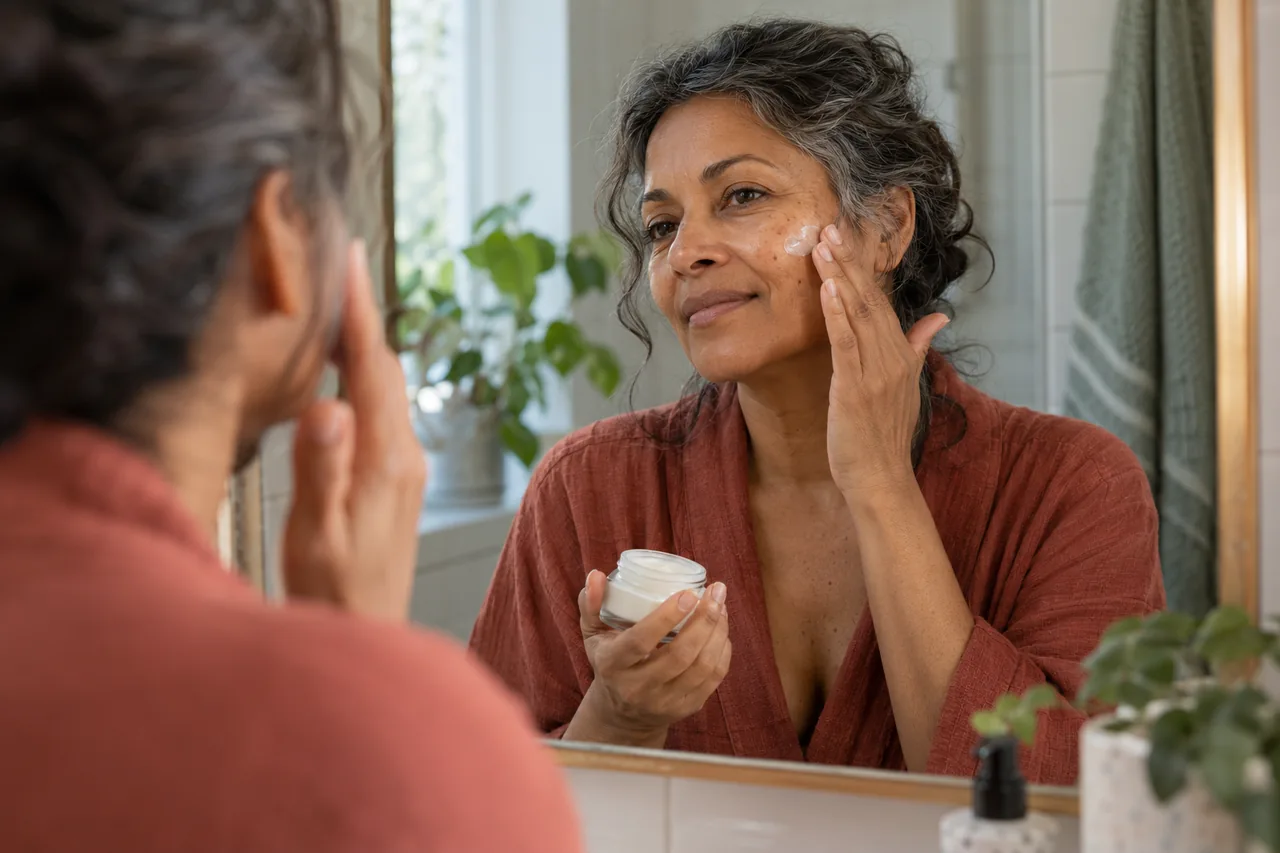
If your skin starts feeling tight or familiar products become uncomfortable, you do not necessarily need an entire new skincare range. Skin may become drier during and after menopause, while weather, cleansing, medicines and skin conditions also matter. A simple approach can reduce irritation and make changes easier to recognise. The goal is comfortable skin, not a wrinkle-free ideal.
General information, not a diagnosis or an individual treatment recommendation. Discuss persistent or concerning symptoms and treatment choices with a qualified healthcare professional.
Review what you already use
Gather products that regularly touch your face and body, including cleansers, exfoliants, serums, fragrance sprays and make-up removers. Note when tightness appears and whether anything changed beforehand. You may discover several intensive products being used together. You do not have to identify a responsible ingredient immediately; simplifying the picture supports observation and any later professional advice.
Keep cleansing gentle
Very hot water, prolonged washing and vigorous rubbing can add to dryness. Choose a mild cleanser and pat skin dry. Notice how it feels afterwards. If severe tightness means you immediately need cream, review both the product and how you use it. Skin does not need to feel squeaky clean. A short, well-tolerated routine can be more useful than several elaborate cleansing steps.
Choose suitable basic moisture care
A simple moisturiser without unnecessary fragrance can be a starting point. Texture and tolerance matter more than price or a menopause label. Check whether it remains comfortable and works with your sunscreen. A different consistency may suit the body and face; one product need not serve every area. The routine should remain practical and should not cause additional burning or itching.
Keep morning and evening routines manageable
In the morning, comfortable skincare and suitable sun protection can prepare you for the day. In the evening, remove make-up and dirt gently and moisturise as needed. Every night does not require another active ingredient. If retinoids, acids or other intensive products irritate, discuss their use with a professional. Adding several active products together makes it harder to judge what helps.
Remember the rest of your skin
Dry shins, hands or arms may need as much attention as the face. Keep a tolerated body moisturiser within easy reach after washing. Use appropriate protection during frequent contact with water or cleaning products and avoid clothing that rubs. Notice particularly affected areas: a local rash or inflamed patch may need different treatment from a general cosmetic routine.
Set kind, realistic cosmetic goals
Skincare can improve comfort and reduce dryness. It cannot be expected to reverse menopause or prevent every visible change. Filtered and carefully lit photographs are an unfair comparison. Choose goals that matter to you, such as less tightness, more comfortable make-up or fewer steps. These are easier to assess than promises of looking ten years younger. Enjoying skincare does not require fighting your age.
Know when to seek assessment
Seek advice for severe itching, persistent inflammation or cracking, or new concerning changes. Suddenly pronounced dryness may also have other influences. Bring a list of products you use. Do not independently replace prescribed skin treatment with cosmetics. Dermatological advice may lead to a simpler routine rather than more purchases; sometimes leaving particular products out is the most useful change.
Frequently asked questions
Do I need a cream specifically for women over 50?
Not necessarily. Age-based labelling says little about whether ingredients and texture suit you. Choose for dryness, tolerance and everyday use. An existing product that works well can stay.
Should dry skin be exfoliated vigorously?
Not automatically. Rubbing and intensive ingredients can worsen irritation. Review cleansing and basic care first. Persistent flaking, redness or itching deserves assessment rather than progressively more exfoliation.