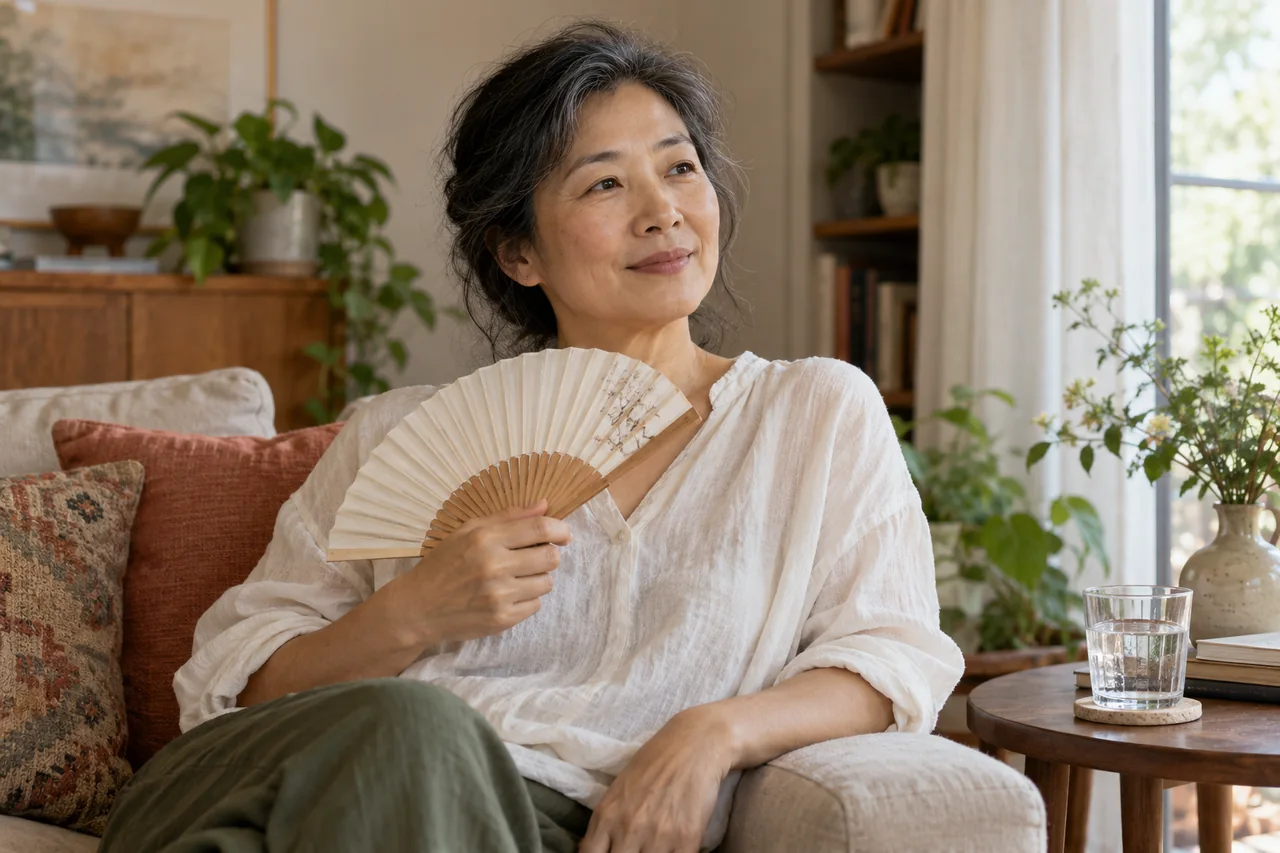
A cool cloth, quiet evening ritual or favourite drink can feel pleasant. That does not mean every home remedy treats hormonal change or substantial symptoms. The label covers environmental adjustments as well as active or risky plant substances. A few clear questions help separate benefit, effort and safety.
General information, not a diagnosis or an individual treatment recommendation. Discuss persistent or concerning symptoms and treatment choices with a qualified healthcare professional.
Define what should improve
Do you want more comfort during a flush, easier changing at night or fewer flushes? These are different goals. A fan may improve the first without altering the hormonal process. A precise question makes promises testable and reduces disappointment. Bringing hormones into balance is too vague to measure useful benefit.
Distinguish types of evidence
A suggestion may rest on everyday experience, a plausible explanation or controlled research. Brief advertisements can make them sound equivalent. Ask whether comparable people and a suitable comparison group were studied. Laboratory effects do not establish effective treatment. One person’s improvement cannot prove causation because symptoms fluctuate and other changes may occur together.
Begin with low-risk adjustments
Layers, an accessible drink or a more comfortable bedroom often require little effort. Use existing items before buying specialist menopause products. Assess whether the measure helps daily life and whether it bothers you or others. A safe comfort measure can remain worthwhile without a medical effect, provided expectations are honest and its limits understood.
Scrutinise ingestion and intimate use
Safety deserves more attention when swallowing substances or applying them to sensitive mucous membranes. Extracts, essential oils and high-dose supplements differ from a cool towel. Ingredients may irritate, interact or be unsuitable. Discuss them with a clinician or pharmacist, particularly with illnesses or other medicines. Familiar food ingredients do not make homemade vaginal preparations appropriate.
Plan a manageable trial
Choose one low-risk change and a short observation period. Record the hoped-for relief and reasons to stop. Starting five products together makes effects difficult to attribute. Include cost and effort: small benefit may matter, but should be weighed against inconvenience or adverse effects. Medicines and supplements have additional professional requirements beyond this simple comfort experiment.
Recognise sales pressure
Guaranteed cures, supposedly suppressed secrets and claims that delaying purchase causes permanent harm deserve scepticism. Check shop links and whether risks are explained. Numerous ingredients do not prove quality. Seek independent information about the actual product or substance. You can postpone a decision. Responsible providers can explain who should not use their offering.
Seek care when difficulty remains substantial
Severe sleep problems, pain, depressive symptoms or frequent disruptive flushes need not be managed only with remedies. Medical advice can explain suitable options. New postmenopausal bleeding and other warnings require assessment even when you prefer natural approaches. Professional care and personal everyday tricks can coexist. The goal is a safer, easier life, not proving you can manage without help.
Frequently asked questions
Is a remedy worthless without studies?
Not necessarily. A cool cloth may feel pleasant without evidence of lasting symptom reduction. Honest expectations and low risk matter. For ingested substances or cure claims, feeling good is insufficient evidence of safety.
Why does something help my friend but not me?
Symptoms, expectations, surroundings and other conditions differ, and symptoms fluctuate naturally. You need not disprove the experience or blame yourself. Assess what is safe and practically useful for you.