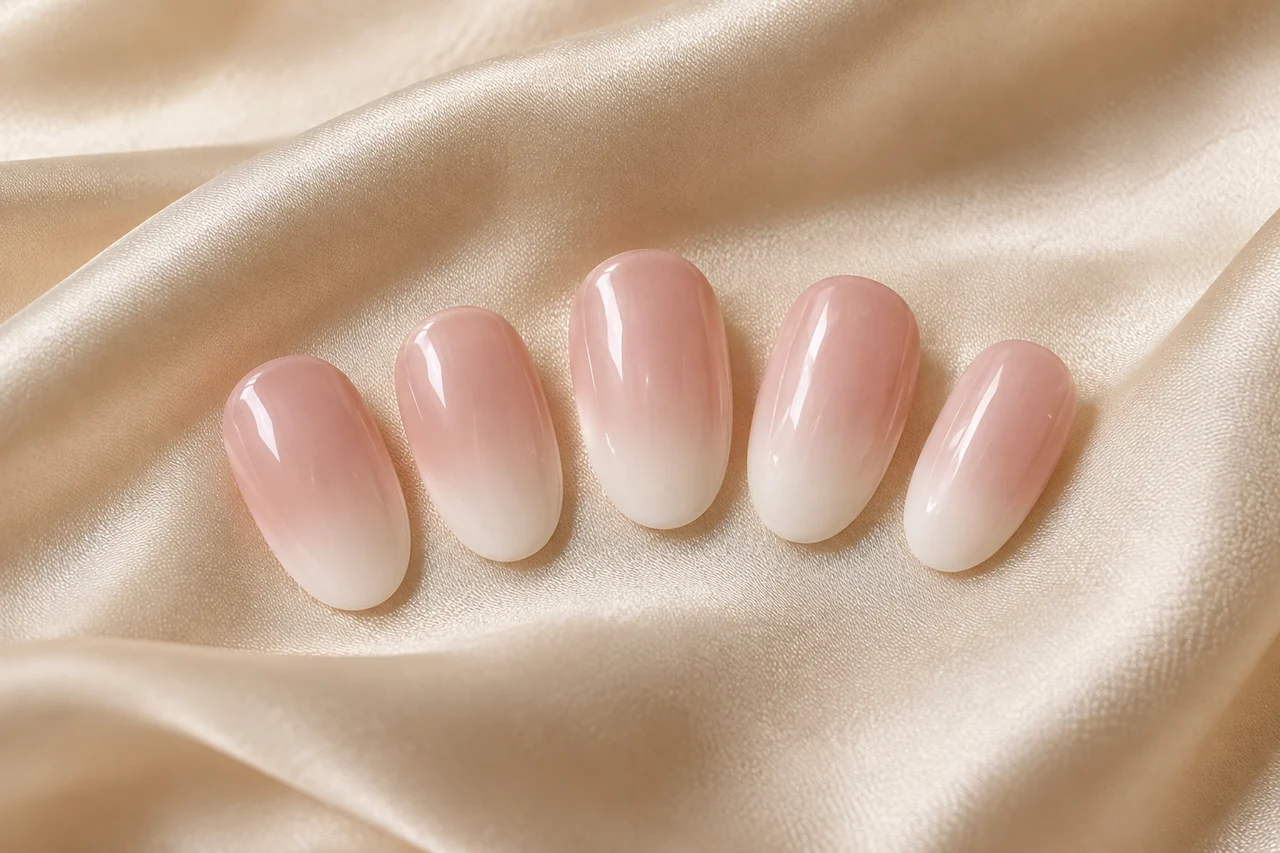
Ombré describes a soft colour transition. In nail styling, babyboomer often means a rosy or beige base fading into a white tip. The name alone does not specify length, opacity, transition strength or a product system.
Draw the difference
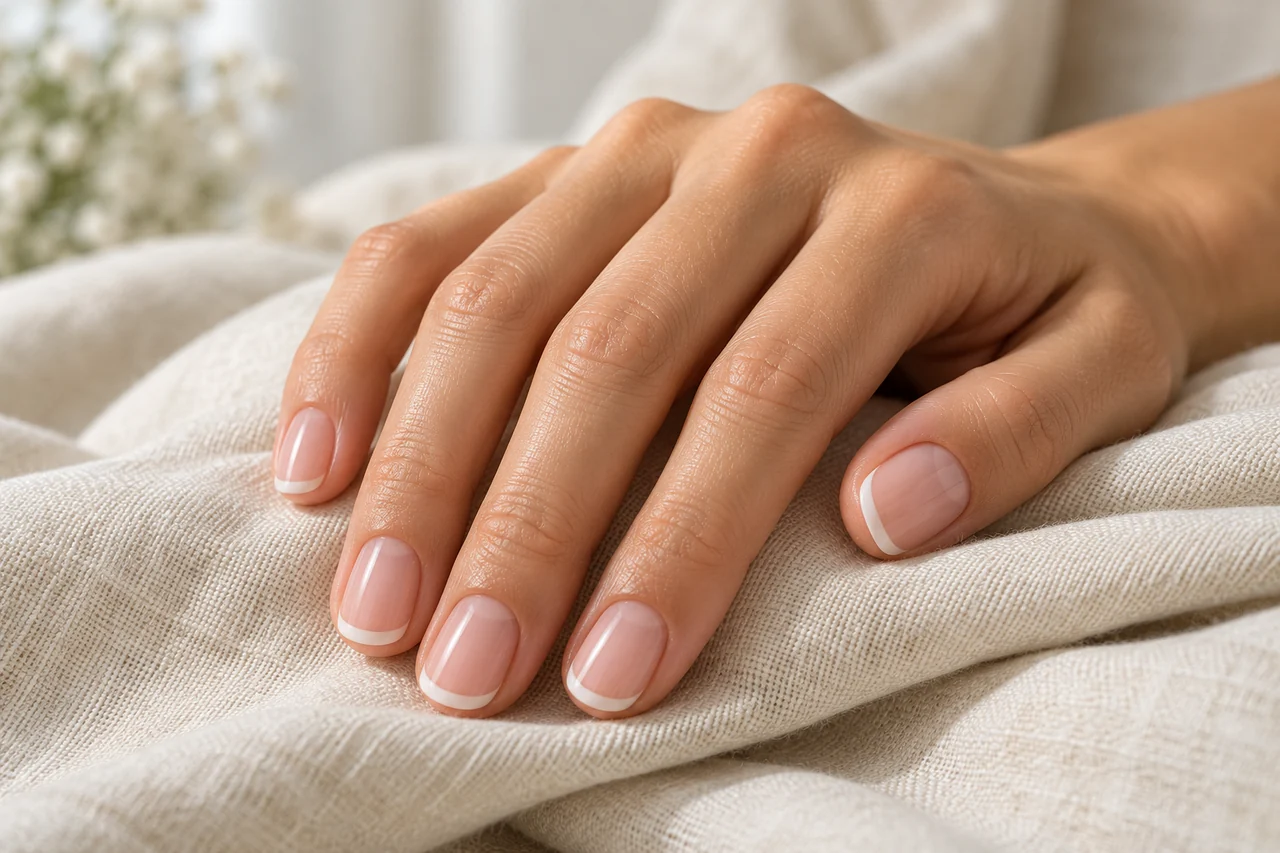
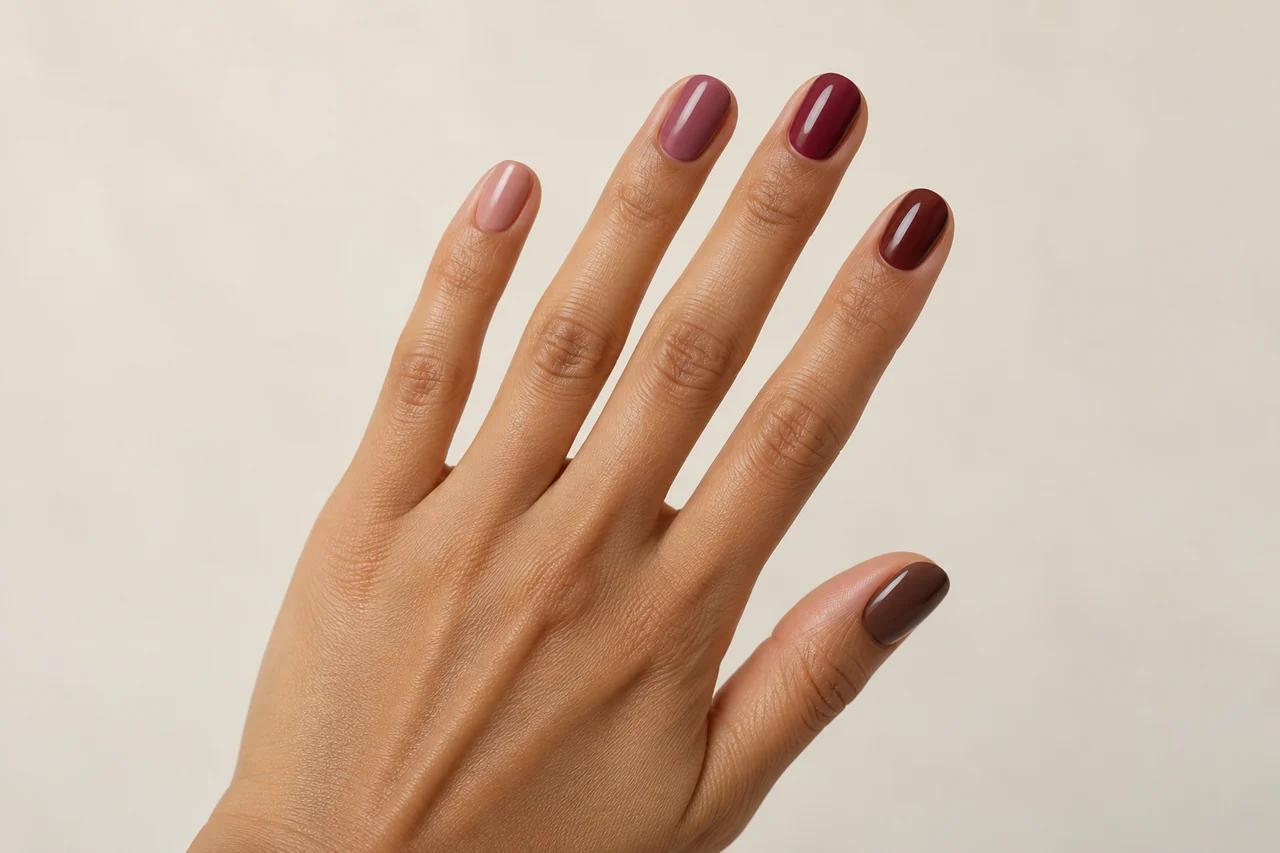
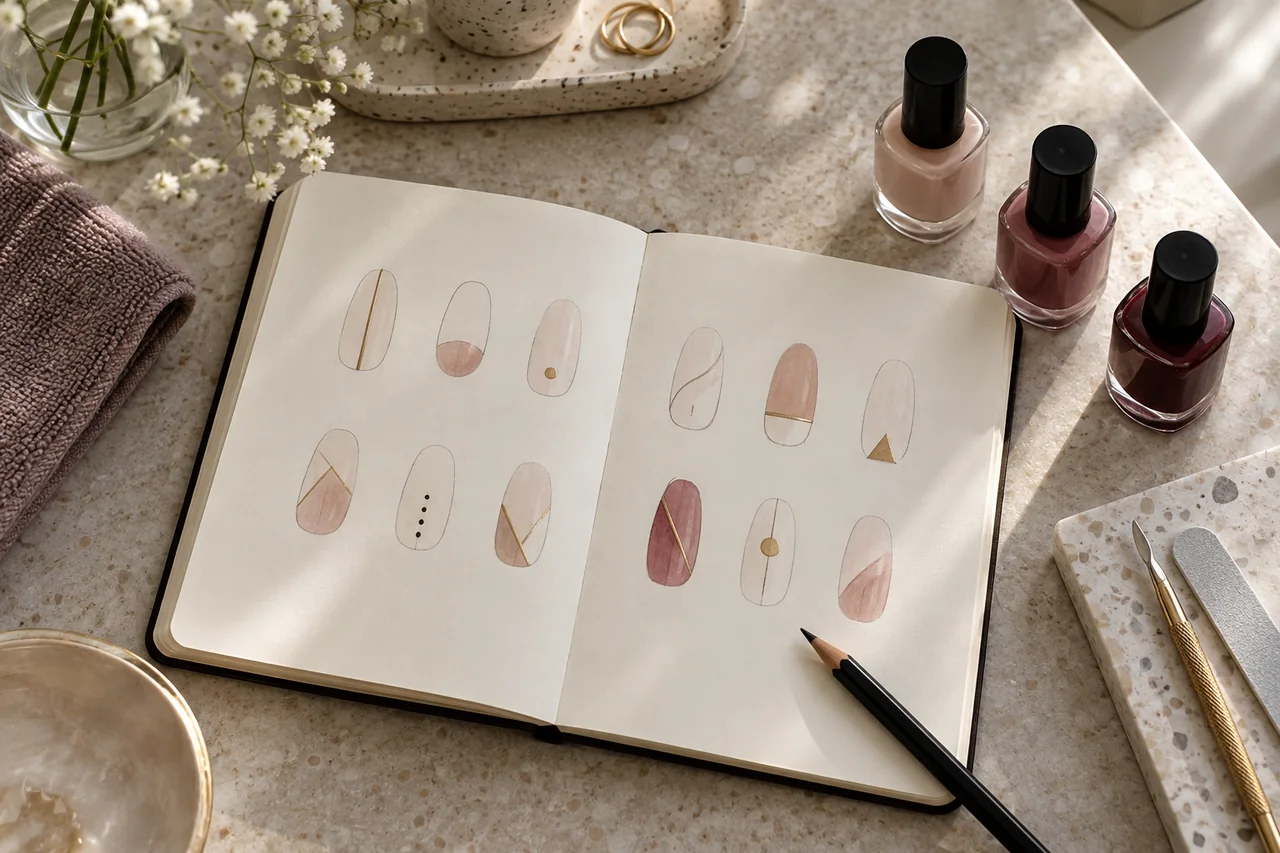
Sketch three equal outlines: rose with a sharply separated white tip, the same colours with a soft fade, and rose fading into berry. This distinguishes a French edge, the pink-white gradient described here and another coloured ombré. The drawing need not reproduce exact shades. It helps identify whether you want a boundary, a softly fading light edge or colour movement across the whole surface.
Proportion the transition
A gradient needs space. If white covers nearly all of a short nail, little rosy base remains. A fade only at the outer edge may resemble soft French styling. Mark roughly where the transition begins and ends, using proportions such as outer third or central area rather than pretending a millimetre rule fits everyone. Adapt that relationship to different nail sizes.
Choose opacity separately
A translucent tip reveals more natural nail than opaque white, and the base may also be sheer, milky or covering. Small screen images can conceal this difference. Ask for a real sample or clear system description. A soft fade need not be invisible, and a visible gradient need not have a harsh boundary. Compare colour visibility and transition softness together.
Compare three distinct concepts
Choose a very sheer light version, a more visible white-tip version and a coloured gradient rather than collecting many near-identical references. Note what you want from each. You may prefer one colour direction with another example’s short shape. That is a clearer brief than copying an entire image without separating its features.
Discuss the technique independently
This is not a gel-building, acrylic-processing or lamp-matching tutorial. For a salon service, ask about the actual system, design effort and appropriate removal. Plan at home on paper or suitable sample surfaces; ordinary polish still follows its own directions. A visual request does not justify a more complex process you do not want.
Strong lighting and editing can make gradients look smoother or paler. Compare angles, the whole hand and a real sample where possible. An AI-generated illustration on this site communicates an idea, not proof of product performance or a guaranteed salon result.
Write a five-part brief
For example: “Short oval shape, sheer rosy base, milky white tip, a soft transition near the outer edge and no raised decoration.” Add whether the natural free edge may remain visible. Before an important event, allow time for a trial. Afterwards decide whether the tip should be lighter, base more opaque or transition broader, changing one feature at a time.
Frequently asked questions
Are babyboomer nails always long?
No. The term primarily describes colour effect. On short nails, fit the transition to the available area. An extension is not a design requirement.
Is ombré the same as skittle nails?
No. This ombré has a transition on one nail. Skittle styling places different colours on separate nails, potentially forming a sequence across the hand.
Can an example image guarantee the result?
No. Lighting, nail area, products and execution affect the appearance. Use references to discuss colour and proportion, and arrange a trial where useful.
Questions and experiences
Share a question or a useful experience about this topic. Every contribution is checked before publication. Comments may be written in different languages.
Loading reader contributions…
Opening the form sets a necessary session cookie. No email address is required. Publication is subject to moderation and is not guaranteed. For deletion requests: Contact