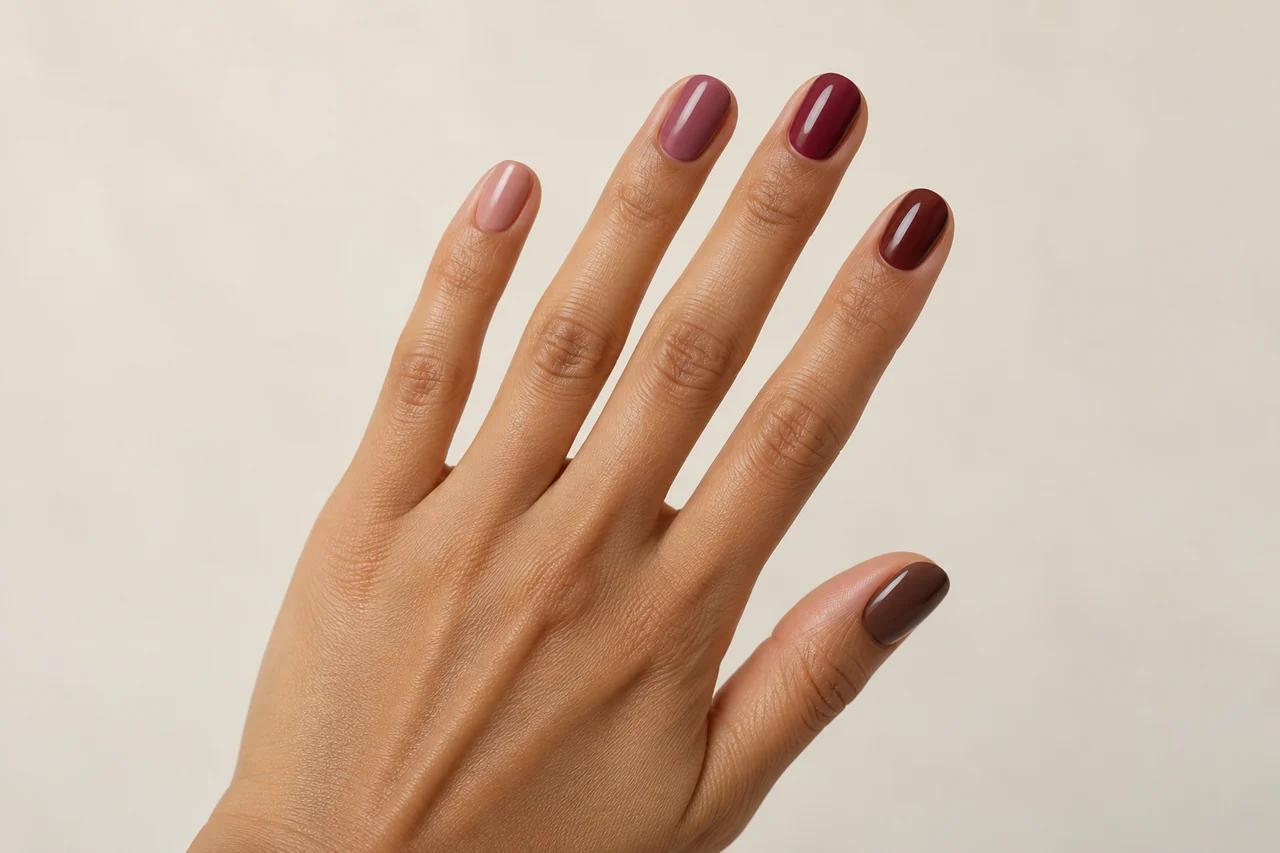
In this version of skittle nails, each nail can stay one colour while the sequence develops across the hand. That differs from ombré on a single nail. You need not buy five new bottles to try the idea.
Lay out the existing options
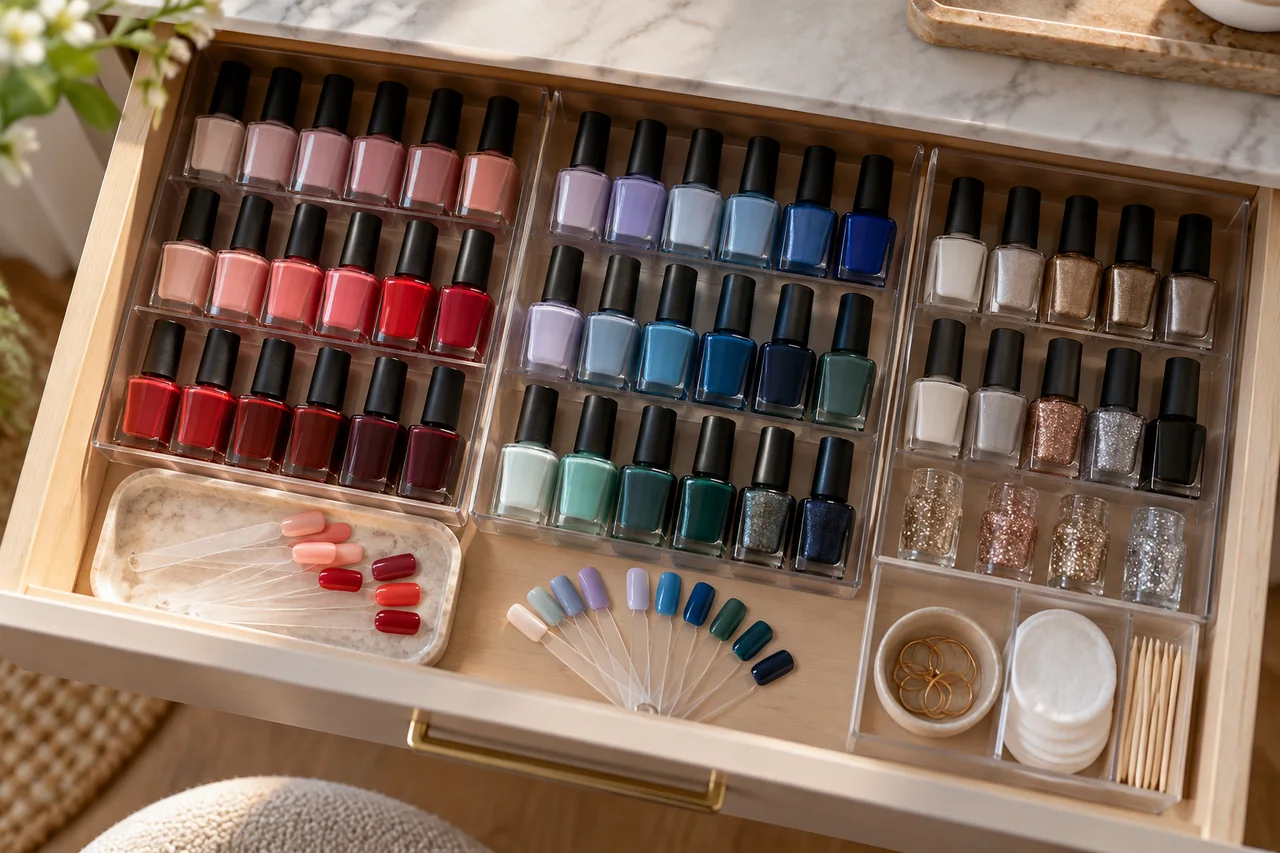
Choose more than five possible shades within a recognisable direction, such as rose, mauve and berry, or cream, taupe and brown. View painted samples in the same light if possible rather than relying on bottles and names. Place similar colours together. Two shades may be so alike that they add little difference to the proposed sequence, a useful observation before shopping.
Choose one sorting rule
Start with light-to-dark order, movement within one colour family or a deliberate sequence of contrast groups. Trying to vary brightness, warmth and saturation perfectly together may require many specialised shades. A personal sequence is not a measurement scale, so a slightly loose order can still work. Identify the relationship you enjoy rather than forcing exact steps.
Assign the ends deliberately
Decide where the lightest or strongest shade belongs, then reverse the sample row to compare. The thumb offers more area and appears differently in many hand positions than the little finger. A dark shade may appeal as a small final accent rather than on the largest area. Record the thumb-to-little-finger order so the second hand follows the intended arrangement.
Consider neighbouring colours and finish
A related family can feel quiet, distinct colours deliberately bright and neutrals restrained. A favourite individual colour may interrupt this particular row, so try removing it. Check unwanted brightness jumps, a useful bridging shade and whether neighbouring colours appeal.
Opacity and finish add another variable: one sheer or shimmering shade among four glossy opaque ones may be a deliberate accent. If the main question is colour order, start with similar finishes. Follow each product’s application instructions rather than assuming one universal layer count.
Test the sequence beside real clothes
Compare with three commonly worn clothing colours. You do not need a different sequence for every outfit. If undecided, use three shades and deliberately repeat two; the concept does not require completing a theoretical collection. A familiar outlier may work as an accent without another purchase to make every finish identical.
Save a repeatable version
Photograph your own sample row in consistent light and record the names and order in writing. Screens can change colours, while written assignments preserve the plan. Mark the shade that connects the row and any candidate for replacement. At a salon, sort actual available samples together rather than relying on five approximate colour names, and clarify the price for the agreed design.
Frequently asked questions
Do I need exactly five different colours?
No. Three or four shades with deliberate repeats can create the idea. Use a colour more than once if you like the sequence.
Is there a gradient on every nail?
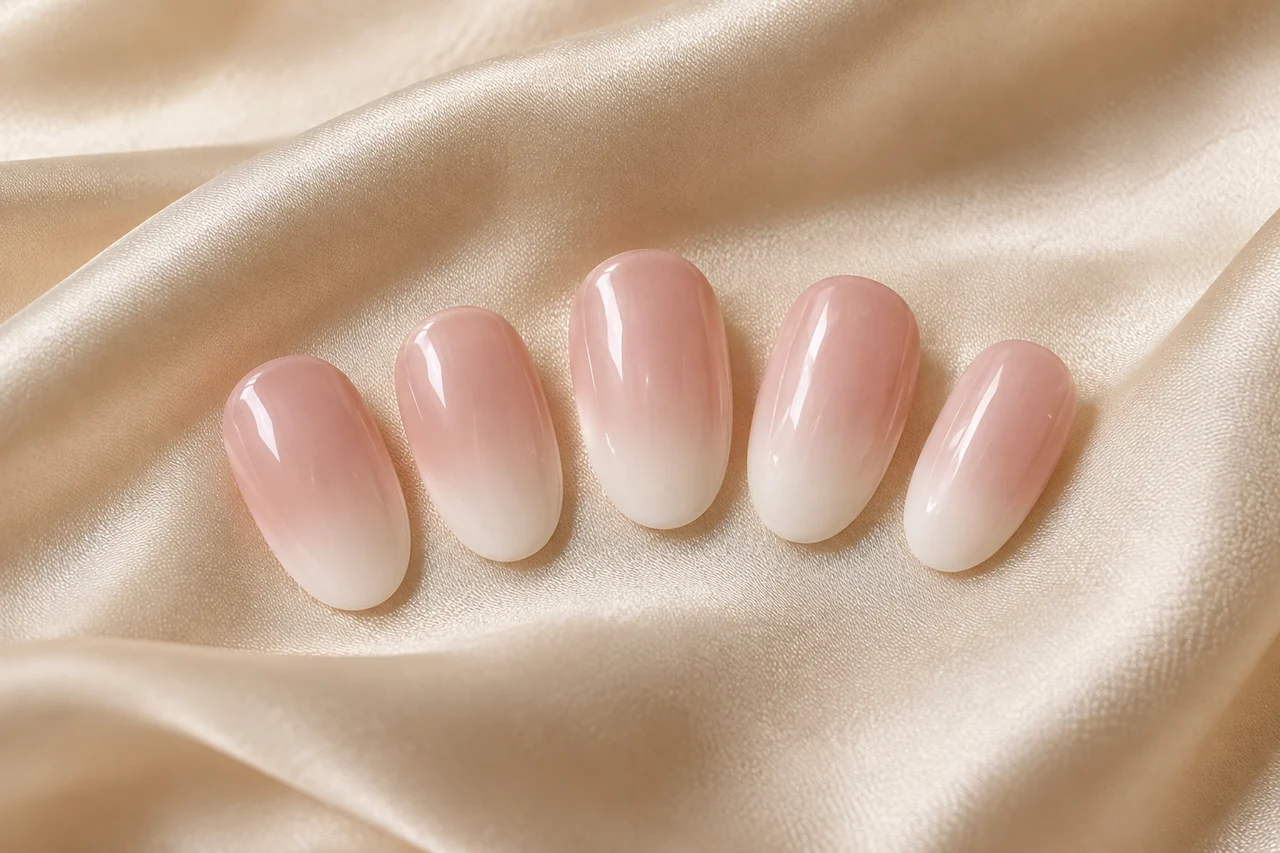
Not in this version. Each nail has one colour and the sequence runs across several nails. For a transition on one surface, see the ombré guide.
How should I arrange the second hand?
Mirror the same finger assignments or choose another deliberate order. Draw both hands first so any differences remain planned.
Questions and experiences
Share a question or a useful experience about this topic. Every contribution is checked before publication. Comments may be written in different languages.
Loading reader contributions…
Opening the form sets a necessary session cookie. No email address is required. Publication is subject to moderation and is not guaranteed. For deletion requests: Contact