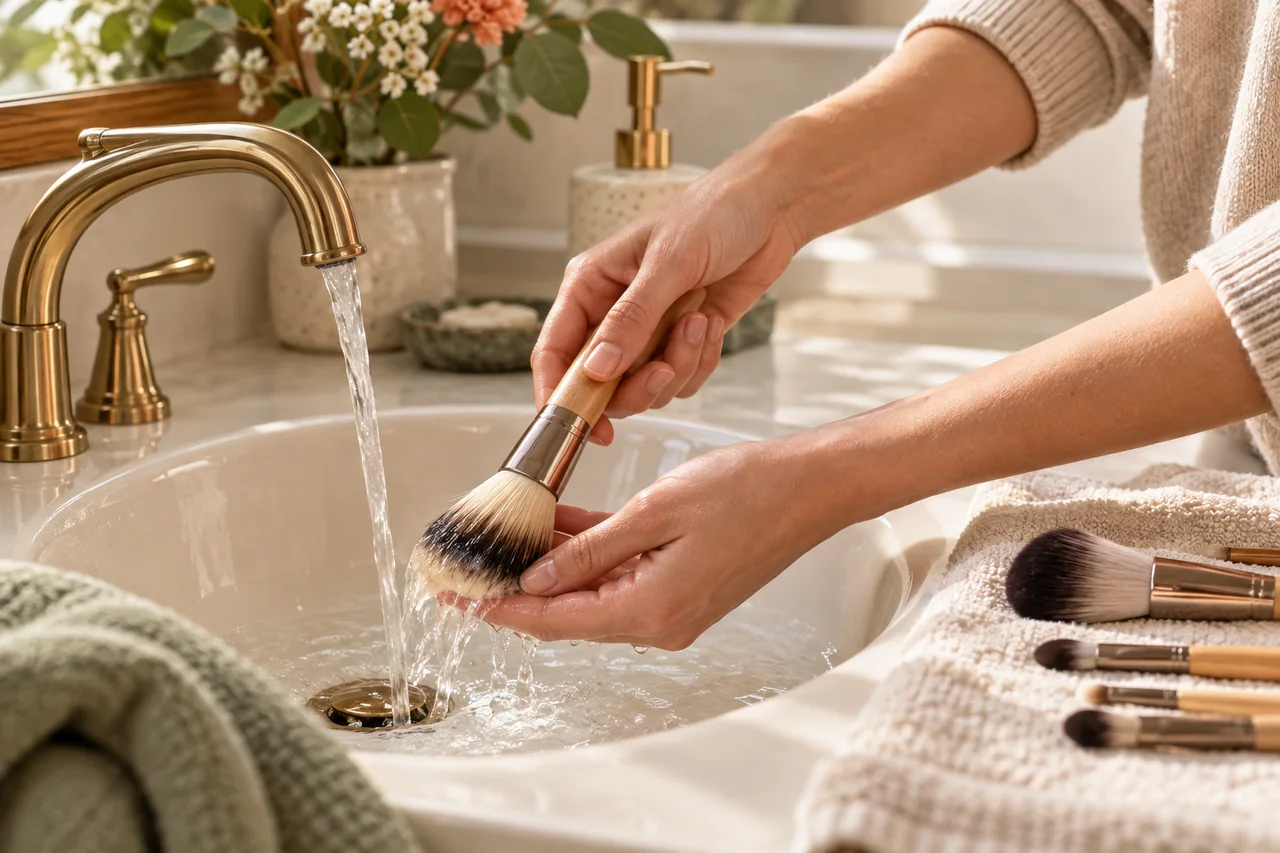
A cleaning routine is not complete at rinsing. Tools also need a suitable place to dry fully. Prepare that space first and distinguish brushes from sponges and other applicators: their materials and care instructions can differ.
Inspect the tools you actually use
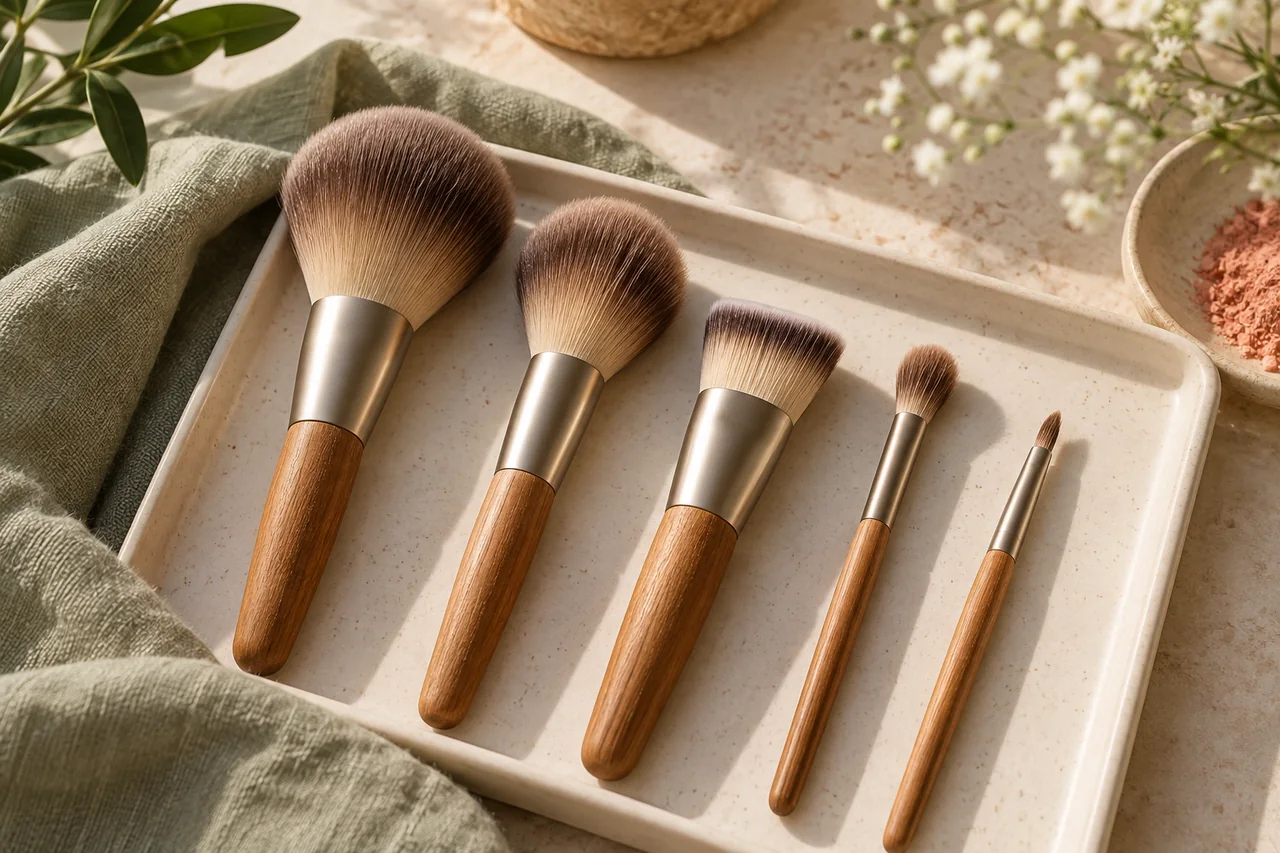
Sort powder brushes from those carrying cream or liquid. Check loose handles, unusual shedding and torn sponges. Washing cannot repair damage. Read material instructions before treating different tools alike; a small working set is easier to maintain than a large unused collection.
Choose a realistic schedule
The American Academy of Dermatology advises washing make-up brushes approximately every seven to ten days. Follow material guidance and respond to actual soiling too. This brush recommendation is not a universal timetable for sponges. Choose a time that allows drying and keep a clean alternative if necessary.
Wash suitable brushes carefully
AAD guidance describes lukewarm water and a mild suitable shampoo for the tips, thorough rinsing and avoiding prolonged submersion of the whole head. Work on one tool at a time, gently cleaning the tips and following any different manufacturer instructions. Carefully press out water without twisting the hairs forcefully.
Complete the drying stage
Lay brushes flat with the tips over a suitable edge, as the AAD recommends. Do not stand wet brushes bristles-up in a cup. Use a clean protected drying area, then confirm complete dryness before closed storage. Keep freshly cleaned tools away from used ones.
Include containers and replacement
A used-tool container can make a weekly four-brush routine easier to organise. Clean dirty pouches and holders too. Replace damaged or uncleanable tools for a practical reason, not a trend. Personal tools should remain assigned to their users. Professional work with different clients requires appropriate separate hygiene procedures; ordinary private washing must not be labelled sterilisation.
Frequently asked questions
Is quick-drying brush spray enough?
Check its intended function. Removing colour residue is not automatically a substitute for thorough cleaning or proof of disinfection.
Can everything soak together?
Not without appropriate material guidance. Handles, glue, foam and brush heads can react differently, so a long shared soak is not a general shortcut.

Questions and experiences
Share a question or a useful experience about this topic. Every contribution is checked before publication. Comments may be written in different languages.
Loading reader contributions…
Opening the form sets a necessary session cookie. No email address is required. Publication is subject to moderation and is not guaranteed. For deletion requests: Contact