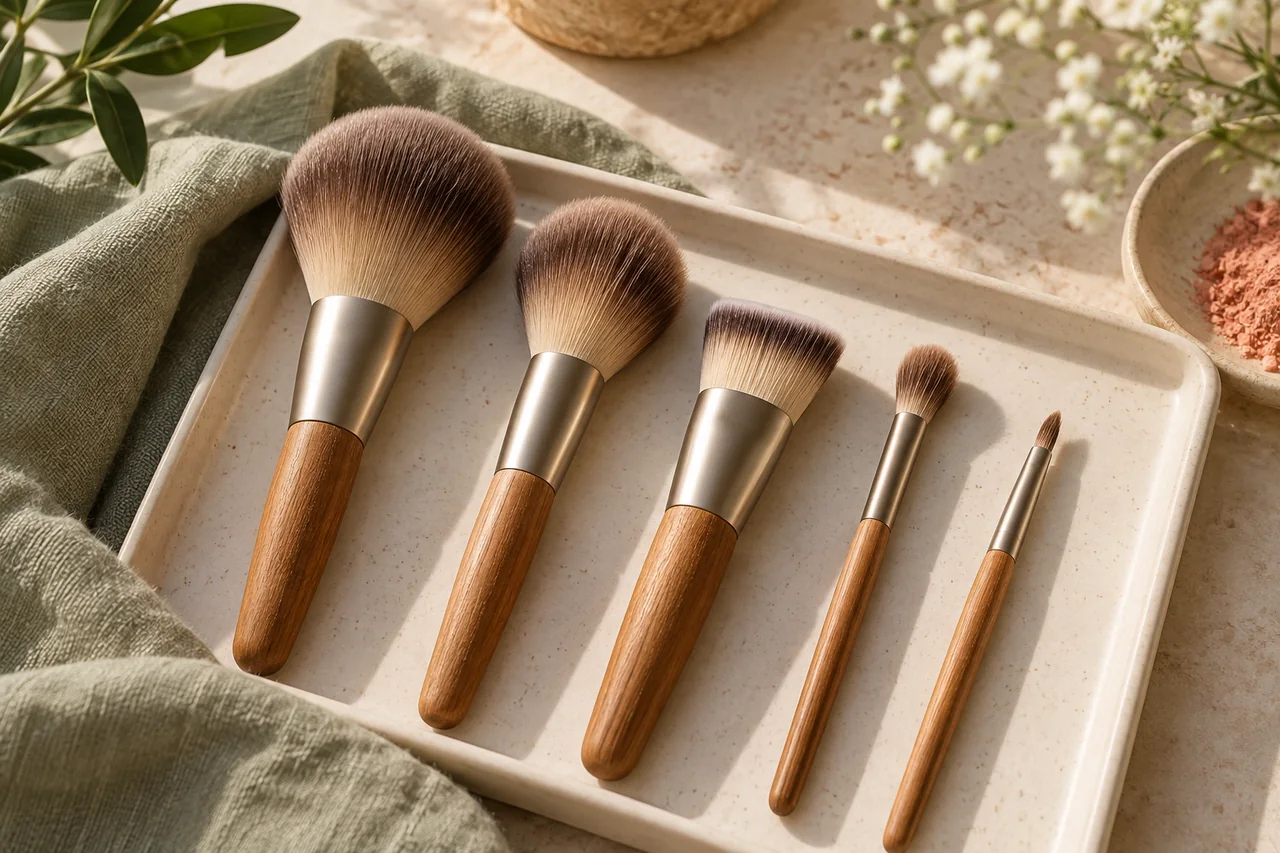
A large brush set can look complete before you know which tools you need. Start with the area, precision and texture involved in your actual steps. Those questions are more useful than a long list of specialist brush names.
Translate your routine into areas
Perhaps you powder the nose, apply cheek colour and use two eye shades. Those tasks do not automatically require ten brushes. A small head controls a narrow area; a looser shape may soften a wider transition. A printed product name is a suggestion, provided the tool and cosmetic are suitable together.
Compare density and flexibility
Dense, loose, flat and rounded heads collect and release product differently. None forms a universal quality ranking. Check whether your grip can distribute a small amount predictably. Start lightly while learning a flexible or firmer head instead of immediately correcting excess over the face.
Include the handle and workspace
Where possible, hold the brush before buying. Does its length suit the distance to your bathroom mirror? Can you guide it gently? A long professional-looking handle may be awkward in a small space; a travel handle may feel less steady. Check the connection between head and handle and practical storage.
Build a small working set
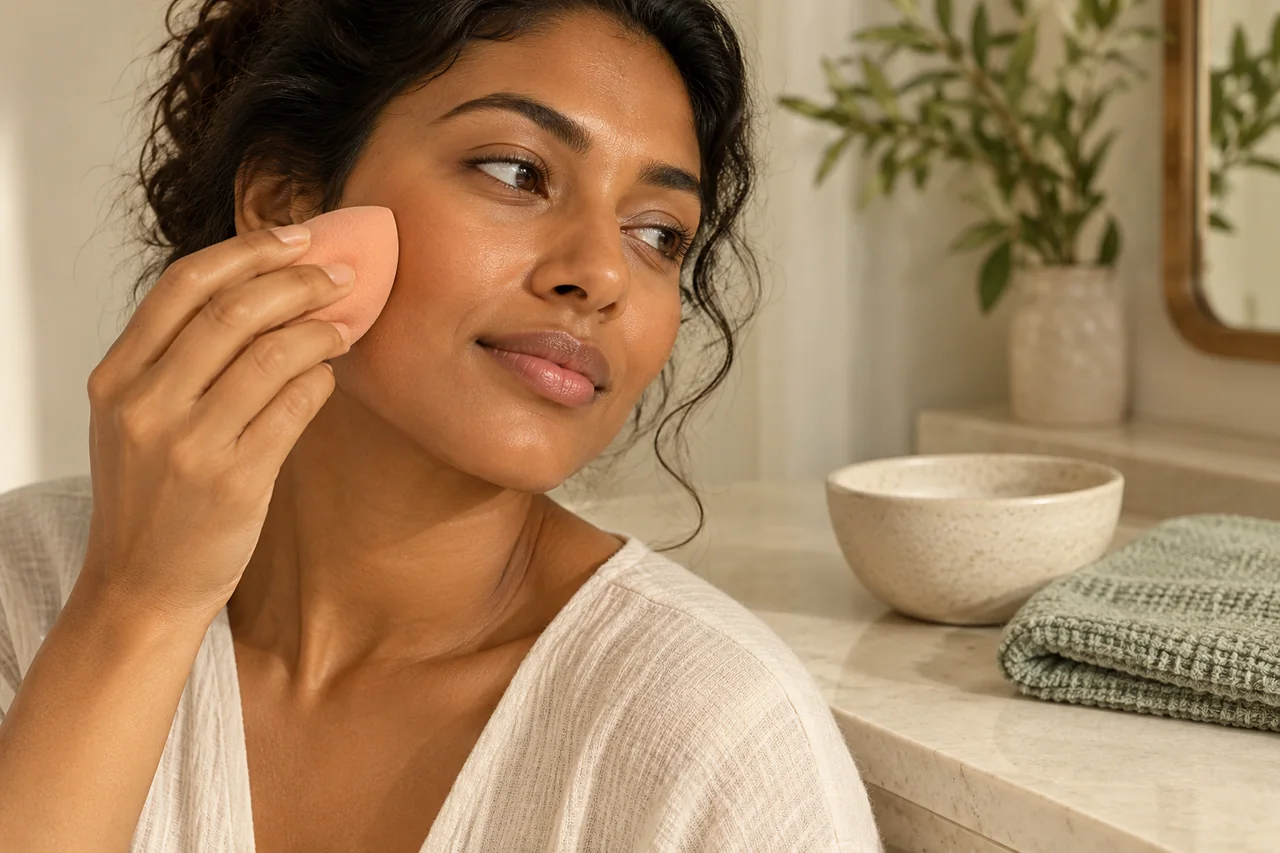
A medium soft cheek brush and a smaller precise tool may cover a simple routine, with suitable eye brushes only if used. Some creams work with clean fingers or an appropriate sponge according to instructions. If a large powder brush repeatedly overshoots beside the nose, add a small one rather than replacing the whole set.
Assess after several uses
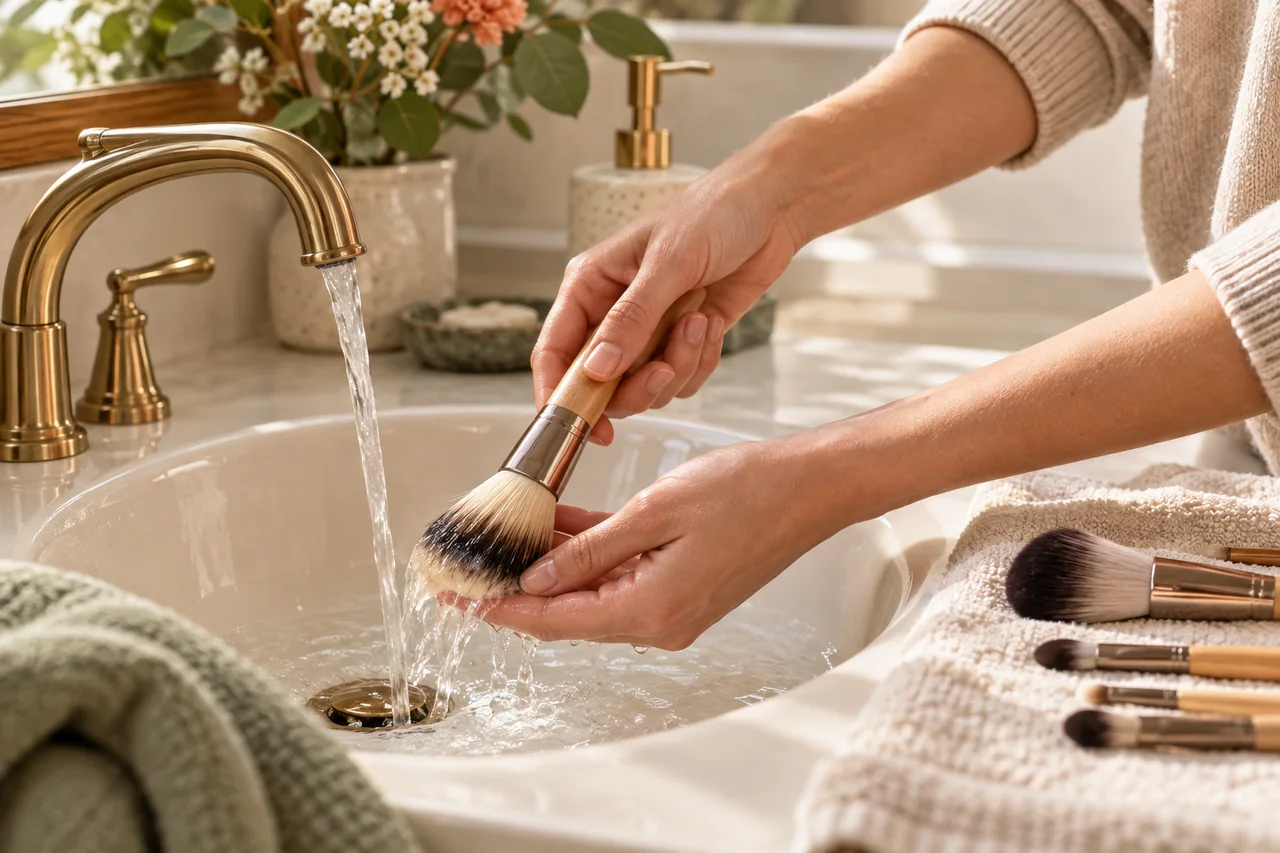
Read care guidance and organise clean and used tools separately. Replace for actual wear. Return to the original problem: is the small area now more precise, the edge softer or application easier? If you cannot name a useful difference, pause before buying more similar shapes.
Frequently asked questions
Are expensive brushes automatically better?
Price does not establish a suitable shape or grip. Check construction and material guidance; controllable handling matters more than prestige.
Does each colour need its own brush?
Not necessarily. A clean suitable brush can serve different products in sequence. A separate clean blending tool can help when working with light and dark shades together.
Questions and experiences
Share a question or a useful experience about this topic. Every contribution is checked before publication. Comments may be written in different languages.
Loading reader contributions…
Opening the form sets a necessary session cookie. No email address is required. Publication is subject to moderation and is not guaranteed. For deletion requests: Contact