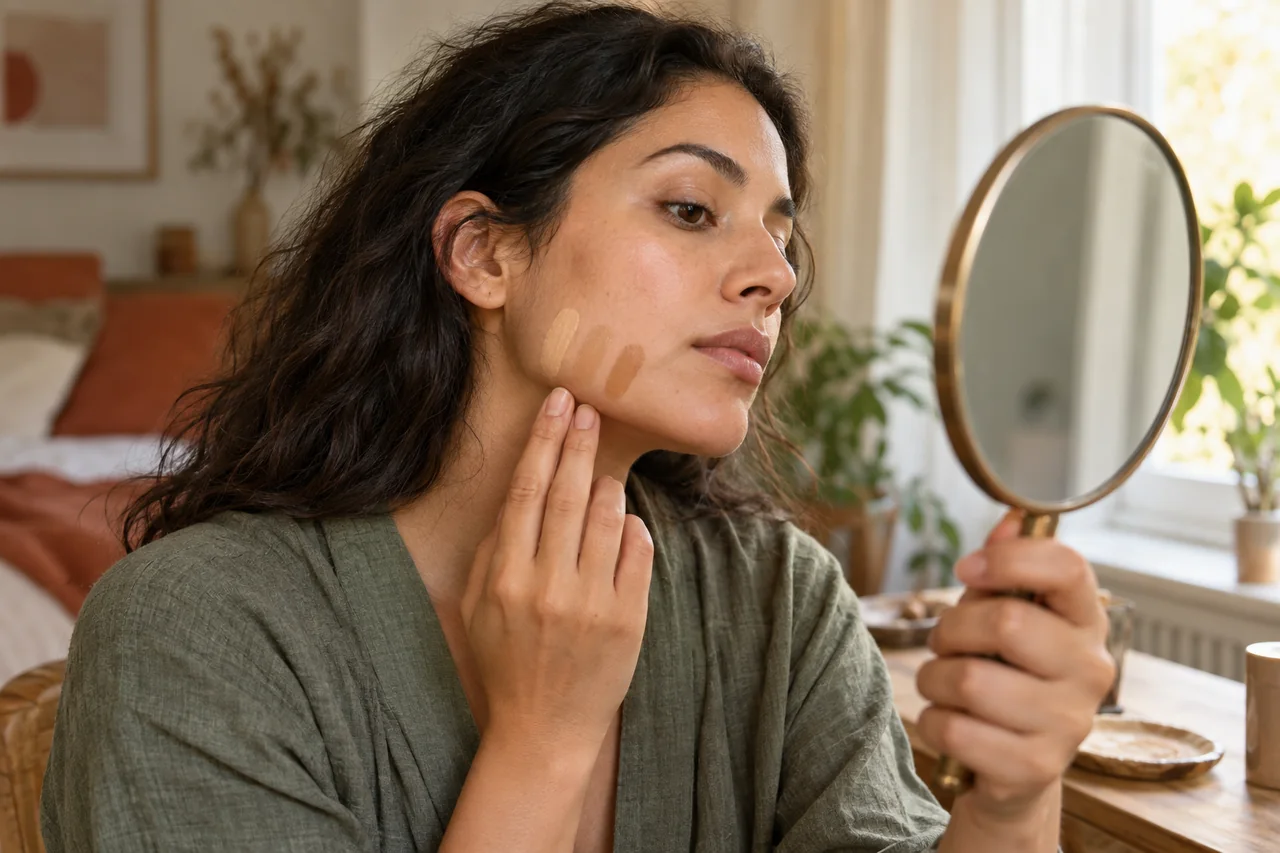
A matching foundation blends into the surrounding bare skin. The bottle colour alone cannot tell you whether the depth, undertone and coverage work together. Two or three well-chosen samples are more useful than a large collection.
Decide what you want to even out
Look at your face, neck and visible upper chest. They need not have identical natural colouring. Decide whether you want local evening or fuller coverage; a shade taken from one noticeable cheek patch may not suit the whole face.
Apply three small samples
Choose a likely depth and two nearby alternatives. Use hygienically dispensed samples and clean applicators, never shared used ones. Place narrow samples along the lower side of your face and blend one edge of each. Immediately note their order.
Keep the light consistent
Compare beside a window in indirect daylight, from normal conversation distance. Strong sun, coloured lamps and beauty filters distort impressions. Turn your head and inspect the neck transition. A single unfiltered photograph can be a note, not a calibrated colour measurement.
Allow drying and ordinary wear
Recheck after the product has dried according to its instructions, over your usual skincare. If possible, take a sample home. Assess comfort, transfer to clothing and actual coverage as well as colour. The best-blending shade may still be too heavy.
Make a short buying note
Record line, shade, light and dried result, then set your budget. If the colour fits but the texture does not, try a lighter formula in a similar direction rather than correcting a poor match with bronzer. Shade numbers are not standard across ranges. Recheck after visible skin-colour changes; replace nothing while your current shade still works.
Frequently asked questions
Is the back of my hand a useful test?
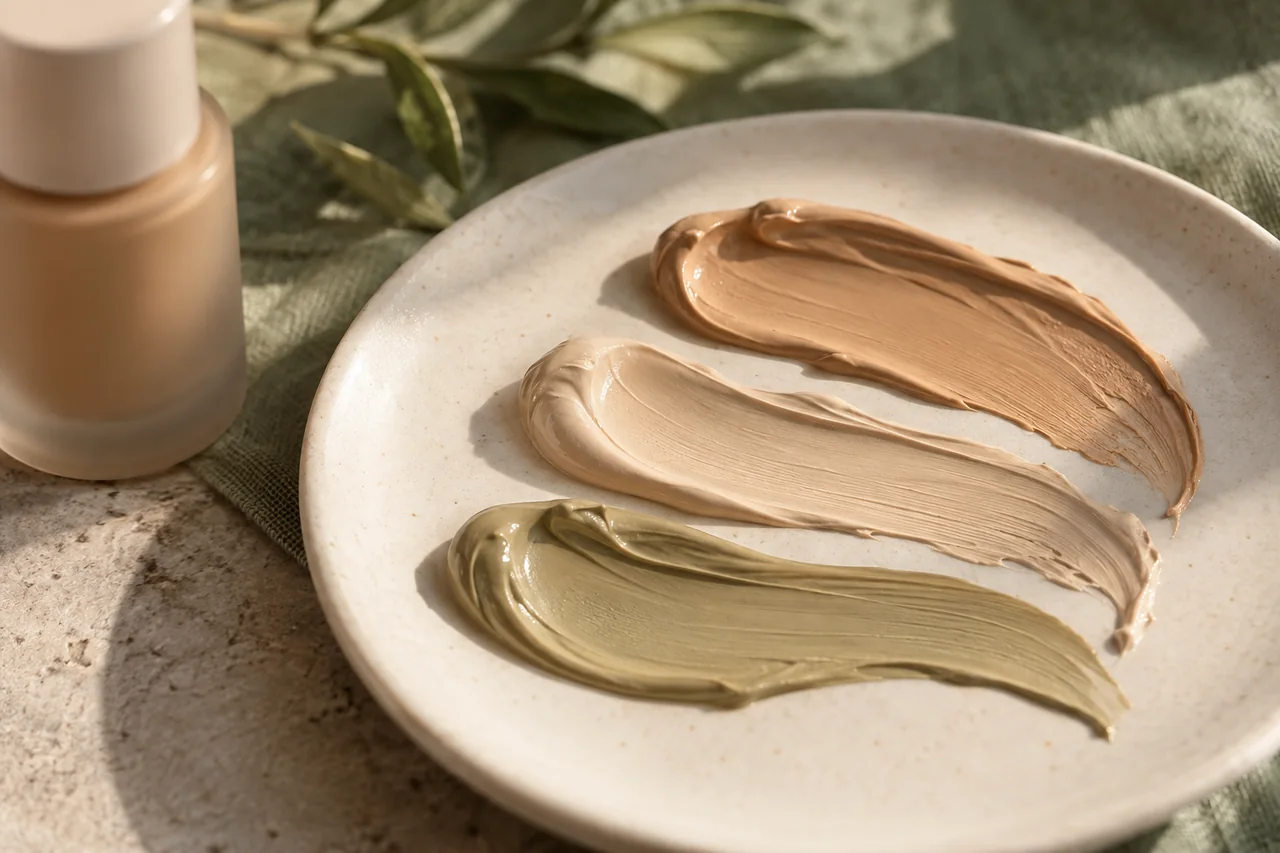
It shows texture and spreadability, but a facial shade decision needs a small sample where you will wear the product.
What if none matches?
Try another shade range or sheerer coverage. Do not buy the nearest option under pressure. Mixing foundations adds complexity and can change how the formula behaves.

Questions and experiences
Share a question or a useful experience about this topic. Every contribution is checked before publication. Comments may be written in different languages.
Loading reader contributions…
Opening the form sets a necessary session cookie. No email address is required. Publication is subject to moderation and is not guaranteed. For deletion requests: Contact