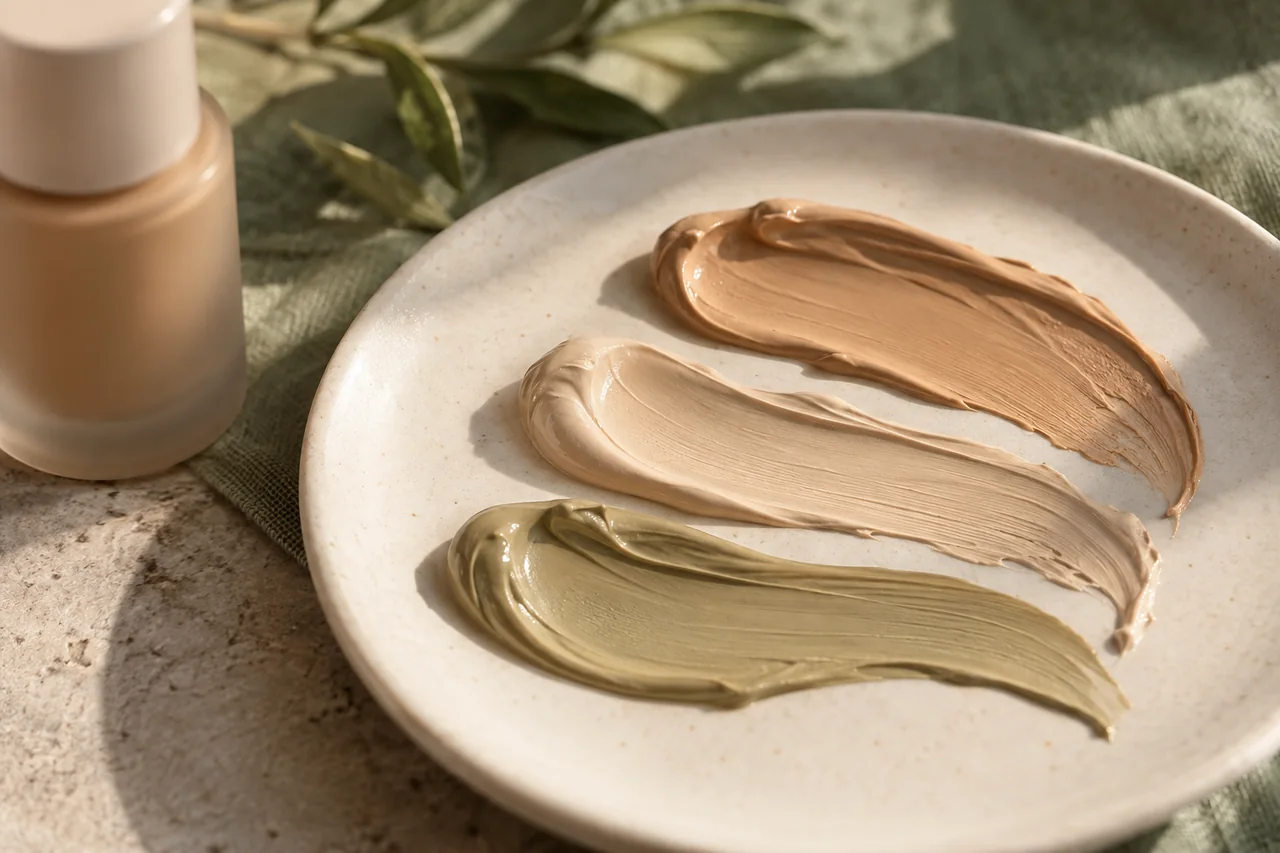
Undertone here means the colour direction of a foundation: relatively pink, golden, neutral or olive. These are useful shopping descriptions, not a precise diagnosis of your skin. A direct comparison is more informative than jewellery preferences or a vein-colour quiz.
Separate depth from colour direction
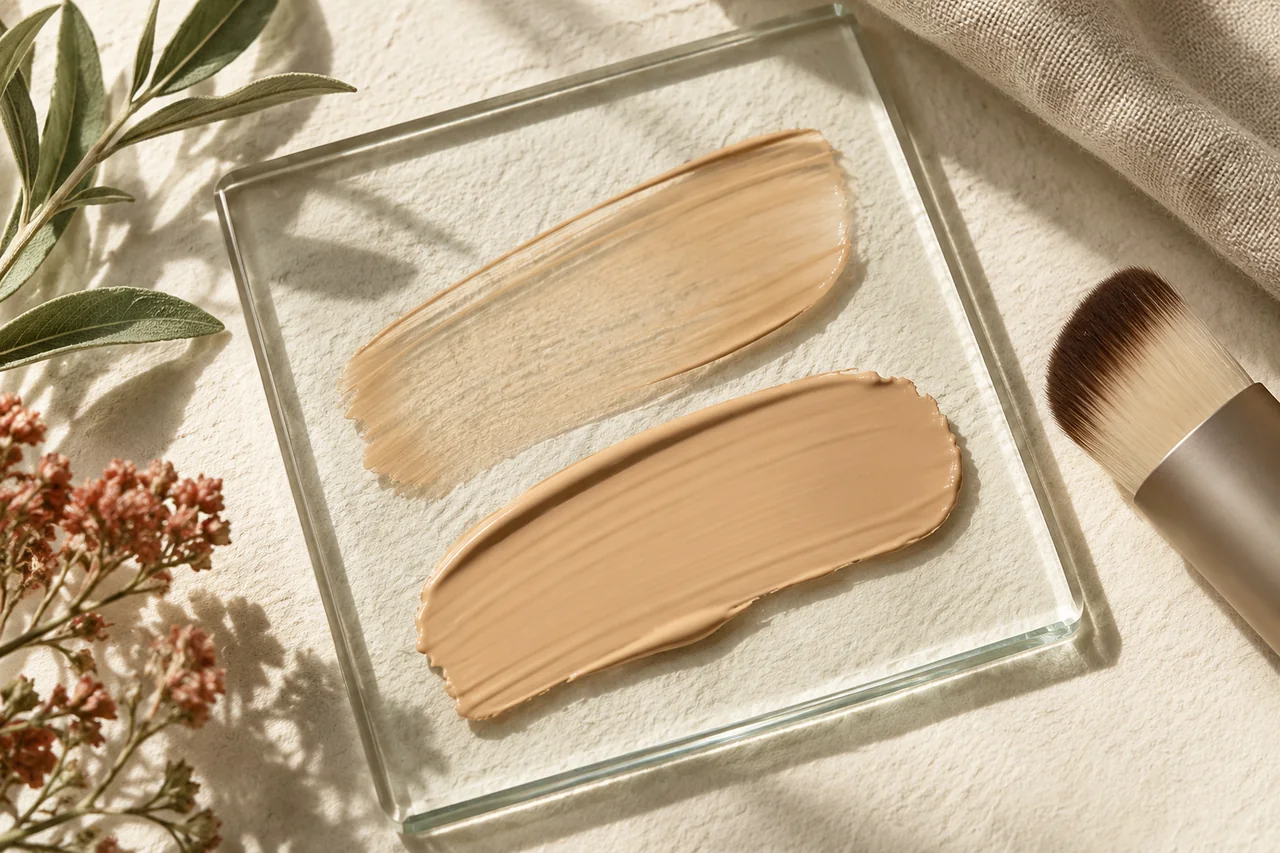
A shade can be both too light and too pink. Begin with two or three similarly light or dark samples, placed side by side. This helps reveal an orange, pink or grey-looking edge without relying on memory.
Treat labels as signposts
Warm, cool and neutral are not universal standards. One neutral shade can look pink beside another. Olive does not specify a depth or belong to one ancestry. Use the words to locate neighbouring shades, then judge the actual application.
Create a steady comparison
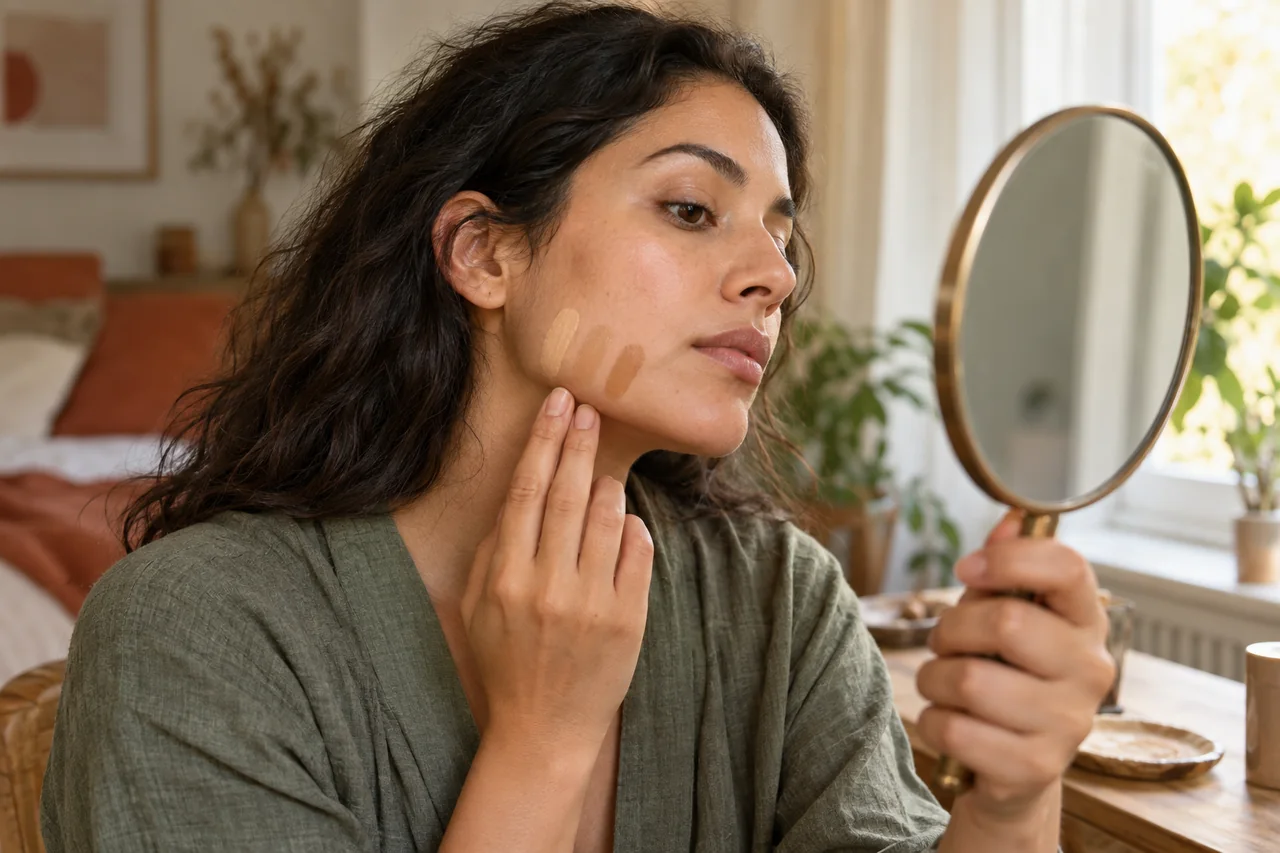
Use indirect window light and, if helpful, a neutral cloth near your face. Strongly coloured clothing can alter the overall impression. Apply small samples on the lower side of the face, blending only part of each. Keep lighting consistent before checking a second setting.
Name the mismatch
Write what you see: lighter than the neck, a pink patch, a yellow edge or a dull finish. If every sample looks grey, also reconsider coverage, depth and the skincare underneath. A thick pale layer or coloured primer can confuse the comparison.
Keep a useful shade record
If sample C blends best despite an unexpected label, try it again with your intended amount. Record product line, shade, date, lighting and one observation; a packaging photo can prevent buying a similarly named formula. No facial upload is necessary. Retest after visible colour changes, but keep a working foundation rather than buying seasonal shades automatically.
Frequently asked questions
Does gold or silver jewellery reveal my undertone?
Jewellery preference describes taste and styling effect. It cannot prescribe a foundation shade; test the product on the skin.
Can powder correct the wrong undertone?
Tinted powder may alter the result but adds another layer. A well-matched base is simpler for a new purchase. Consider correctors only after testing a specific need.

Questions and experiences
Share a question or a useful experience about this topic. Every contribution is checked before publication. Comments may be written in different languages.
Loading reader contributions…
Opening the form sets a necessary session cookie. No email address is required. Publication is subject to moderation and is not guaranteed. For deletion requests: Contact