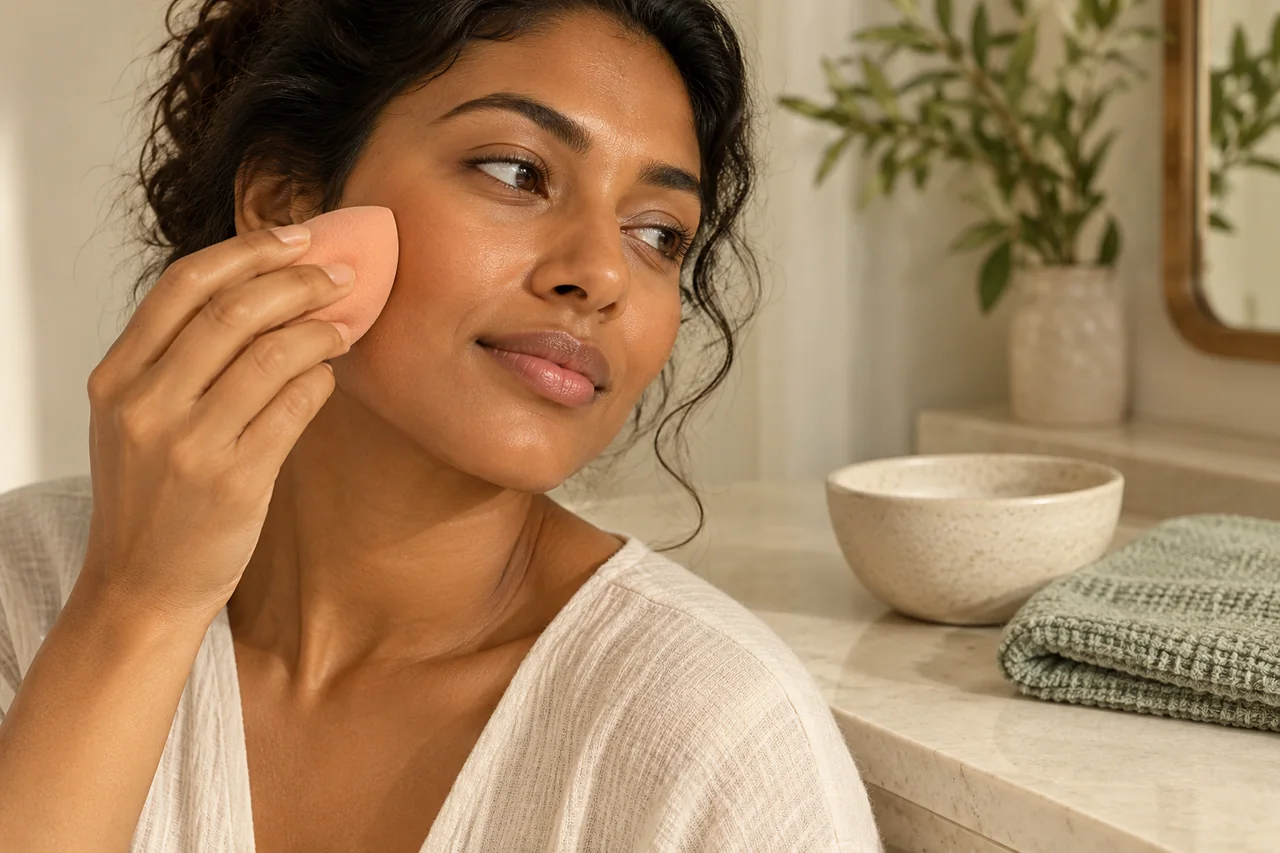
A sponge is a tool for small controlled movements. Whether it should be dry or damp depends on its own instructions. Wetting any sponge is not automatically an improvement.
Check shape and preparation
Different materials, surfaces and shapes have different care needs. A broad side may suit larger areas and a narrow tip smaller ones. If damp use is intended, squeeze out excess water as directed so it does not release unpredictably. Consistent preparation makes comparisons more useful.
Measure product separately
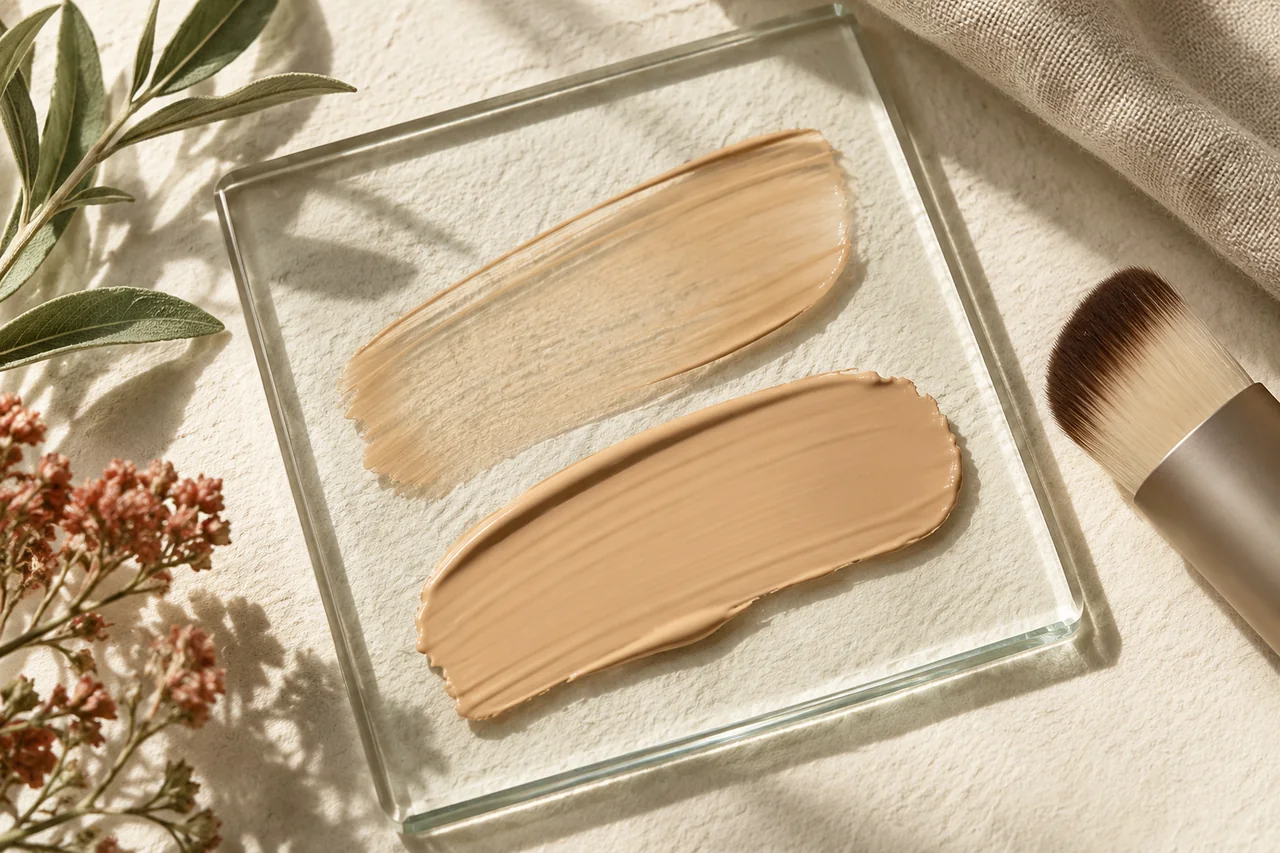
Dispense a little foundation hygienically onto a suitable clean surface or use the intended method. Pick up only part initially. Notice how much the sponge absorbs and leaves on the skin; the same quantity does not necessarily match the coverage achieved with fingers or a brush.
Tap rather than drag
Place the tool lightly and lift it, working section by section. Long dragging motions can shift an existing base. Use a narrower area for small transitions without pressing strongly into sensitive zones. Check after a few movements: endless tapping can remove coverage rather than improve evenness.
Build a second layer locally
If one patch needs more coverage, add a tiny fresh amount there, leaving the rest alone. At moving areas such as the chin or beside the nose, remove accumulation before covering it with more. The sponge need only improve one step; it does not have to apply every product.
Compare the result and finish the care
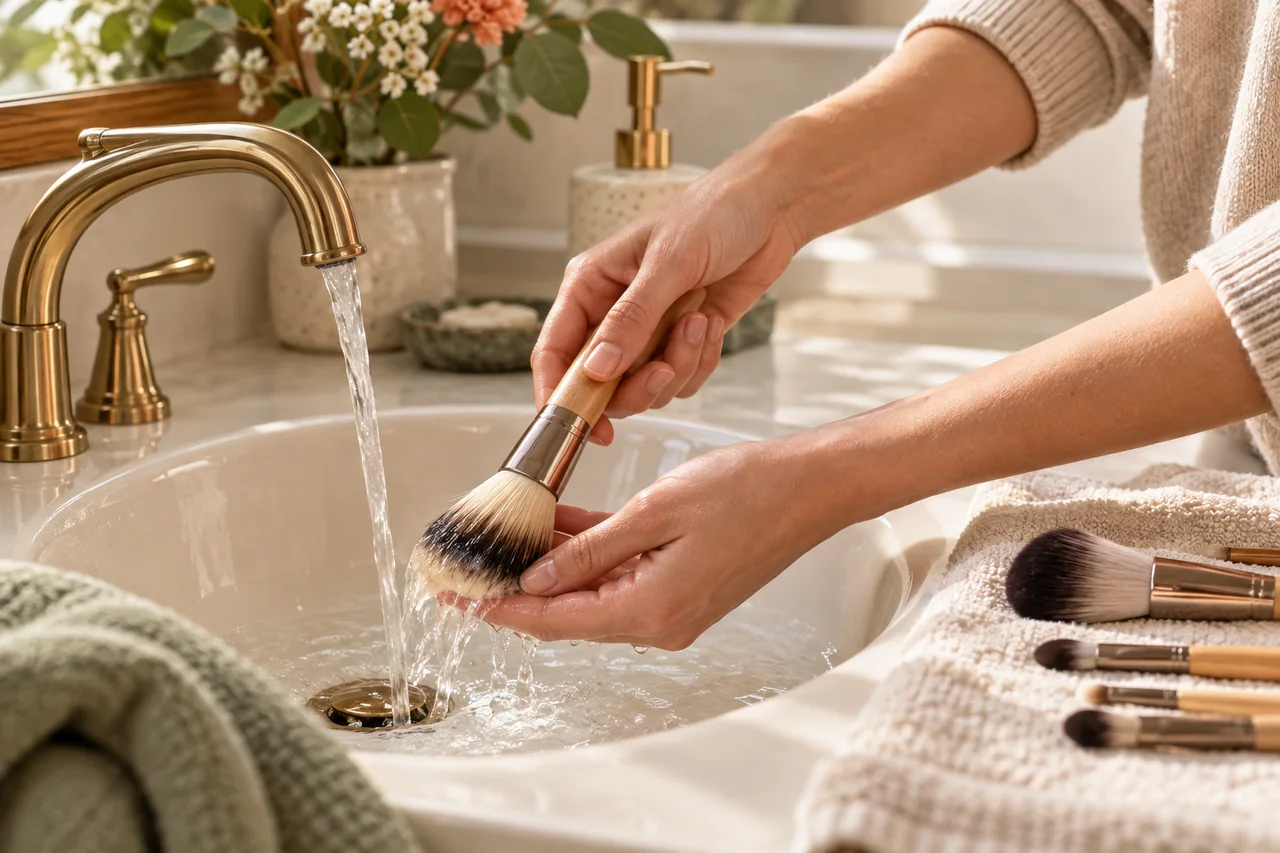
Try the same foundation on a similar day, using the sponge only to soften a jawline edge. Distinguish a better transition from simply reduced coverage. Record preparation, amount and result. Afterwards clean as instructed, check for damage and allow complete drying before closed storage. Do not transfer brush-washing guidance automatically to foam; replace torn or uncleanable tools.
Frequently asked questions
Does a sponge use more foundation?
That depends on material, preparation, formula and technique. Compare the amount needed for your intended result rather than assuming a universal answer.
Can it apply powder?
Only when sponge and powder suit that use. Start lightly and remember that the effect differs from a loose brush. Do not put an inappropriately damp tool into a sensitive product.
Questions and experiences
Share a question or a useful experience about this topic. Every contribution is checked before publication. Comments may be written in different languages.
Loading reader contributions…
Opening the form sets a necessary session cookie. No email address is required. Publication is subject to moderation and is not guaranteed. For deletion requests: Contact