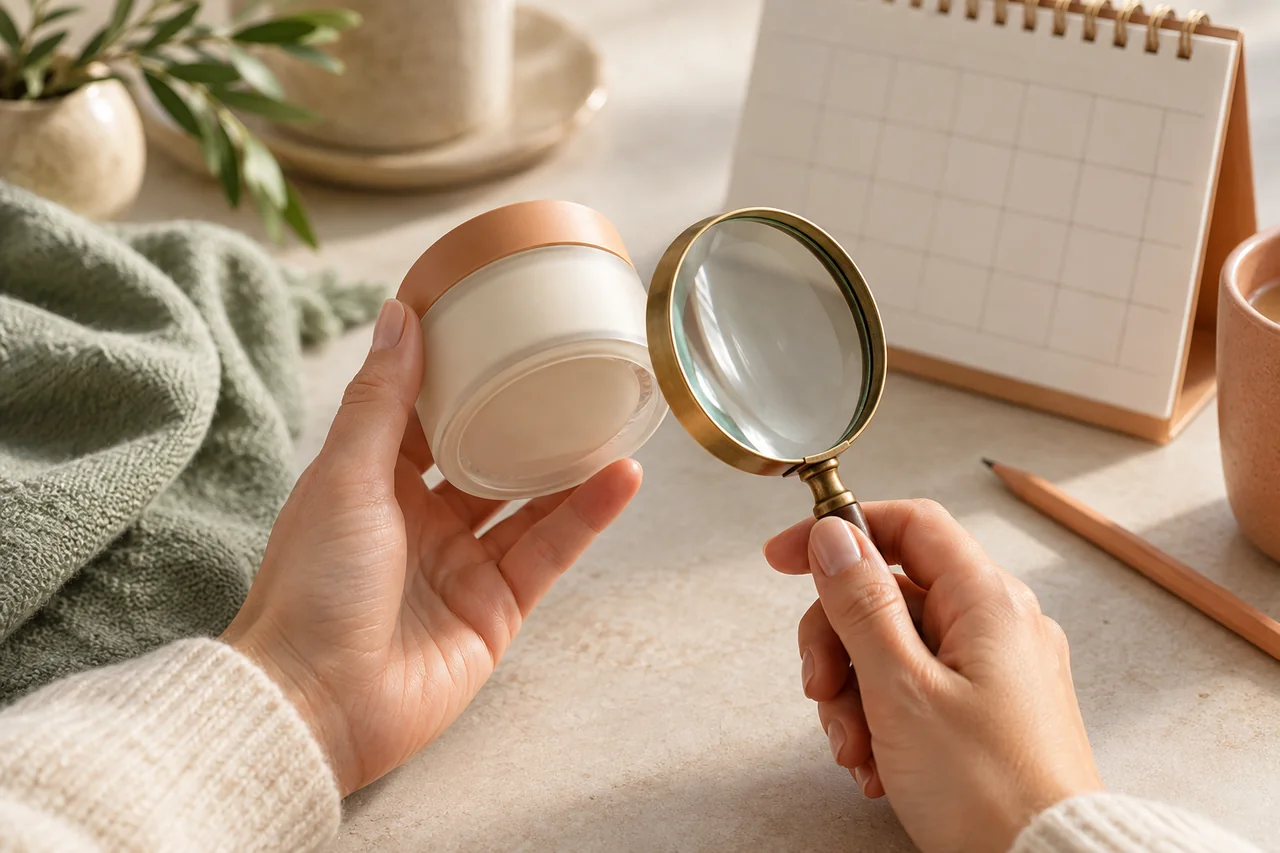
A minimum-durability date and a period after opening answer different questions. This guide concerns EU cosmetic labelling and helps you organise actual products instead of relying on universal social-media disposal charts.
Find the actual information
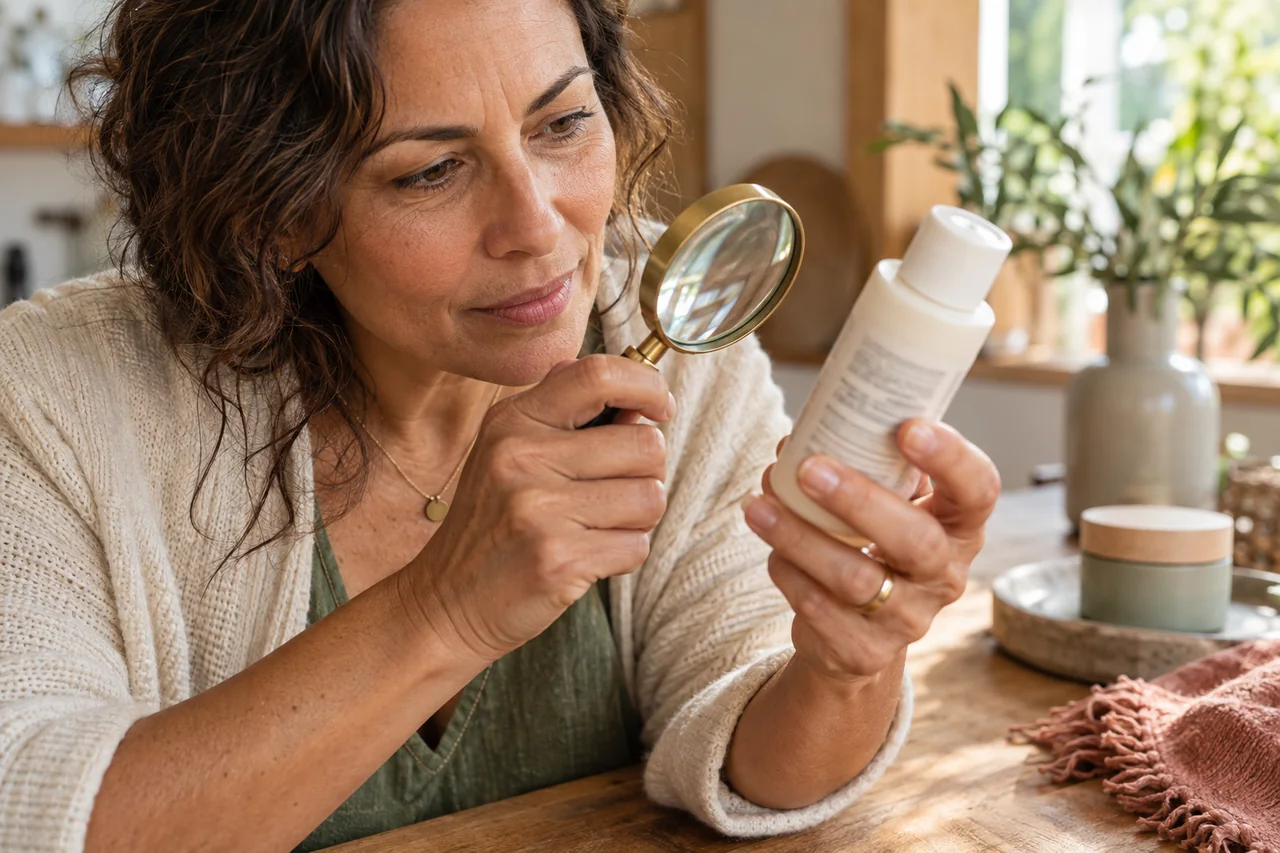
Check the container, base, carton and supplied leaflet. Small packaging may carry information elsewhere as permitted. Look for a date, open-jar symbol and storage instructions. A batch number is not necessarily a readable expiry date; ask the responsible supplier if the meaning is unclear rather than trusting an arbitrary online decoder.
Distinguish date and period
Article 19 of the EU Cosmetics Regulation provides for a minimum-durability date where durability is no more than 30 months. Longer-lasting products generally state the safe period after opening, often using an open jar. Exceptions apply when that concept is not relevant, so absence of the symbol does not automatically establish an error.
Keep an opening record
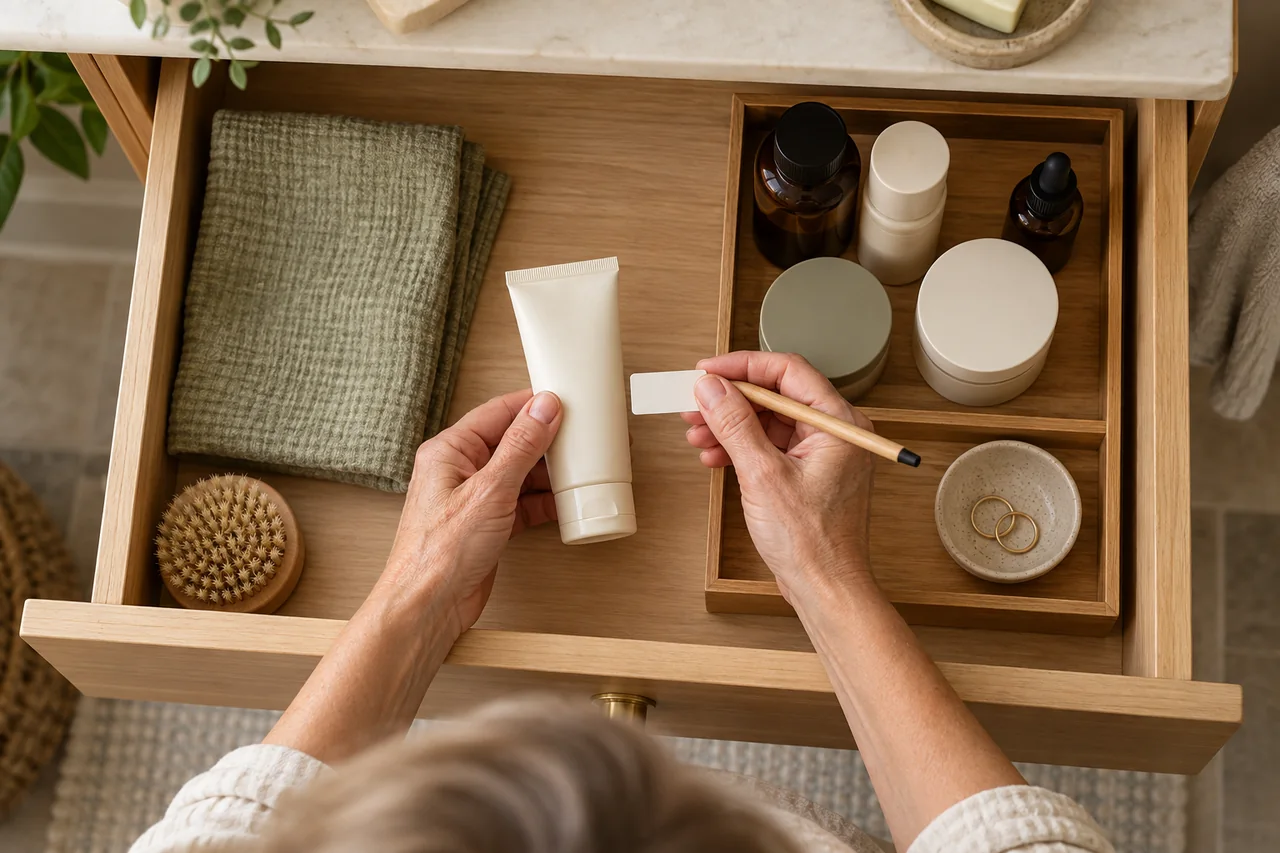
Write the product, first opening date and the period shown. A local note or label is sufficient. Keep unopened reserves separate. For a product opened on 10 April with 6M, 10 October is a planning reference for that stated period, not a guarantee of safety until then. Mark an unknown opening date as unknown.
Do not ignore a change
FDA guidance advises against using cosmetics that have changed colour or smell. A future calendar date does not override that warning; normal appearance likewise does not replace storage and label instructions. Close containers after use and avoid combining remnants, which confuses product, batch and opening records.
Review before buying
Check which opened products you actually use and plan replacement around consumption and the stated period. Several similar discounted products are not economical merely because each was reduced. Clarify uncertain labelling with the responsible business; your personal list cannot substitute for its information.
Frequently asked questions
Does 12M mean twelve months after purchase?
The open-jar period refers to opening. Keep purchase and opening separate when a product remains sealed.
Does every cosmetic need the jar symbol?
No. Date-labelled products and after-opening periods differ, and exceptions exist where after-opening durability is not relevant. Read the complete label.
Questions and experiences
Share a question or a useful experience about this topic. Every contribution is checked before publication. Comments may be written in different languages.
Loading reader contributions…
Opening the form sets a necessary session cookie. No email address is required. Publication is subject to moderation and is not guaranteed. For deletion requests: Contact