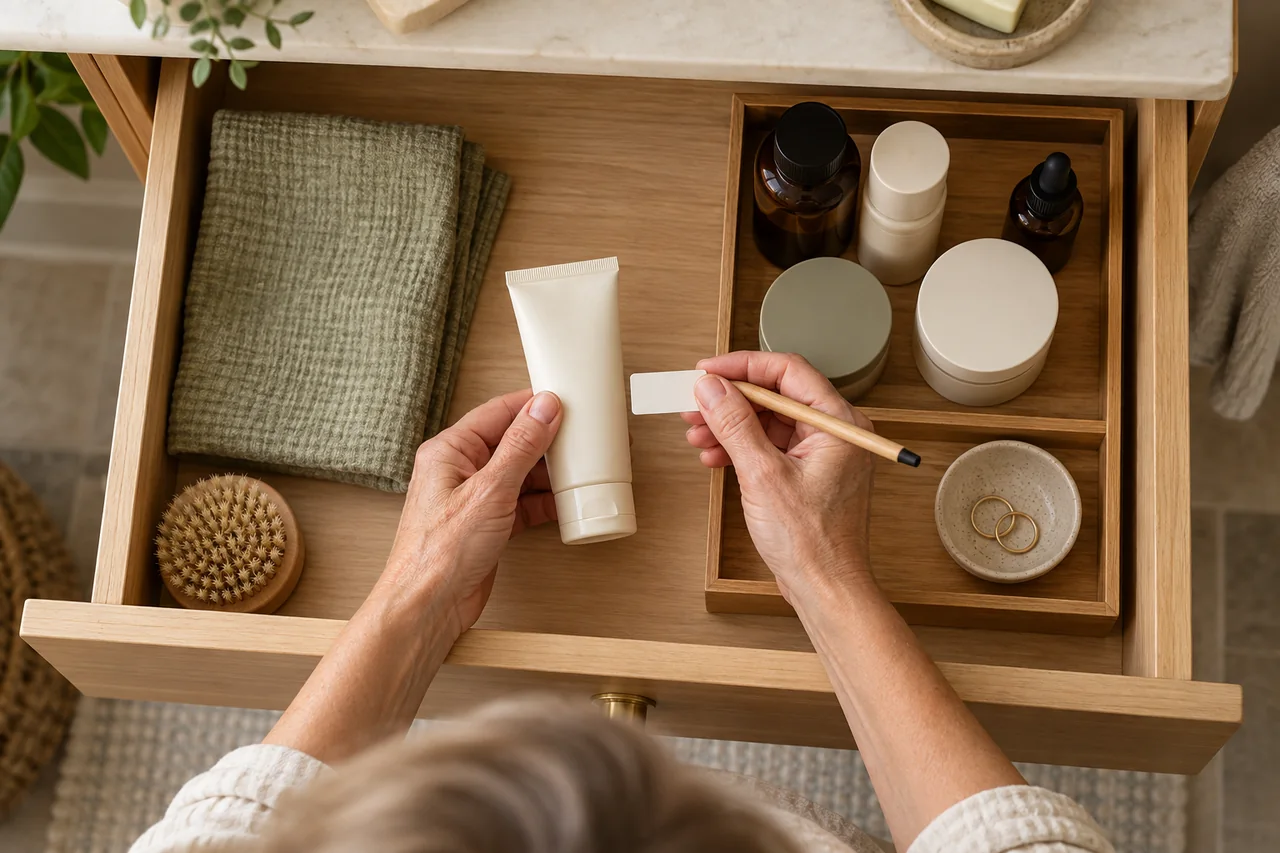
This guide is about storing and using cosmetics you already own: opening dates, storage locations, noticeable changes and whether another pack is actually needed. Copy the information from each product into your notes; a general shelf-life chart cannot replace it. The related make-up labelling guide explains minimum durability dates and the open-jar symbol in more detail.
Find the relevant label
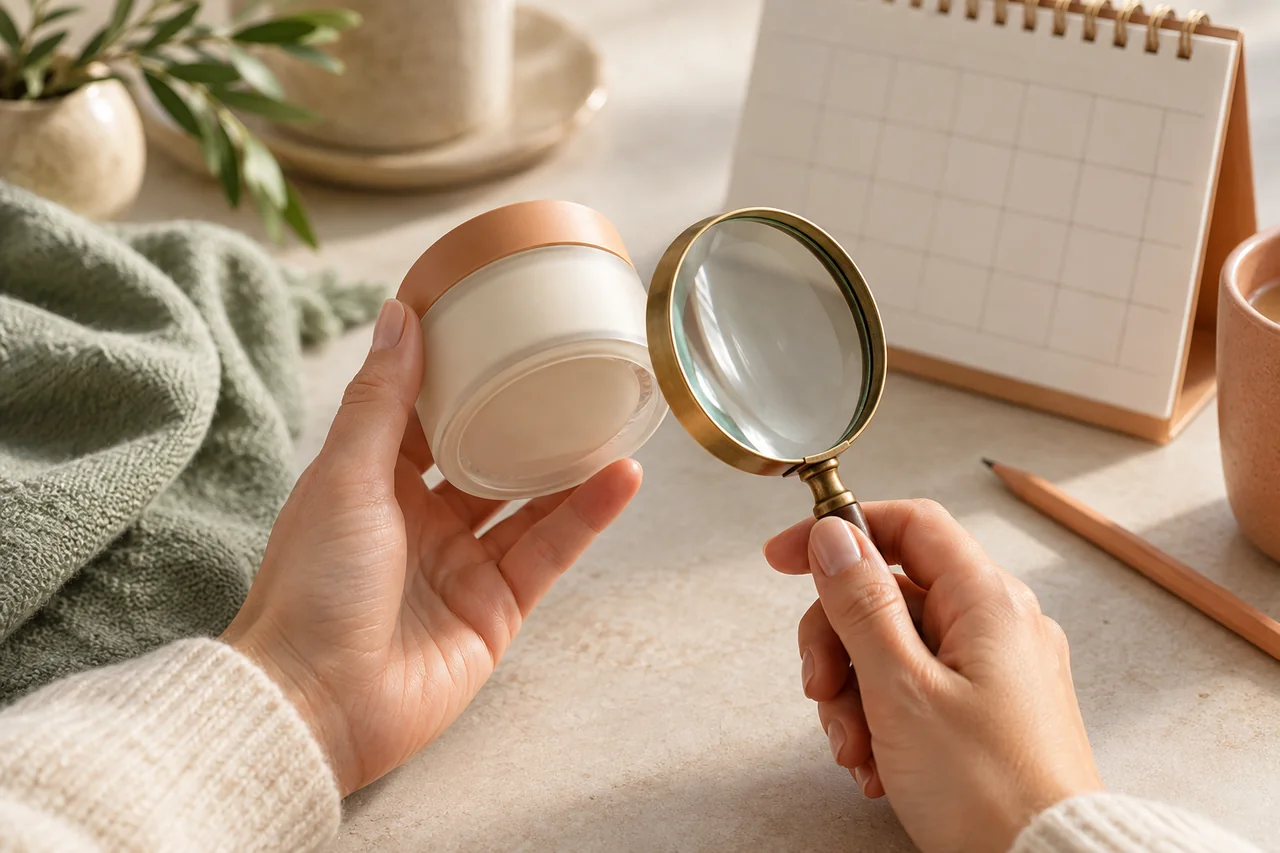
Cosmetics may carry a minimum durability date or information about use after opening, often an open jar with a month figure. The appropriate label depends on the product. Read storage and application directions as well. If a marking is unreadable, ask the manufacturer rather than relying on a generic list.
In the EU, products with minimum durability of 30 months or less require a date. Those lasting longer generally display the safe period after opening where that concept is relevant. A jar marked 12M means twelve months after opening, not after purchase.
Record when you opened it
Write the month and year on the pack or a small sticker without covering ingredients, batch details or warnings. You can add travel-size dates to a packing list. There is no need for a database covering every soap. Start with products that remain open for a long time or are used occasionally, since their opening dates are easiest to forget.
| Record | Example |
|---|---|
| Product | Face cream, exact variant |
| Opened | September 2026 |
| Labelled period after opening | 12M |
| Review no later than | September 2027; earlier if changes occur or storage has been unsuitable. |
Choose storage deliberately
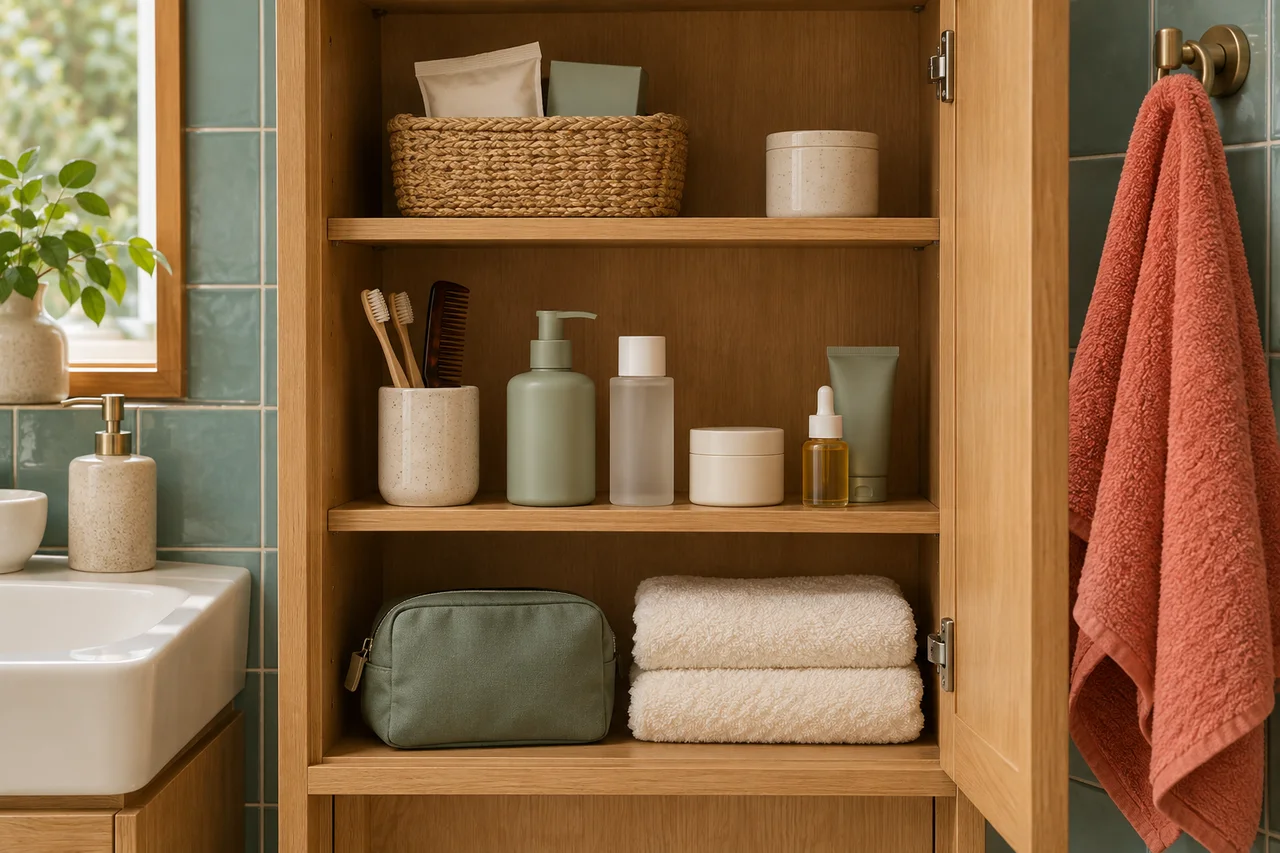
Follow labelled conditions. A sunny windowsill, hot car or continually wet shelf is not a thoughtful default. Choose a place where packs can stay dry and close properly. Refrigeration is not automatically better and does not confer a general shelf-life extension. Keep frequently used products at the front and reserves behind to avoid accidentally opening several similar products together.
Take changes seriously
Do not continue using a noticeably altered smell, colour or texture just because the printed date has not passed. Equally, an unchanged appearance cannot guarantee that a long-expired product is suitable. Combine observation with labelling and its storage history. Do not improvise ways to restore it: dilution and mixing do not create a new reliable use-by period.
Buy according to actual use
Before buying a promotion, count comparable opened and unopened products. A large pack only makes sense if you can use it. Put replacements on the list when the current pack is nearing its end. This reduces clutter and uncertain old stock. For occasional use, a smaller size may be more practical even when its price per unit is higher.
Frequently asked questions
Does the period start at purchase or opening?
It depends on the marking. A period after opening starts when opened; a minimum durability date is a calendar date. Read the symbol and instructions on your actual pack.
Can refrigeration make cosmetics last longer?
A storage choice you make does not automatically extend the manufacturer’s period. Follow the instructions and account for known storage history. Ask if uncertain rather than treating the fridge as a general guarantee.
Questions and experiences
Share a question or a useful experience about this topic. Every contribution is checked before publication. Comments may be written in different languages.
Loading reader contributions…
Opening the form sets a necessary session cookie. No email address is required. Publication is subject to moderation and is not guaranteed. For deletion requests: Contact