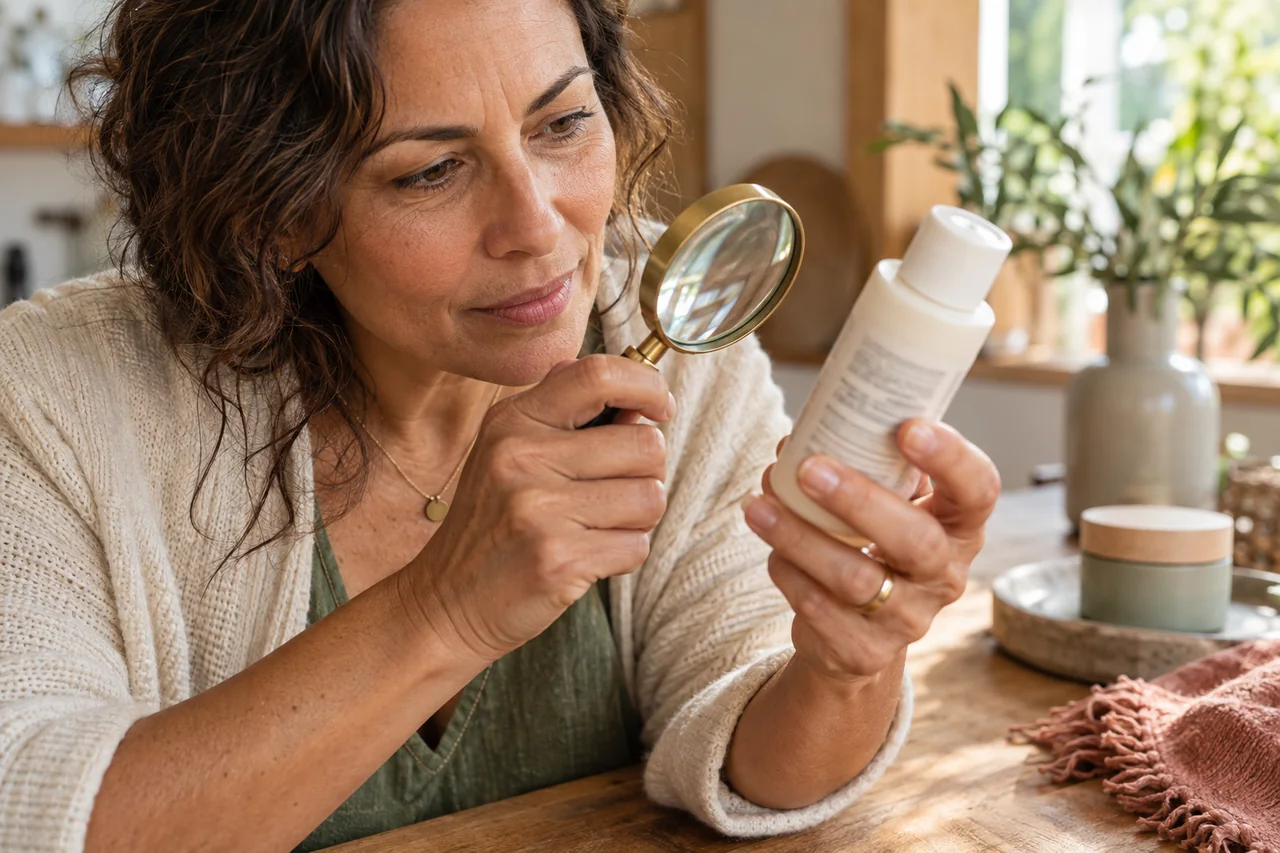
The back of a cream can look like a foreign-language puzzle. Ingredient lists are intended to provide standard names, not require you to memorise every substance. Start with a clear question: are you looking for a known allergen, comparing two products or checking how a claim relates to the formula? That makes the list far more useful.
Decide what you are looking for
Before copying an entire list into a search engine, identify your question. With a diagnosed allergy, the exact substance name matters. To compare two versions of a cream, start with their current packaging. An ingredient list cannot divide all cosmetics into good and bad. Keeping a clear purpose prevents a simple purchase from turning into an endless collection of conflicting online scores.
Understand the names
INCI is an internationally used system for naming cosmetic ingredients. The German BVL explains its importance, particularly for people with known allergies. A name identifies a substance, not its specific effect on your skin. Familiar plants may appear under botanical names. Keep the exact list when changing products: a similar name or identical-looking pack does not guarantee an unchanged formula.
| Entry | Meaning |
|---|---|
| Ingredients | The list of components begins here. |
| Aqua | Water. |
| Parfum or Aroma | A fragrance or flavour mixture; check any additional allergen information. |
| CI followed by a number | A standard colourant designation. |
| Position in the list | Information about ordering, not an exact concentration. |
Respect the limits of the list
Ingredients are generally listed in descending order of weight at manufacture. Those below one per cent may then appear in any order, and additional rules apply to colourants. You cannot read an exact percentage from the position, and the one-per-cent boundary is not normally marked. An ingredient near the end may still matter greatly if you are allergic to it.
The list is not a complete recipe. It cannot tell you exactly how the finished product spreads or whether you will tolerate it. A heavily promoted ingredient does not guarantee a result. Check intended use, warnings and application too. If an app assigns red or green ratings, examine its criteria: a colour code does not replace interpretation.
Compare the front and back
If an extract is prominently advertised, find its name in the list. That connects the claim to the ingredients without proving unusual effectiveness or gentleness. A short list is not automatically better than a long one. Focus on the job you need the product to perform. Ask the manufacturer clear questions rather than judging unknown names in advance.
Keep a small personal reference
For substances you need to avoid, keep the professionally confirmed names and relevant alternatives in a short list. Photograph labels clearly and recheck the current pack when buying again. This is more practical than a complete ingredient analysis and directs attention towards information relevant to you rather than changing trends.
Frequently asked questions
Does a long chemical name mean an ingredient is risky?
No. Length or unfamiliarity does not reliably describe the risk of its intended use. The substance, its use in the finished product and individual sensitivities all matter.
Can I compare products only by ingredients?
You can identify differences and look for known substances. A full judgement also requires information about formulation and use. Packaging, feel, price and purpose remain part of a practical decision.



Questions and experiences
Share a question or a useful experience about this topic. Every contribution is checked before publication. Comments may be written in different languages.
Loading reader contributions…
Opening the form sets a necessary session cookie. No email address is required. Publication is subject to moderation and is not guaranteed. For deletion requests: Contact