A scent can make a product a favourite. Other people prefer care products with as little added fragrance as possible. Both are personal preferences. A confirmed allergy or a reaction changes the question: smelling a bottle is then not enough. This guide separates taste, labelling and tolerance without treating every natural or synthetic fragrance as inherently good or bad.
Describe your preference clearly
Is a scent too intense, too persistent or competing with your perfume? You can answer without making a health claim. In everyday use, you may prefer one deliberately scented product and more neutral choices elsewhere. Consider shared spaces: a fragrance you enjoy at home may be less suitable at work or on public transport.
Natural does not mean allergy-free
The BfR identifies natural as well as manufactured fragrance substances as possible contact allergens. A plant illustration or an essential-oil label therefore does not guarantee tolerance. Equally, a synthetic origin alone does not prove a product is problematic. Separate origin, scent preference and personal reaction. You can like or dislike a smell without classifying a whole ingredient group as good or bad.
Check current labelling
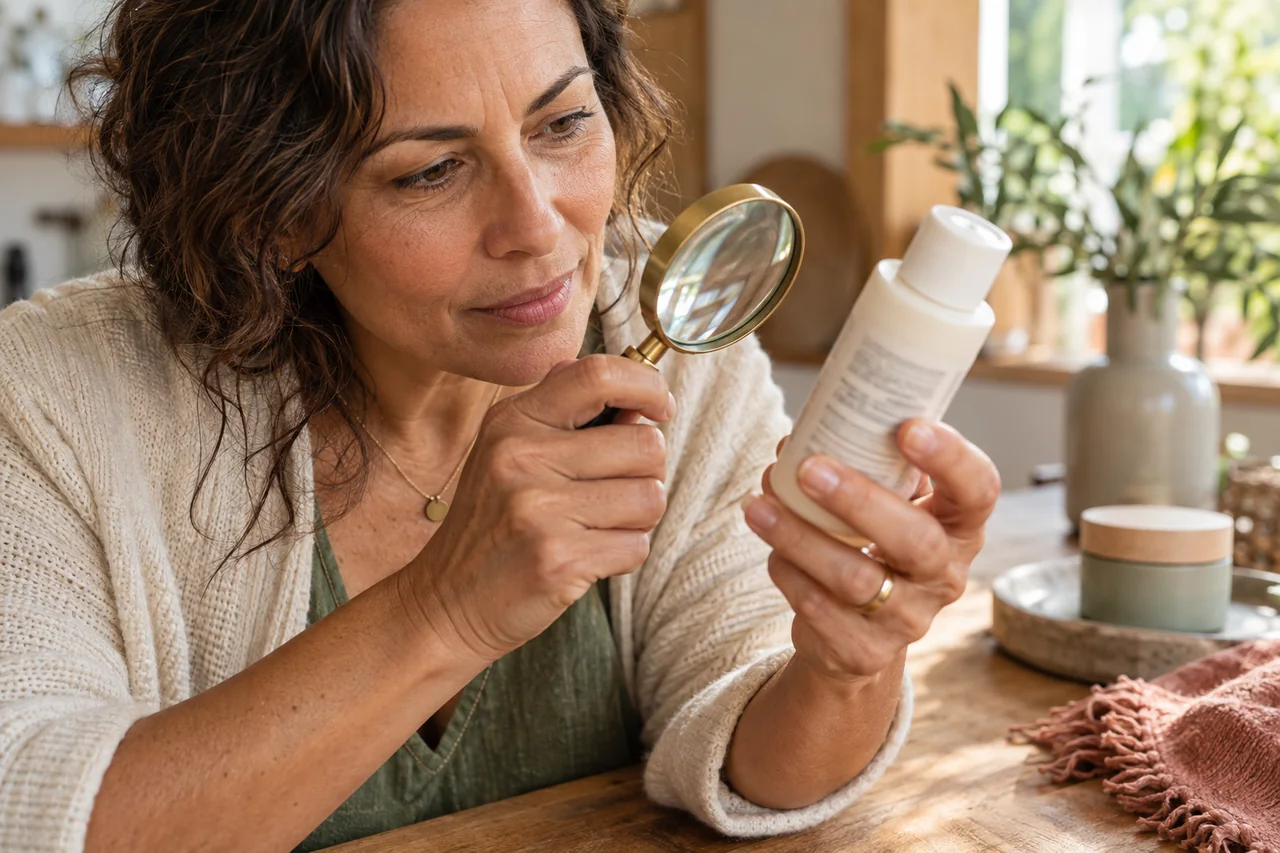
If you have a diagnosed allergy, use the exact professionally confirmed ingredient name to check the current list, even for a familiar product. Formulas and labels may change. A front-of-pack marketing term cannot replace this check. If the information is unclear, ask your clinician, pharmacist or the manufacturer. A readable packaging photograph ensures everyone is discussing the same product.
Do not diagnose a reaction yourself
Burning, itching or a visible change after cosmetic use can have different causes. A contact allergy needs professional assessment and cannot be proven by a quick home experiment. Do not continue using a suspected product to get accustomed to it. Note the timing and products involved. Seek medical advice for persistent or recurring symptoms. Clear records help investigate without assuming the cause.
Build a manageable selection
To reduce fragrance, start with products you use frequently rather than replacing the entire bathroom in one day. Compare one relevant alternative when a replacement is needed. Include handbag and workplace products, which may otherwise escape notice. With a known allergy, follow professional avoidance advice. Without that diagnosis, preferring a quieter scent is a sufficient reason on its own.
Frequently asked questions
Does no noticeable smell mean no fragrance ingredients?
Not necessarily. Perceived intensity does not reliably replace labelling. If you must avoid a particular substance, check the ingredients rather than relying on a sniff test.
Can I test a fragrance allergy at home?
A personal experiment cannot reliably confirm or exclude an allergy. Seek medical assessment if you suspect one. Bring product details, ingredient lists and observations instead of repeatedly trying new products on irritated skin.


Questions and experiences
Share a question or a useful experience about this topic. Every contribution is checked before publication. Comments may be written in different languages.
Loading reader contributions…
Opening the form sets a necessary session cookie. No email address is required. Publication is subject to moderation and is not guaranteed. For deletion requests: Contact