
Office nails cannot be defined by one colour. Your tasks, any workplace requirements and comfortable handling matter more than a supposed style rule. This guide does not set binding standards for particular occupations or employers.
Describe the workday
List five regular actions, such as typing, mouse use, writing, opening folders and picking up small objects. Add handling materials or travelling where relevant. Office work alone does not define what feels practical. Ask about specific nail, jewellery or hygiene requirements rather than inferring them. Choose the design within that real framework.
Use the current length as a baseline
Type a short paragraph, write a few lines and use an ordinary fastening with your existing nails. This is a comfort observation, not a speed test. Record precisely what feels easy or unfamiliar. Compare a new length against that baseline. A small adjustment may tell you more than an extreme change chosen mainly from a picture.
Decide form before decoration
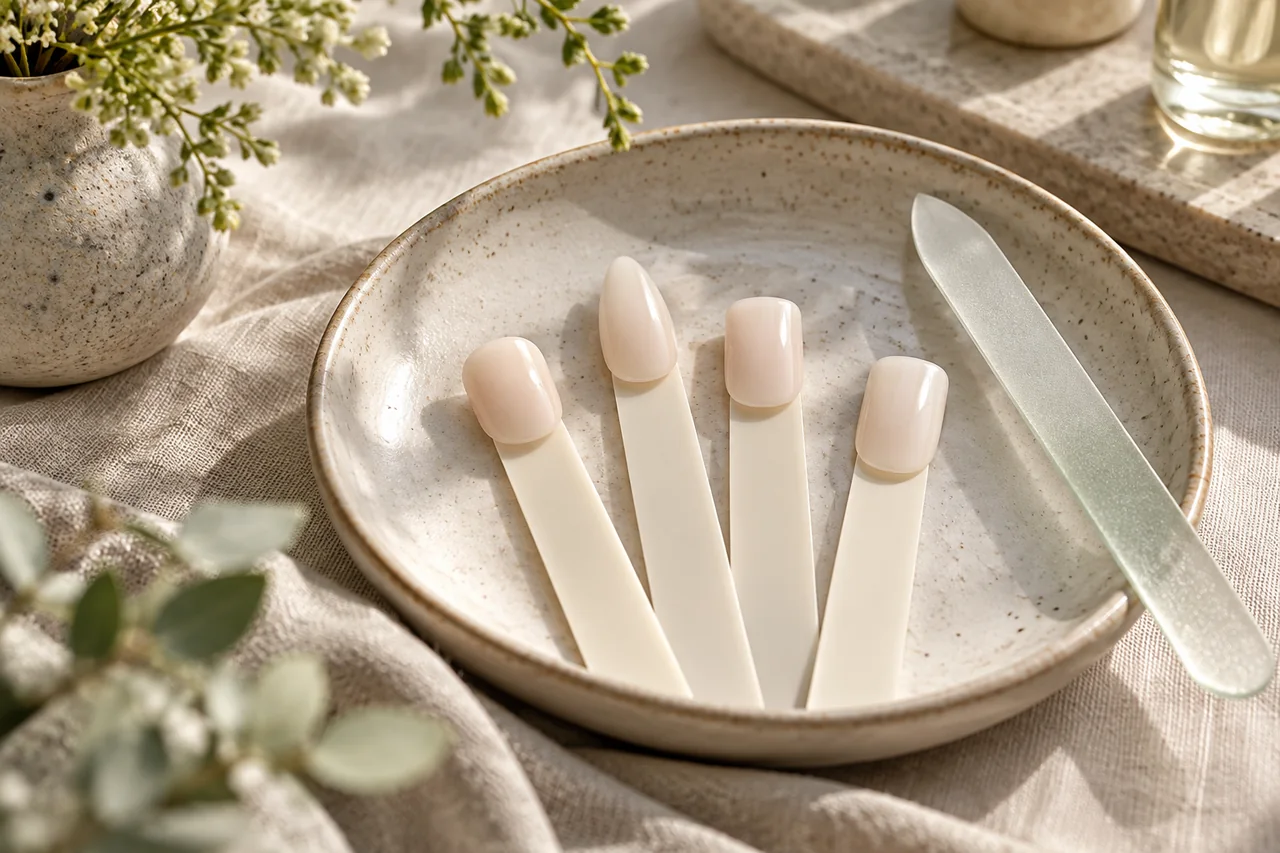
Once shape and length feel comfortable, consider colour and pattern. Dark polish does not automatically make a nail impractical, and pale polish does not solve unfamiliar length. Plain colour, a fine coloured tip or one dot may each fit your preferences and applicable rules. A general list of unprofessional colours cannot reliably cover different workplaces.
Compare three design levels
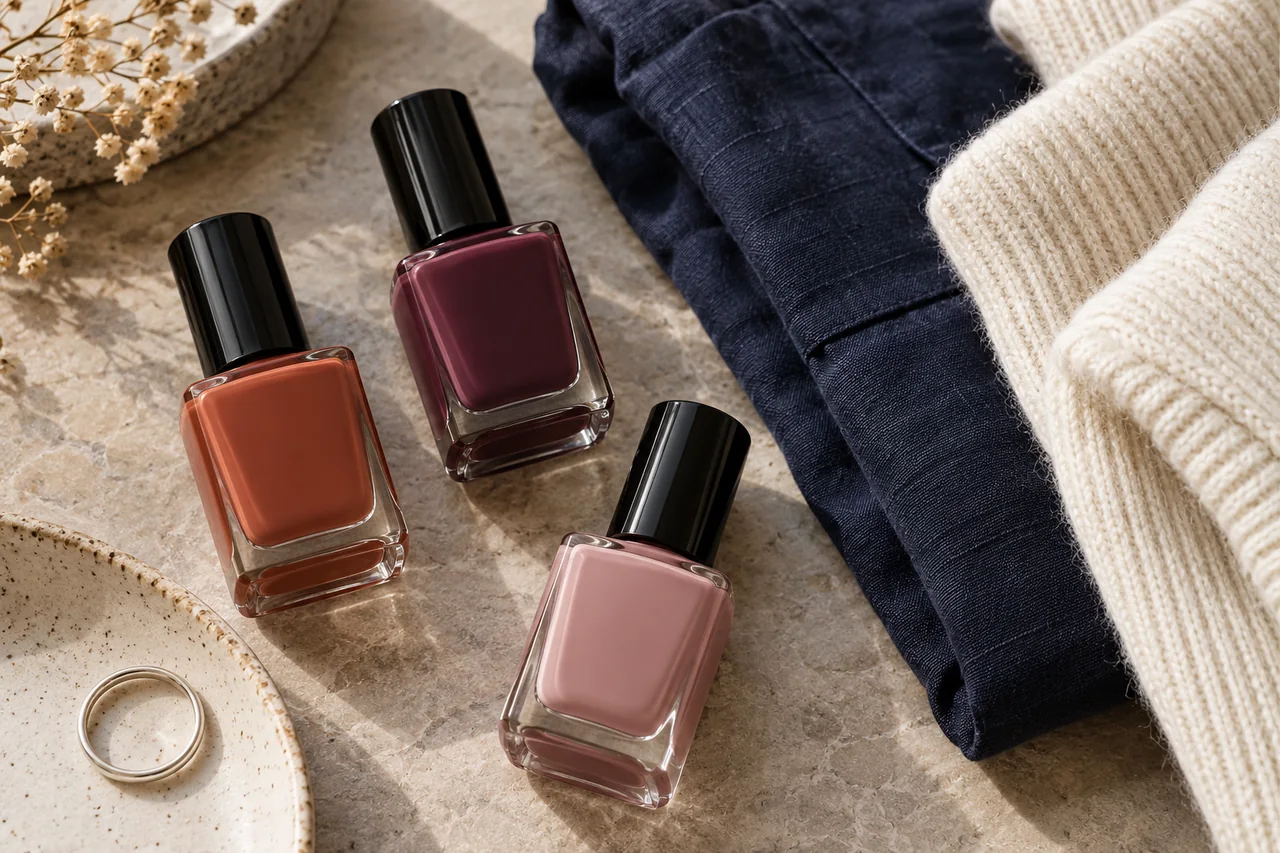
Use the same colour for a plain version, small tip and single accent, so you compare the extent of design. A versatile look may suit changing meetings or outfits, but that is your practical preference, not a universal duty. Check whether the colour works with work clothes, the design fits requirements and handling remains comfortable.
Plan effort and test an ordinary day
Consider when you can apply polish or attend appointments, including removal and reapplication if you change often. Use your actual products and experience rather than an assumed wear time. An elaborate occasion look may not fit the effort you want for work.
During an ordinary permitted trial, assess handling, visible effect and effort separately. You may love the colour while wanting shorter nails, or like the length but find a pattern personally distracting. Keep the useful parts rather than rejecting the whole manicure.
Write an adaptable standard
A reference could read “short and softly rounded, opaque muted rose, glossy, no raised details”, with a second version for more colour. This reduces repeated decisions and gives a salon a clear practical request. Revisit it when duties or employer requirements change. The useful standard follows your actual work rather than an unchanging office label.
Frequently asked questions
What is the right office nail length?
No length fits every task. Check your normal hand movements and workplace requirements, using a current comfortable length as the comparison.
Are red or dark nails unprofessional?
That broad judgement is unreliable. Rules differ by employer and task. Within applicable requirements, colour is a personal styling choice.
Should I try unfamiliar long nails just before an important workweek?
An earlier trial is more practical if the length is new. You can assess handling and make changes before a busy schedule or unfamiliar tasks.

Questions and experiences
Share a question or a useful experience about this topic. Every contribution is checked before publication. Comments may be written in different languages.
Loading reader contributions…
Opening the form sets a necessary session cookie. No email address is required. Publication is subject to moderation and is not guaranteed. For deletion requests: Contact