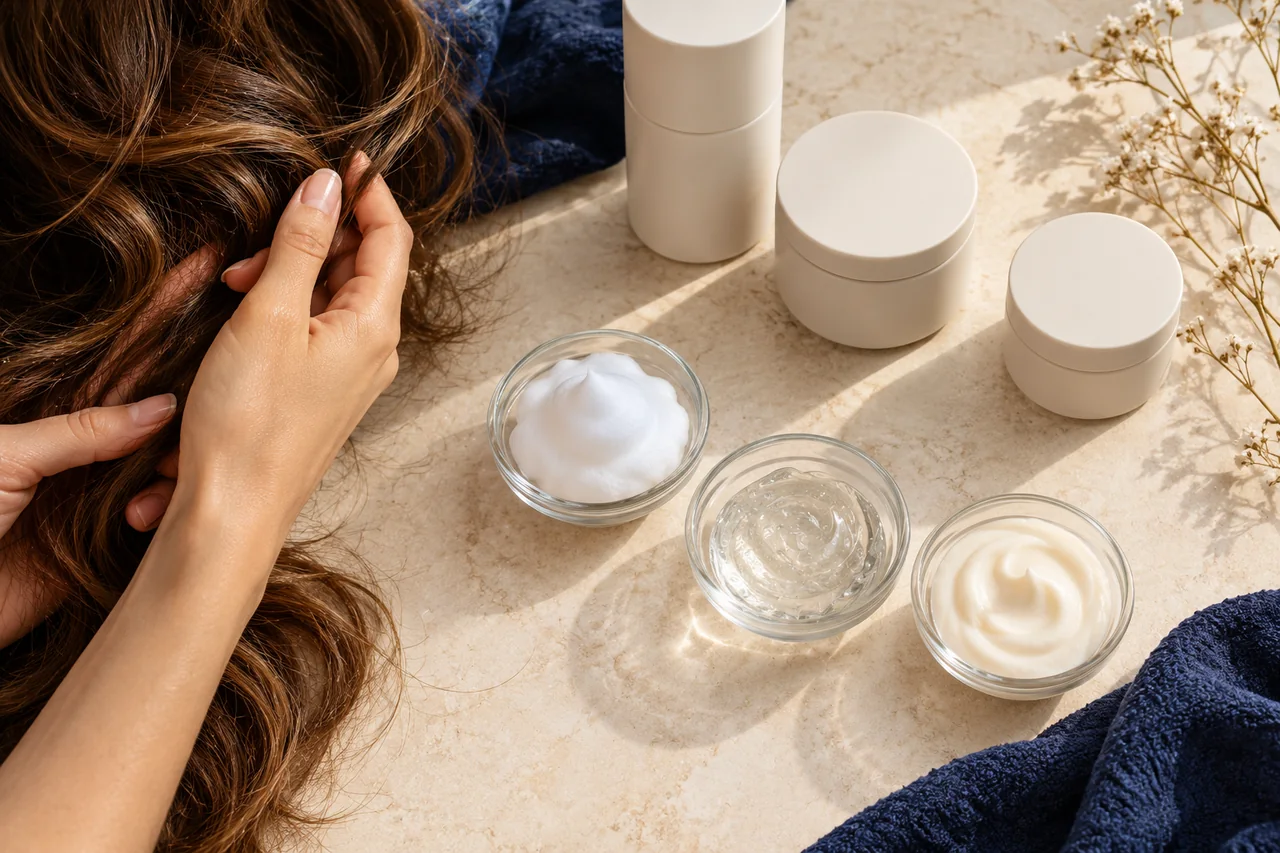
A product is easier to choose when you can describe what you want it to do. Begin with the task and what is already in your cupboard.
Define the task
“Better hair” is too vague to guide a purchase. Try “less rearranging of the front wave”, “tidier ends” or “more hold for a half-up style”. Decide whether the product belongs at the roots, in the lengths or on selected sections. Check your existing products first. If you cannot explain the job of another bottle, observe your routine before shopping.
Read beyond the product format
Mousse, gel, cream and spray apply differently, but their format alone does not predict hold or feel. Two gels can behave differently, and a cream may condition, shape or serve another purpose. Read the actual label and directions, including damp or dry application.
- Mousse: may provide shape and hold; check quantity and hair condition.
- Gel: may group sections or define hold; check distribution and finish.
- Cream: may arrange or condition; check the intended application area.
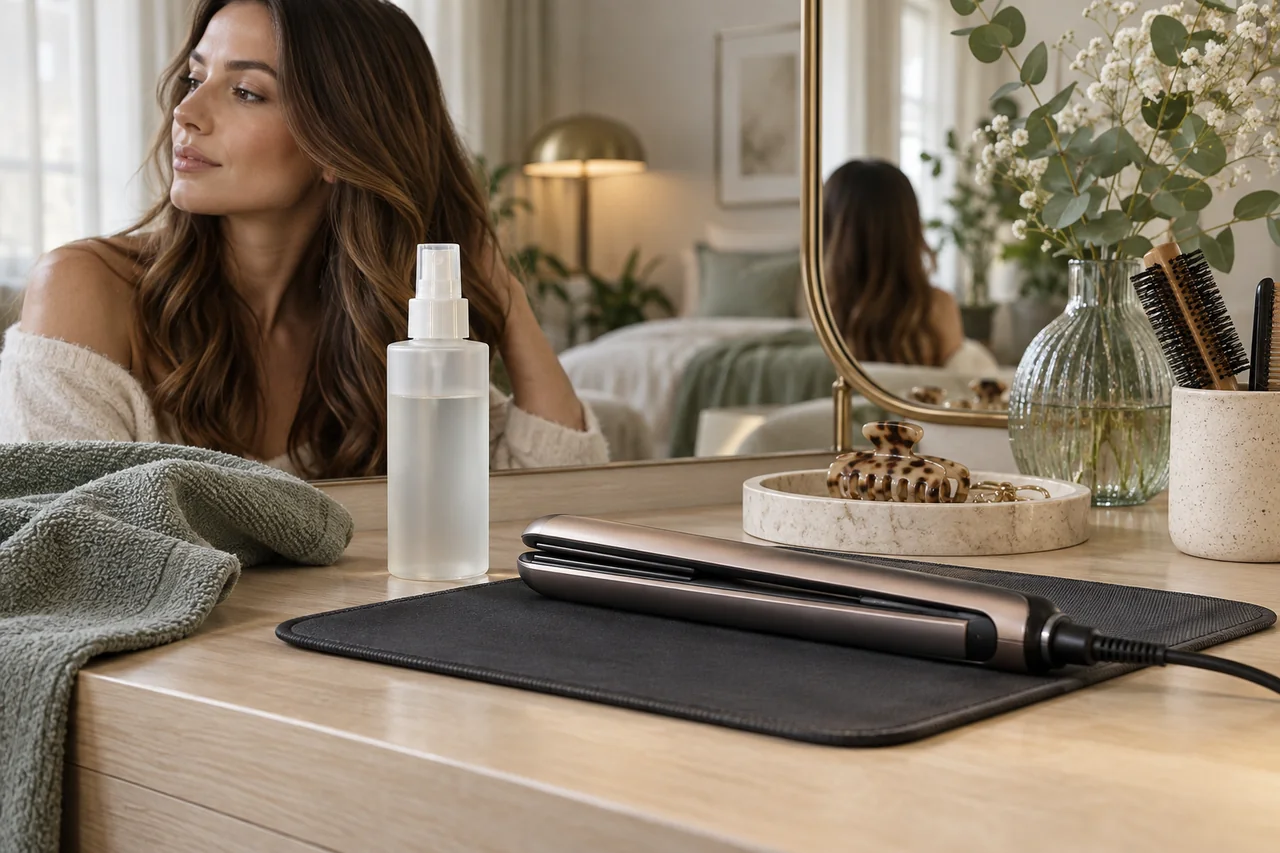
- Spray: may target an area or finish a style; follow distance, surroundings and warnings.
Separate conditioning from hold
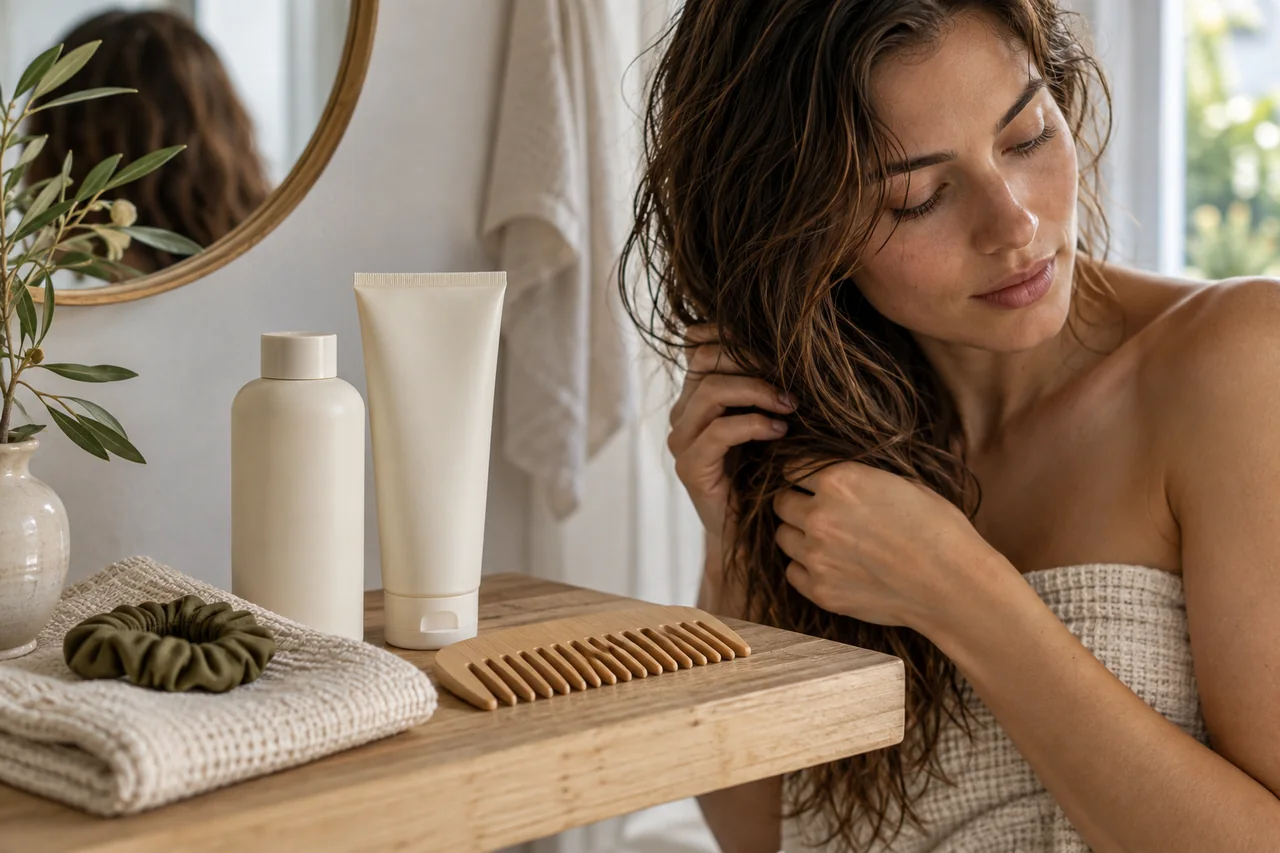
Depending on its formula, a leave-in conditioner may help arranging or detangling without providing strong hold. The American Academy of Dermatology distinguishes leave-in from rinse-out conditioner. Do not turn a rinse-out product into homemade styling water. Similarly, an oil is not automatically a heat protector. If you need two functions, name them separately and check that the intended use actually supports them.
Use an amount you can repeat
Start with a small reproducible quantity, such as part of a pump or a small portion from a pot. Apply only where needed and judge the complete result after drying or settling as directed. Constantly topping up makes it harder to know how much helped. A note of starting condition, amount, area and intended effect is usually enough for a useful comparison.
Assess more than hold
A firm hairstyle may still feel wrong if you prefer soft movement, little residue or easy cleansing. Consider visible benefit, feel, maintenance and any residue together. Stop using a product that causes an unpleasant reaction and seek advice for persistent symptoms. Price and a long ingredient list cannot tell you whether a product earns its place in your everyday routine.
Organise by real functions
Group products into cleansing, conditioning, shaping and finishing. Set duplicates aside and check storage and usable-life guidance. Do not combine unsuitable products just to use them up. Before buying, identify a specific gap and budget; a small pack can be helpful for a first trial.
For example, if you already have mousse and gel but only want better hold at the front, try each on comparable days according to its own directions. The quantities need not be identical. Compare shape, feel and later adjustments. If both work well enough, choose by handling and what you already have rather than assuming a third purchase is needed.
Frequently asked questions
Can I combine several styling products?
Yes, when each has a clear task and compatible intended use. Introduce combinations gradually. A longer routine is not automatically better.
Which product type is best overall?
That depends on your intended shape and the specific formula. Choose by task, directions and your own comparison, not just the category printed on the front.

Questions and experiences
Share a question or a useful experience about this topic. Every contribution is checked before publication. Comments may be written in different languages.
Loading reader contributions…
Opening the form sets a necessary session cookie. No email address is required. Publication is subject to moderation and is not guaranteed. For deletion requests: Contact