
A small routine is useful when it meets your needs, not when it reaches an arbitrary product limit. Start by recording what you actually do.
Record an ordinary routine
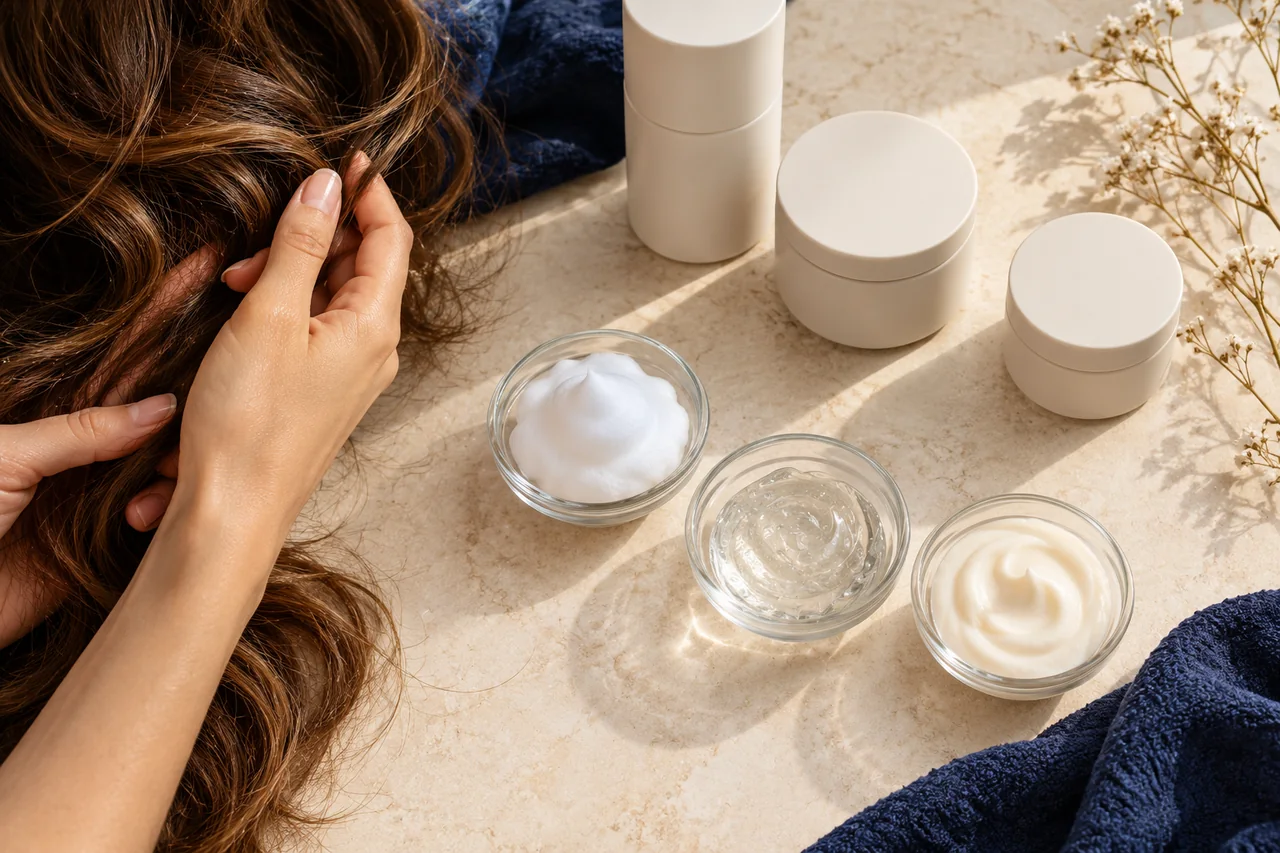
Write down a wash day and a day between washes, including cleansing, rinse-out conditioner, leave-in products, styling, drying and refreshing. Note the area treated and approximate time. Do not judge yet: several products may serve the same vague role, while a small step may be particularly helpful. The exercise is about usefulness, not a permitted number of bottles.
Keep cleansing and comfort appropriate
Do not extend washing intervals simply to call the routine minimalist. Match care to your scalp and actual needs and use products as intended. Persistent symptoms, noticeable hair loss or unexplained substantial breakage require individual assessment rather than further cuts to an internet routine. Separate the steps that keep your hair clean and manageable from those added mainly through habit.
Make duplicated jobs visible
Give each product a specific purpose. Replace a vague “care” label with easier detangling, more comfortable ends or explicitly stated protection for a heat step. Multiple functions are possible when the intended use supports them. Mark what you would miss and what has an unclear benefit; begin with the latter. Frequent use does not prove necessity, while an occasional product can still have a clear useful job.
Try leaving out one step
Choose an ordinary day without a special event. Omit one unclear styling step and keep everything else the same. After drying, judge shape, feel and time, then check whether later corrections increase. If no important disadvantage appears, repeat the simpler routine. One unusual day proves little. Restore a useful step if needed and test something else. The aim is a manageable routine, not the shortest possible list at any cost.
Calculate using your own figures
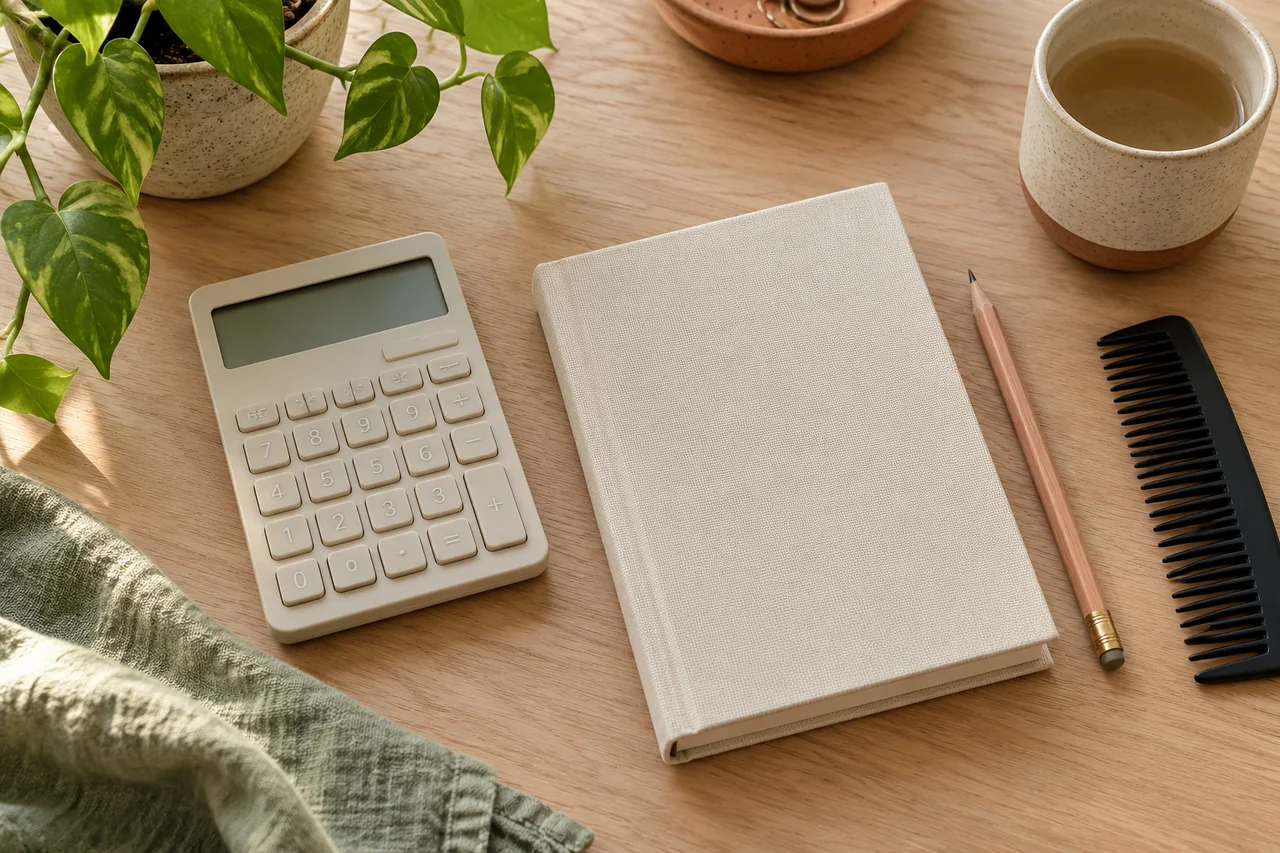
Record a pack price and the number of applications you actually observe. Divide price by uses for your personal cost per use; it is not an overall product rating. In a purely illustrative calculation, CHF18 over 60 applications equals CHF0.30 per use. At 100 actual uses per year, that would be CHF30 annually. Replace these with your own figures. Saving three minutes across 80 uses would save 240 minutes, or four hours, in a year.
Separate the base from occasional additions
Write the standard routine in a few lines and keep its products together. Store occasion or specialist styling additions separately so you do not repeatedly decide whether to use every bottle. Reconsider the routine when the cut, length, daily life or needs change; no monthly purchase is required.
For example, suppose you understand the role of two conditioning products but use two holding products together only because an old tutorial did. Omit one holding product while keeping everything else the same over several normal uses. Keep the simpler version if it works, or restore the step if a clear disadvantage appears. This needs neither immediate disposal nor a new minimalist product range.
Frequently asked questions
How many products are really necessary?
There is no useful fixed number without knowing your needs. Each step should have a clear purpose and work in your everyday routine.
Should I immediately throw out unused products?
Check condition, labelling and manufacturer guidance first. Keep suitable occasional additions organised. Do not use unsuitable or no longer usable products on skin or hair out of obligation.

Questions and experiences
Share a question or a useful experience about this topic. Every contribution is checked before publication. Comments may be written in different languages.
Loading reader contributions…
Opening the form sets a necessary session cookie. No email address is required. Publication is subject to moderation and is not guaranteed. For deletion requests: Contact