
Air-drying can be a useful option when the resulting shape and the time needed suit your day. A controlled comparison helps more than declaring one drying method universally best.
Choose a day with enough time
On a quiet day, observe when your visible lengths and denser areas become dry. This is a personal planning guide, not a universal target: the amount of hair, starting wetness and surroundings can change the timing. If a working morning is too short, try another day and keep an easy alternative available. Judge how much restyling you need afterwards as well as the drying itself.
Remove water gently
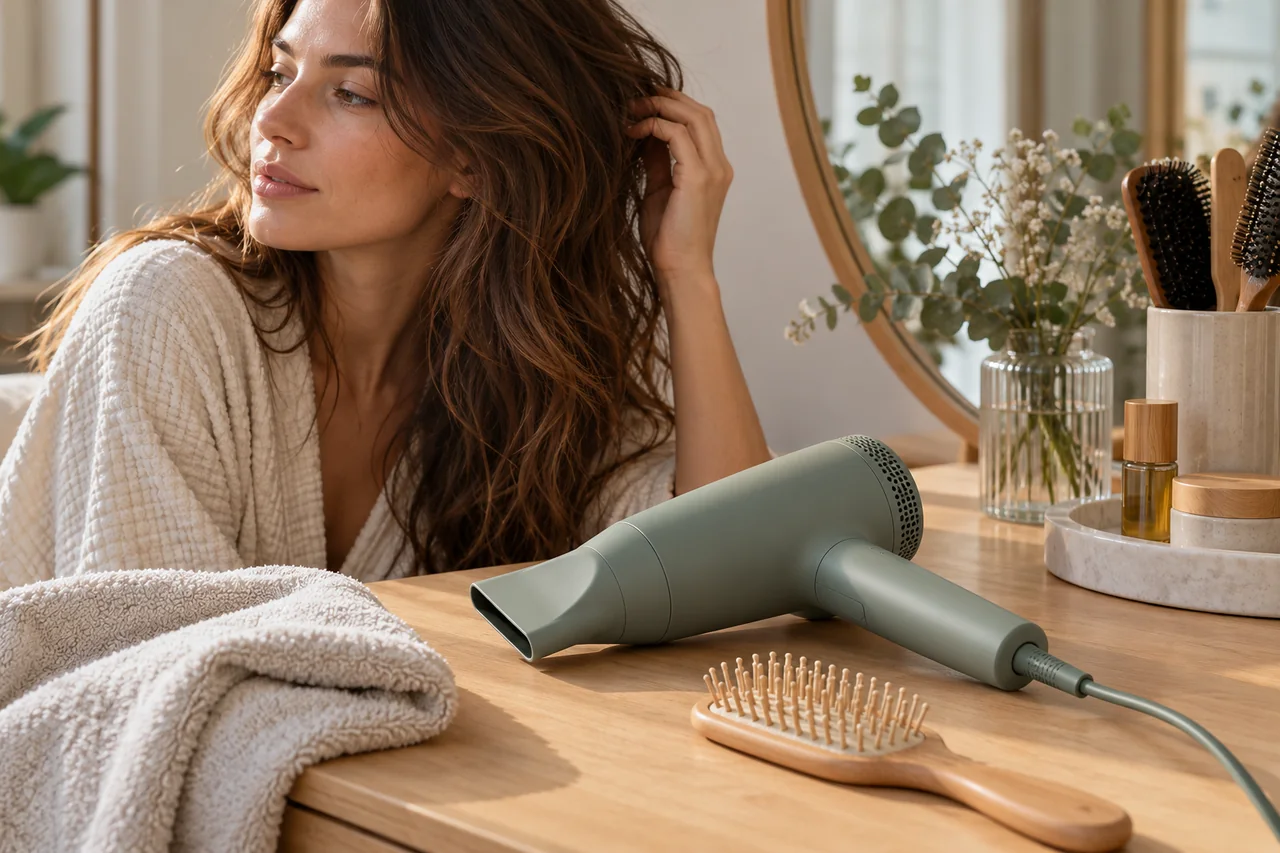
Gently press excess water from the lengths with a clean soft cloth. The American Academy of Dermatology recommends gently absorbing moisture with a towel or T-shirt instead of rubbing vigorously. A specialist purchase or a heavy wrap is not required. Choose something manageable and spread it out to dry afterwards. The aim is to prepare your hair for comfortable arranging, not force a fixed hairstyle.
Use suitable detangling
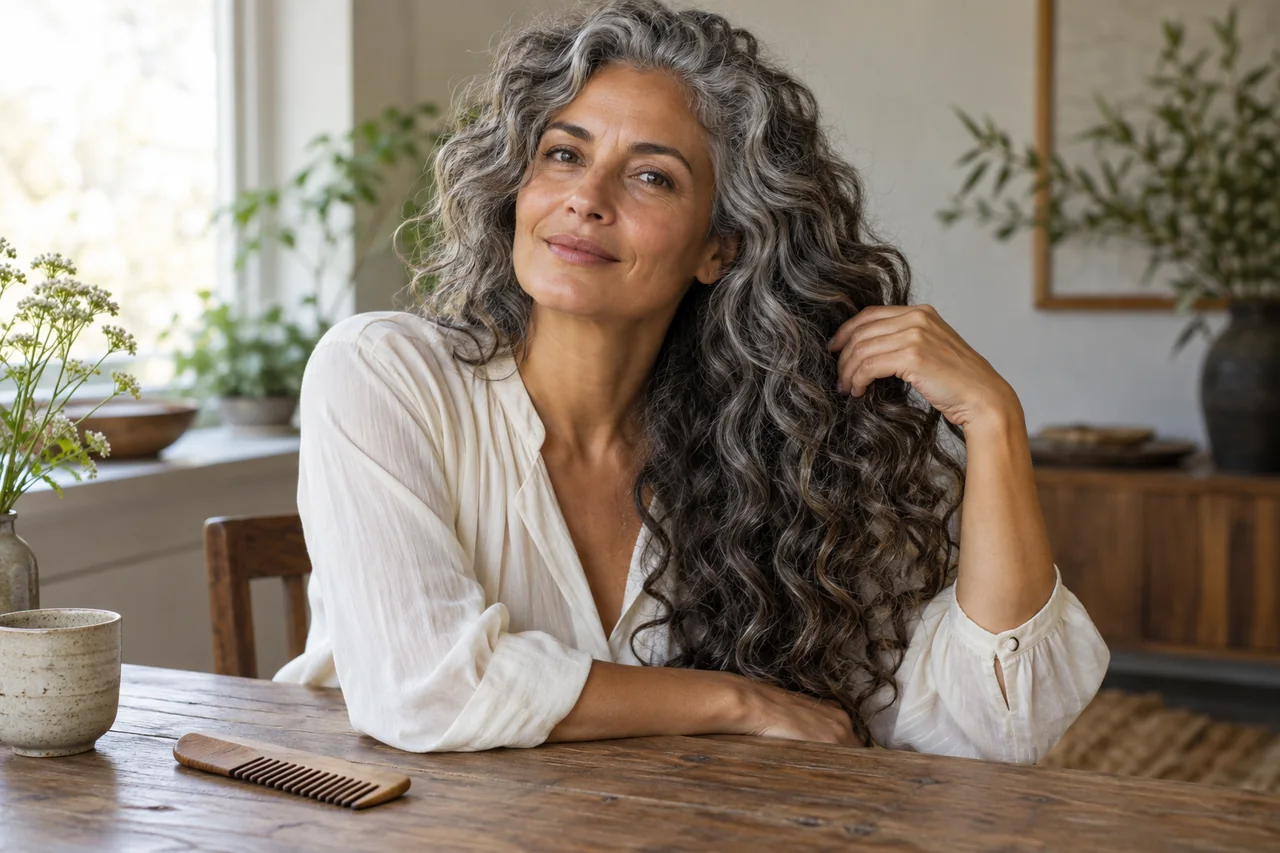
The AAD suggests allowing straight hair to dry a little before combing, while thick curly hair can be detangled with conditioner during washing. Apply those pointers thoughtfully to your own hair. Work on knots without force; repeatedly brushing over one does not solve it. If your current detangling method works well, keep it for the first comparison so that drying is the main change.
Arrange the visible shape early
Place your parting where you want to wear it. Arrange the front and choose whether to leave waves loose or gently group them. Let the shape develop without constantly handling every strand. If you tuck one side behind an ear, observe the outline it produces. You can try the two sides differently, compare once dry and repeat the preferred approach before making it your routine.
Add product only for a clear purpose
A leave-in conditioner and a holding gel do different jobs. Start with the aim: easier arranging, clearer waves or less later correction. Use a suitable existing product as directed in a small amount, or begin without one. If the shape looks good but the lengths feel uncomfortable, focus on that zone rather than adding another layer everywhere.
Choose where the method fits
Assess fully dry hair in the mirror and after an ordinary activity. Does the movement appeal to you? Did drying delay your departure? Did only the front need attention? You may air-dry on free days and use a controlled blow-drying routine on workdays. There is no need to make one option exclusive.
For a practical comparison, use two free mornings. On the first, set the parting after your usual preparation and leave the hair mostly alone. On the second, guide the front differently while keeping everything else similar. Photograph the fully dry results in the same room and note later adjustments. If both take longer than a workday allows, keep air-drying as a free-day option.
Frequently asked questions
Is air-drying always gentler than blow-drying?
A universal ranking is too broad. Wet-hair handling and the actual amount of heat differ. Use a controlled method and avoid unnecessarily rough handling.
Must I avoid styling products when air-drying?
No. Use a suitable existing product for a specific task if helpful. Starting without one simply makes the natural starting shape and the benefit of later changes easier to judge.

Questions and experiences
Share a question or a useful experience about this topic. Every contribution is checked before publication. Comments may be written in different languages.
Loading reader contributions…
Opening the form sets a necessary session cookie. No email address is required. Publication is subject to moderation and is not guaranteed. For deletion requests: Contact