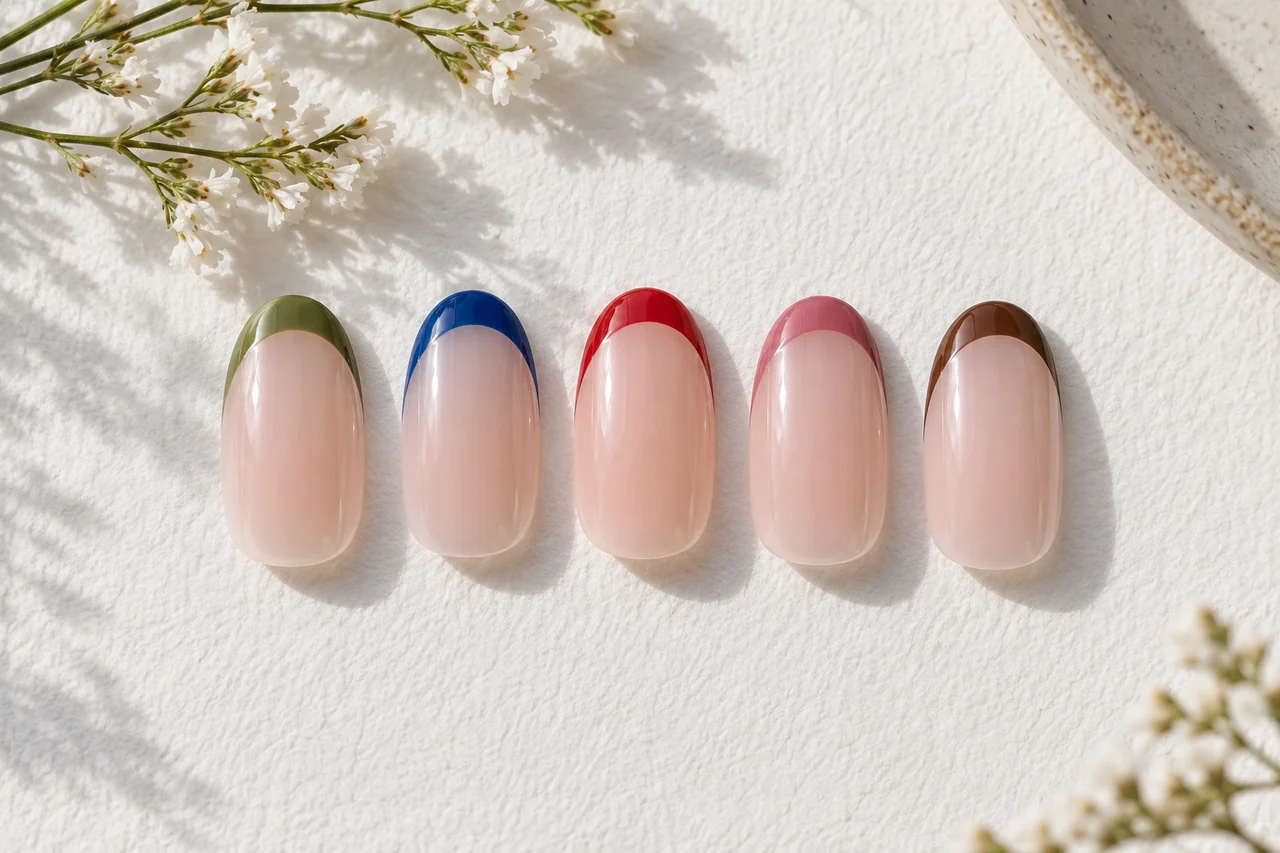
Coloured tips change a look on a small surface. Decide first whether you want one accent shade, two alternating colours or five different tips, then compare what each choice actually changes.
Name the intended effect
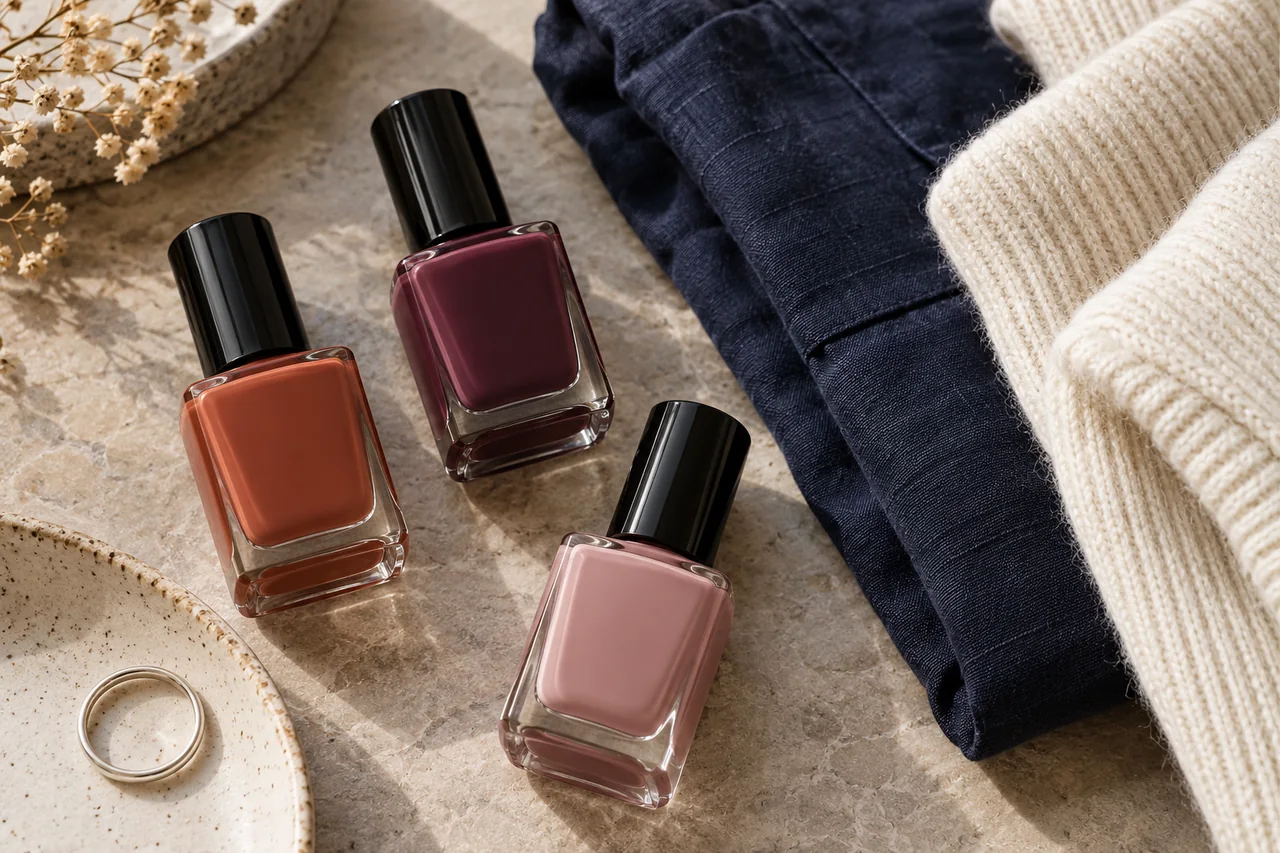
Describe the look as calm with a small colour accent, strongly graphic or deliberately colourful. Start with a shade in clothing, a scarf or a bag, without making full matching compulsory. Navy might repeat across outfits while coral creates contrast. Decide how much colour you want visible: a narrow strong line may suit a subtle accent better than five wide pastel bands.
Keep the base consistent
Draw identical outlines with the same base and add blue, red and olive tips. This compares colour itself. Switching from sheer to opaque white at the same time also changes background contrast, which can explain why an inspiration shade looks different when copied. Include base opacity in a salon request; a sheer base intentionally leaves natural nail colour visible.
Plan the sequence across both hands
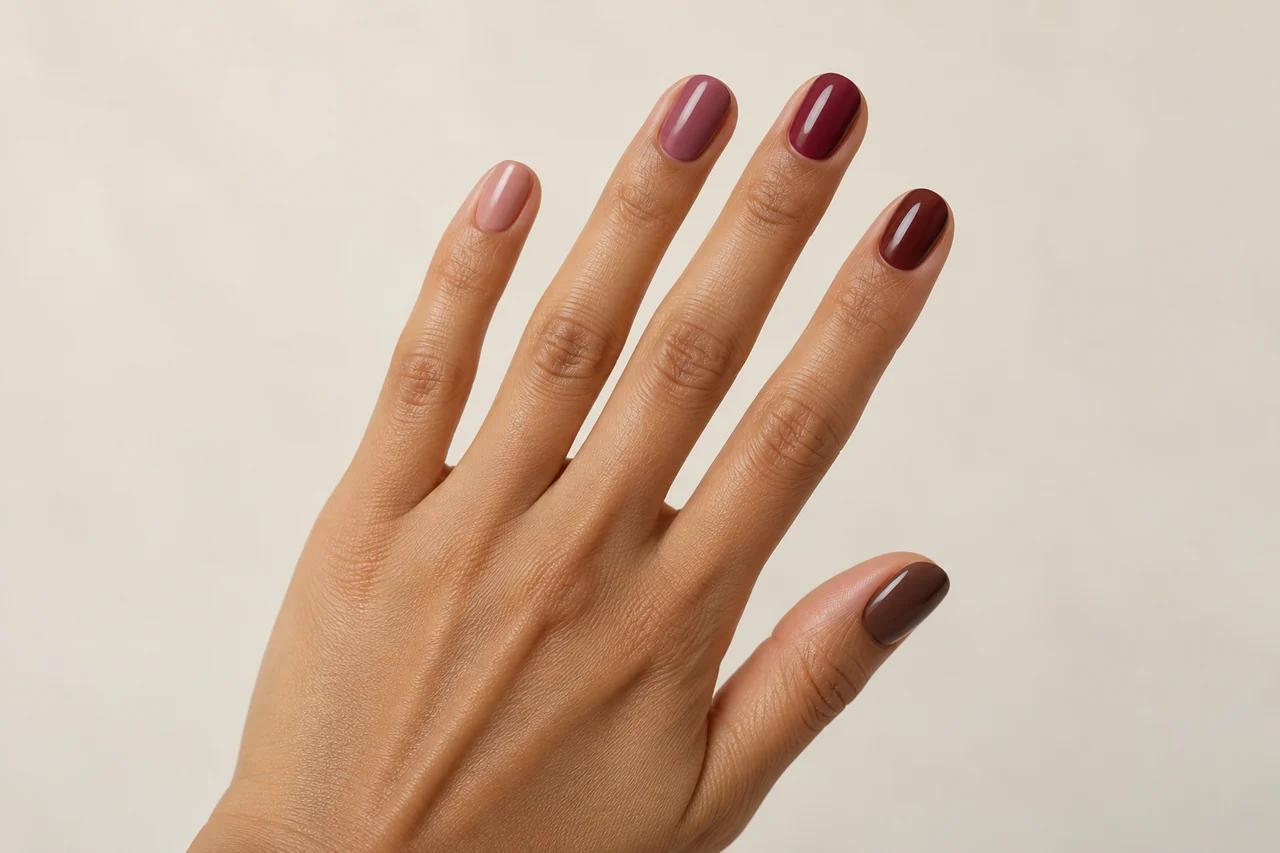
One colour creates repetition. Two can alternate or appear only on selected nails. Five can follow light-to-dark order or a colour family from rose to berry. Hands may mirror each other, but need not. If the order differs, keep another feature stable, such as line width. Label the sequence from thumb to little finger before starting.
Control contrast through area
A very dark narrow tip may use less surface than a broad pastel one while remaining clearer through contrast. If a sample seems too quiet, consider a darker or clearer colour before enlarging the design. These are design options, not rules for skin tones. Check whether one colour is visible enough, two remain orderly or five look deliberately connected.
Make a small appropriate trial
Use cosmetic nail products and suitable tools according to their instructions. This design does not inherently need a lamp or artificial nails. Practise the line on an intended sample surface and choose a width you can repeat. If a very fine line is difficult, try a slightly wider softer-coloured edge or one accent nail. Avoid making the first attempt an endless correction exercise.
Test with real clothing and record the result
Compare beside a familiar light and dark garment with usual jewellery, not only a carefully matched photo background. A red accent can stand independently beside neutral clothes. Keep lighting similar for private comparison photographs.
Record base and opacity, tip colour, relative width and sequence. For example: “Sheer rosy base, narrow navy tips on every nail, no other pattern.” Next time change only navy to red. If you already own several colours, sketch a multicoloured version before assuming it needs five new bottles.
Frequently asked questions
Which colours go together for coloured French tips?
Begin with one shared feature, such as similar lightness, a colour family or two shades from an outfit. This is a practical starting point, not an objective harmony rule. Compare on the same base.
Can the tips be asymmetric?
Yes. A diagonal tip or different colour order can be deliberate. Limit other changes so the asymmetry reads clearly rather than as an accidental variation.
Do I need five polishes?
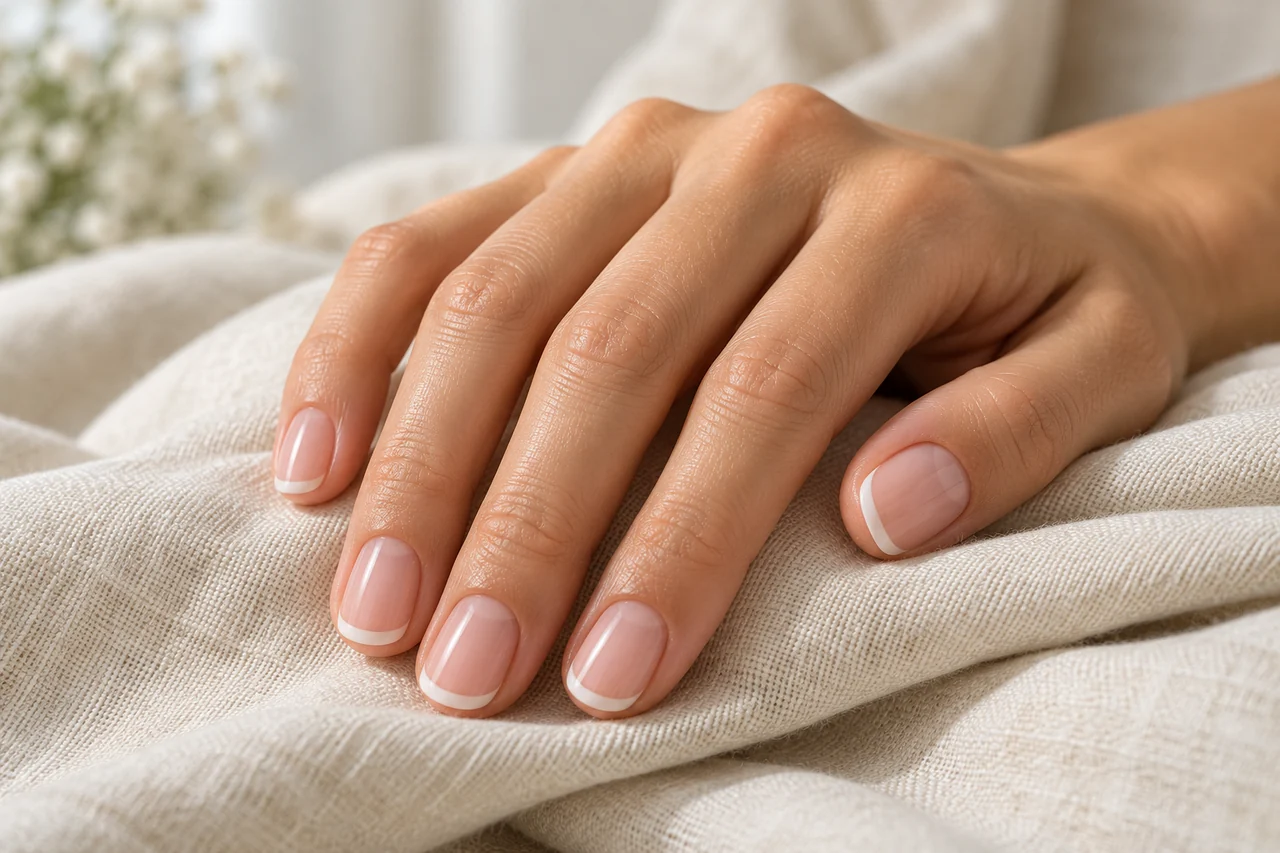
No. A single coloured tip over a sheer or opaque base is enough. Start with an existing colour whose effect you know.
Questions and experiences
Share a question or a useful experience about this topic. Every contribution is checked before publication. Comments may be written in different languages.
Loading reader contributions…
Opening the form sets a necessary session cookie. No email address is required. Publication is subject to moderation and is not guaranteed. For deletion requests: Contact