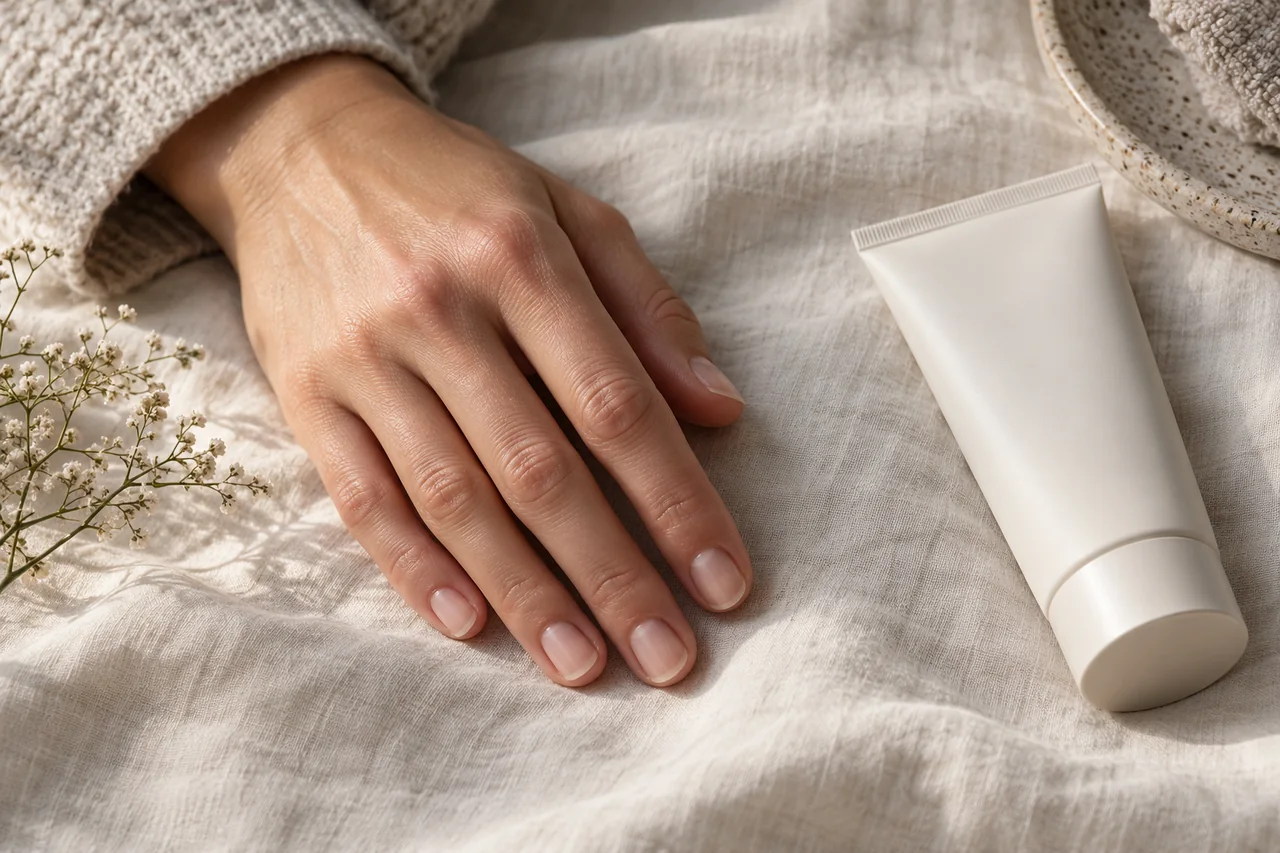
Visible natural skin around the nail is not a styling failure. You can aim for a neat polish outline without treating every natural edge as something to remove.
Put close-up images in context
Social-media photographs often use strong light, extreme closeness and extensive preparation. They are designed views, not standards your hands must meet. Look at your nails from an ordinary distance too. Separate wanting controlled polish application from wanting to remove natural skin. The first is a design task; the second can encourage unnecessary intervention.
Simplify the care plan
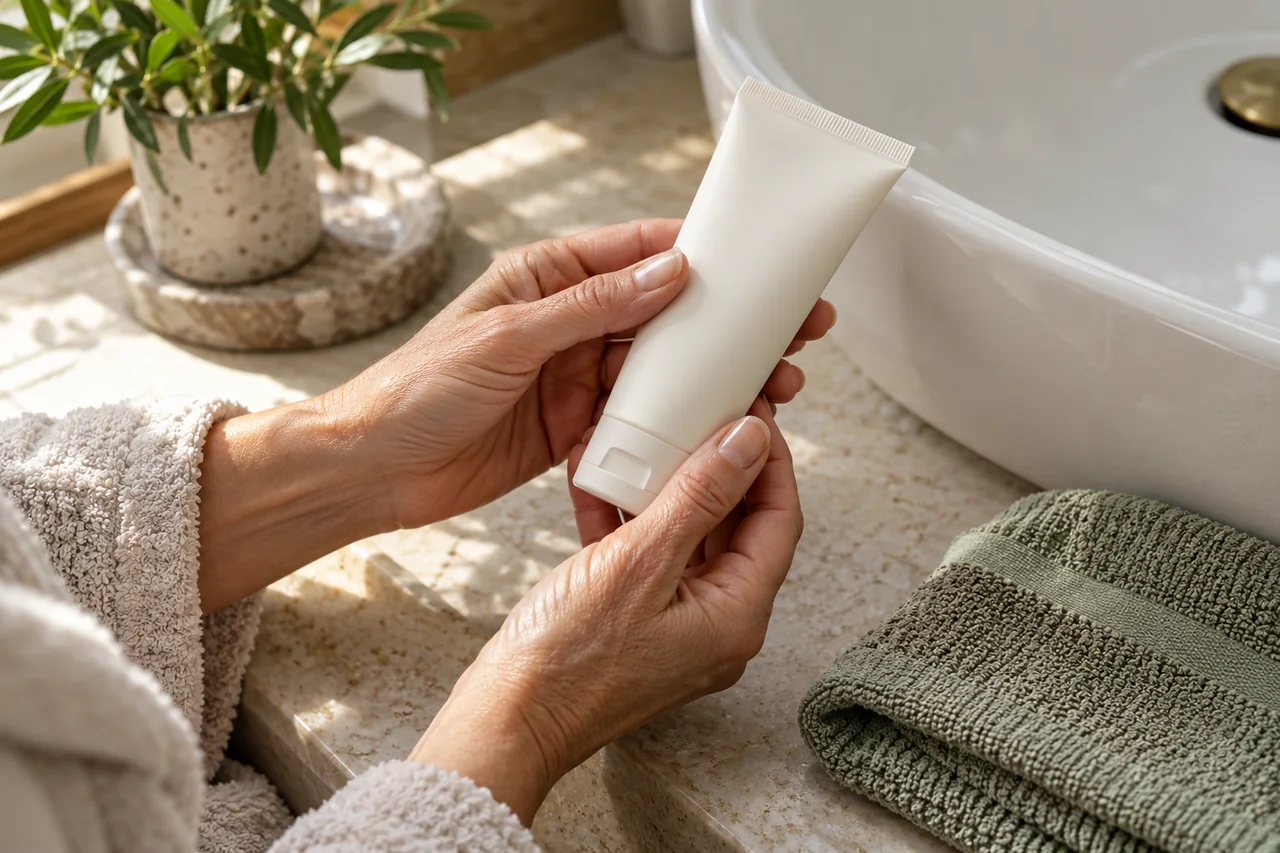
List current steps and their purposes. A tool is not necessary merely because it arrived in a set. An ordinary suitable handcare product may be enough for a restrained routine, used as directed. A collection of cuticle products is not required. Fewer changes can also make reactions easier to describe, without promising that one product will resolve every dry or altered area.
Remove tools from the compulsory list
Cuticle nippers and sharp scrapers need not be part of an everyday manicure. Ask about the purpose and limits of procedures advertised as especially thorough. Before a salon appointment, state what you do not want: “Please do not cut my cuticles” is clearer than “Be careful”. You do not have to justify the boundary medically. Choose another service or stop before unwanted treatment begins.
Plan care separately from colour
Follow polish-specific preparation before colour rather than automatically adding a rich care layer immediately beforehand. Handcare may fit better after ordinary washing or in the evening, depending on its directions and your needs. One clearly identified product within reach can be more practical than several half-used bottles.
Do not respond to irritation with more cutting
Avoid pulling small pieces of skin or trying to cut away discomfort. Persistent or significant changes deserve professional help. Record when symptoms began and recent products rather than diagnosing from pictures. A trend term such as Russian manicure does not establish which steps are appropriate for you or override your limits.
Treat the outline as an application task
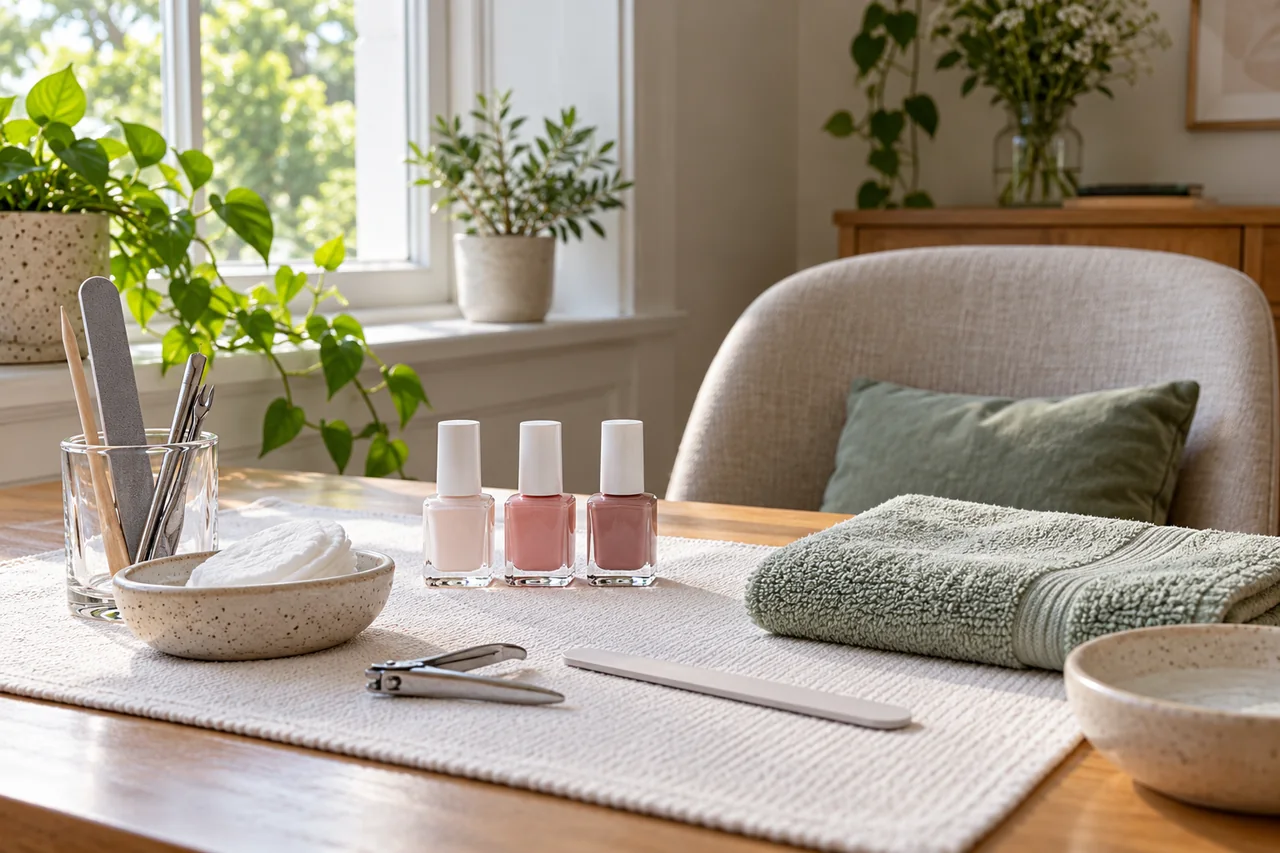
Polish does not have to reach onto the skin. Follow the product directions and practise brush control on a suitable sample with a simple design. Better positioning, light or fewer details may help more than additional skin work.
At the end, judge comfort, whether you understand the process and whether you like the ordinary-distance result. Keep a short note of omitted steps and useful care for future salon visits. A reduced service can be a sensible outcome; more treatment is not automatically more careful treatment.
Frequently asked questions
Does a visible cuticle look uncared-for?
No. Visible natural skin does not demonstrate poor care. A heavily worked close-up edge is not a universal standard. Judge comfort and your intended look instead.
What should I say at the salon?
Before starting, explicitly request no cuticle cutting or aggressive work and ask what the booked service includes. Clear boundaries prevent misunderstandings better than a vague concern raised midway through.

Questions and experiences
Share a question or a useful experience about this topic. Every contribution is checked before publication. Comments may be written in different languages.
Loading reader contributions…
Opening the form sets a necessary session cookie. No email address is required. Publication is subject to moderation and is not guaranteed. For deletion requests: Contact