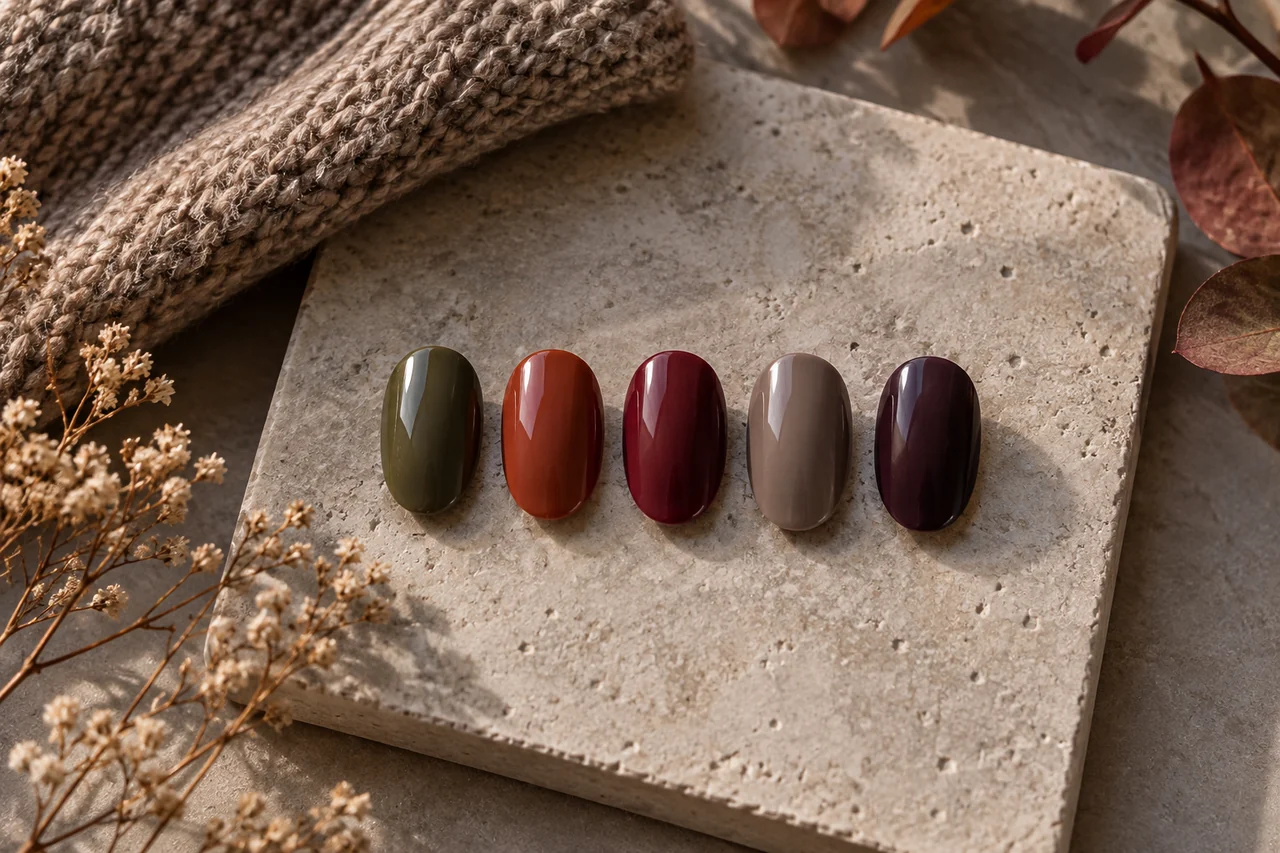
Seasonal clothing and plans can prompt a fresh look at polish you already own. Berry, olive, rust and cream are possible styling ideas here, not a verified ranking of current searches or compulsory seasonal colours.
Look at the coming weeks
List workdays, free days and a real special occasion if one is planned, with likely clothing and time available for a manicure. Every week does not require a new look. A familiar colour can serve several situations. Calm bases may suit varied outfits, while mostly plain clothes may invite stronger colour. Start from your calendar and taste rather than a supposed mandatory seasonal shade.
Sort existing colours by purpose
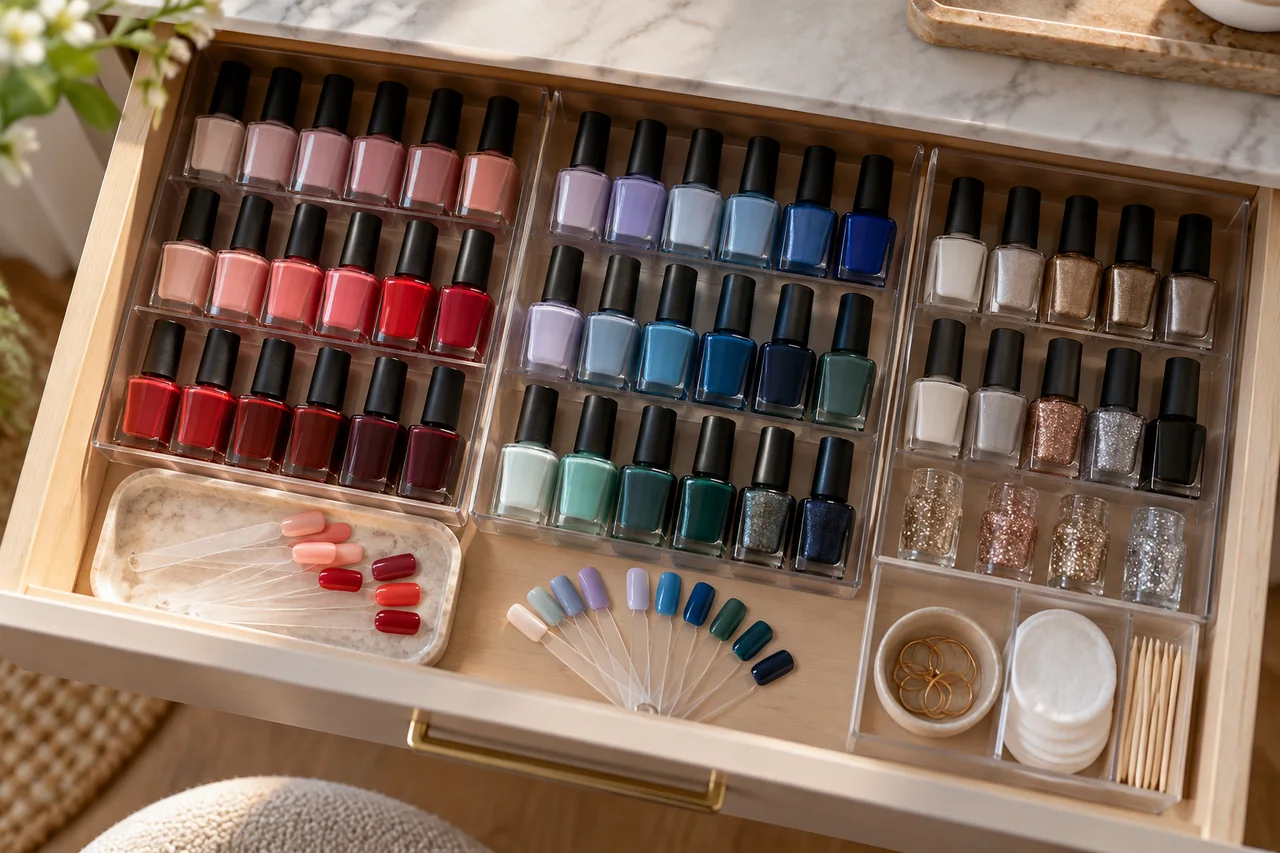
Group suitable samples as quiet and versatile, visibly colourful and special effect. One shade may cover more than one role. Dark red could be your everyday standard while cream feels striking. Check near-duplicates before buying another renamed version. A genuine gap is more specific, such as a light accent with dark jumpers or a sheerer quiet-day option.
Connect with real fabrics
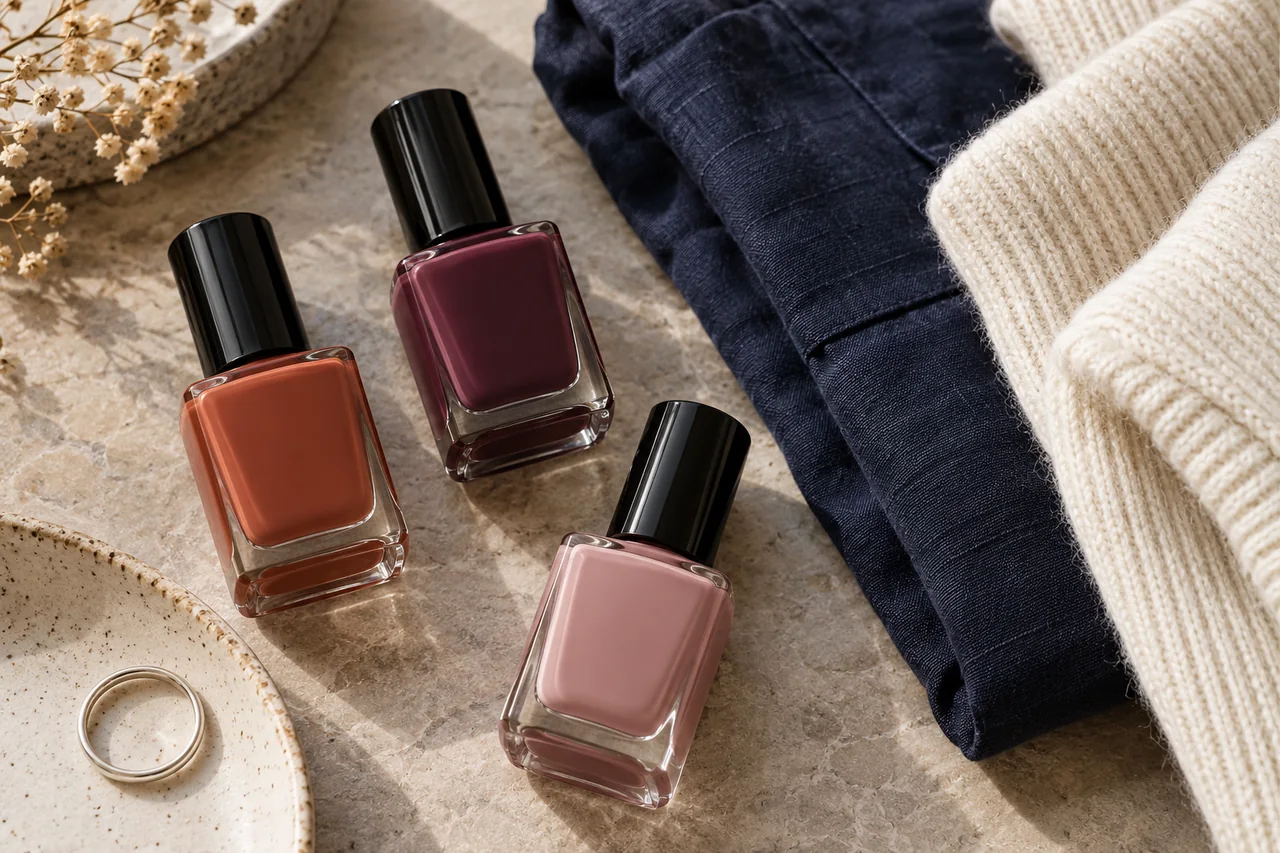
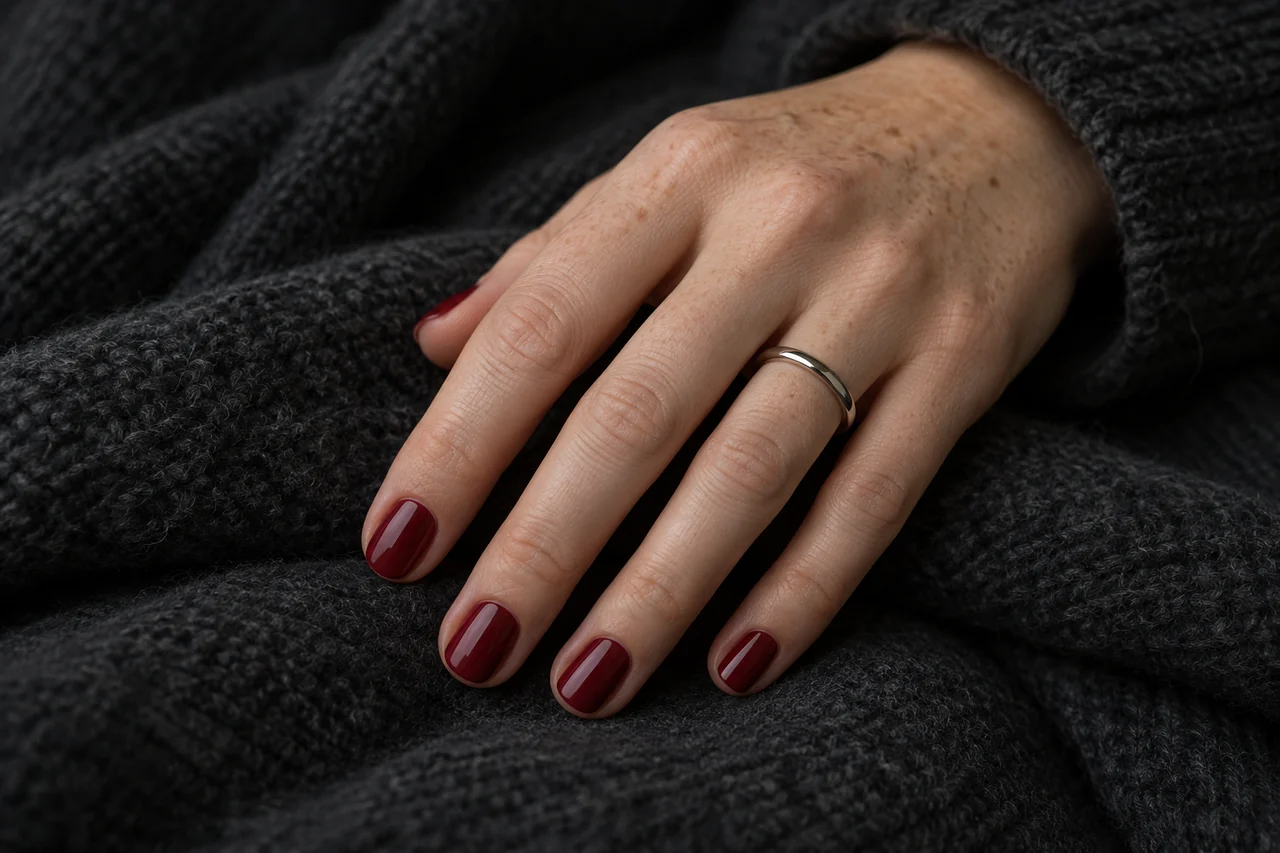
Compare against two often-worn garments and decide whether to repeat or contrast colour. Olive might echo a bag; pale polish might stand out against dark knitwear. You do not need every possible autumn shade. Pink, blue and bright pale colours remain options in winter. Seasons can organise choices without banning colours.
Develop three versions from one base
Start with a favourite polish: plain first, one painted accent in an existing contrasting colour second, and an appropriate shimmer finish or different colour placement third. Check compatibility and application for every combination. You need not wear all versions; the comparison may show that the existing base already offers enough variety. Give the standard, colour accent and occasion look distinct jobs.
Plan occasions without last-minute experiments
Decide early enough for a trial if shape, colour or system is unfamiliar. An event is not a reason to try several unknown products immediately beforehand. A familiar polish with a small original detail may be enough. For a salon, clarify the full service and removal in advance. The seasonal plan should reduce uncertainty, not create extra appointments you do not want.
Use your own rhythm and review
Base changes on your product and everyday experience rather than a universal wear-time promise. Simple calendar notes such as standard look, free choice or occasion trial are sufficient. A busy week can use a familiar uncomplicated option.
After several weeks, check actual use and successful combinations. An unused shade is not automatically wrong; perhaps its occasion never arose or coverage was unsuitable. Identify that before buying similar colours. A useful palette can become smaller and clearer or expand for a real gap without matching a general trend list.
Frequently asked questions
Which nail colour must I wear in autumn?
None is compulsory. Compare existing shades with actual clothing and occasions. These are original styling suggestions, not a binding trend ranking.
Do autumn and winter need separate collections?
No. One small collection can cover both through combinations, accent placement or suitable finishes rather than new colours for each period.
How many colours are enough?
Start with three jobs: a standard, a clear accent and a special option. Whether two, three or more existing shades serve them depends on your taste and collection.
Questions and experiences
Share a question or a useful experience about this topic. Every contribution is checked before publication. Comments may be written in different languages.
Loading reader contributions…
Opening the form sets a necessary session cookie. No email address is required. Publication is subject to moderation and is not guaranteed. For deletion requests: Contact